


Presidential pardons were designed by the founders for at least three purposes, according to U.S. scholars: 1) to provide another executive check on legislative or judicial power when a president saw an excess or injustice; 2) to offer a way for a president to grant mercy when an acknowledged wrong had occurred; and 3) to unilaterally seek to “lower the temperature” on an issue roiling and threatening to dominate the nation.
Alexander Hamilton in Federalist 74 calls clemency a deliberately broad power to dispense “exceptions in favour of unfortunate guilt” and to restore “tranquility” after crises.
That latter motive explains why George Washington sought to pardon those behind the Whiskey Rebellion in 1794 to help citizens come back into the fold. This is also how historians now see Gerald Ford’s unpopular pardon of Richard Nixon and why former Sen. Mitt Romney had encouraged former President Joe Biden to pardon then-candidate Donald Trump.
In addition to interceding if someone had “unfairly been punished by the justice system,” scholar Stewart Ulrich emphasizes this motivation of early presidents to use pardons to help “keep political peace, as a way to grant this amnesty, lower the temperature and unite the nation — in order to avoid a big, drawn out division.”
But in recent years, presidential pardons have become their own source of division and friction.
Somewhere along the way, Ulrich notes, such earlier, more noble intentions behind the broad pardon power have given way to something less about the well-being of the nation as a whole or the higher pursuit of justice or mercy.
According to two scholars who spoke to the Deseret News, there’s been a change in how frequently more personal and political motives are driving the constitutionally ordained process.
Stewart Ulrich, Sam Houston State University
Many presidents throughout history “used the pardon power in ways that people have questioned the legitimacy of,” Ulrich acknowledges, a researcher with a special focus on presidential power.
“Especially our modern president,” he tells the Deseret News, has engaged in a pardon that is “controversial.”
But when asked, wouldn’t any president be inclined to show mercy to those closer to their way of thinking? Ulrich pushes back, noting that influential political parties hadn’t yet grown in dominance, helping early founders to not really see pardons as a way to “help personal or political allies.”
“They didn’t see it that way,” he says again.
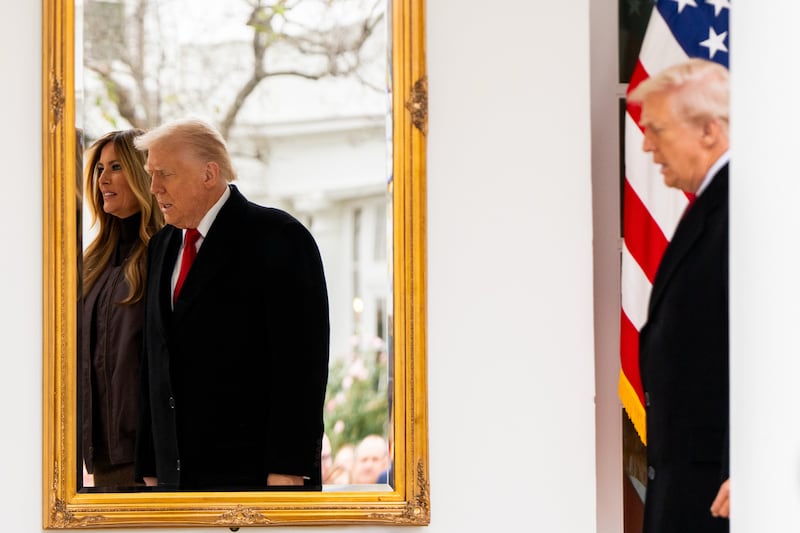
“President Donald Trump is not unique in the fact that most modern presidents have given pardons for personal or political reasons,” Ulrich reiterated. “It’s not unheard of that they do give a pardon to someone who’s personally connected to them or politically connected to them, allies and such.”
Scholar Bradley Hays likewise documents in “The Politics of Clemency in the Early American Presidency” how deeply entangled with ideology and party-building many early pardons were, including Thomas Jefferson’s pardoning of those convicted under the Alien and Sedition Acts, who were overwhelmingly his political allies.
“So that is not unusual,” Ulrich admits, before noting that especially in this second term, Trump is doing more pardons that seem personal or political, and earlier in his term than normal.
“Most of our modern presidents have waited until kind of the end of their time in office, to really dole out these controversial pardons, and that’s because they want to isolate themselves from criticism, and, you know, not risk any hit to their public standing and reputation.”
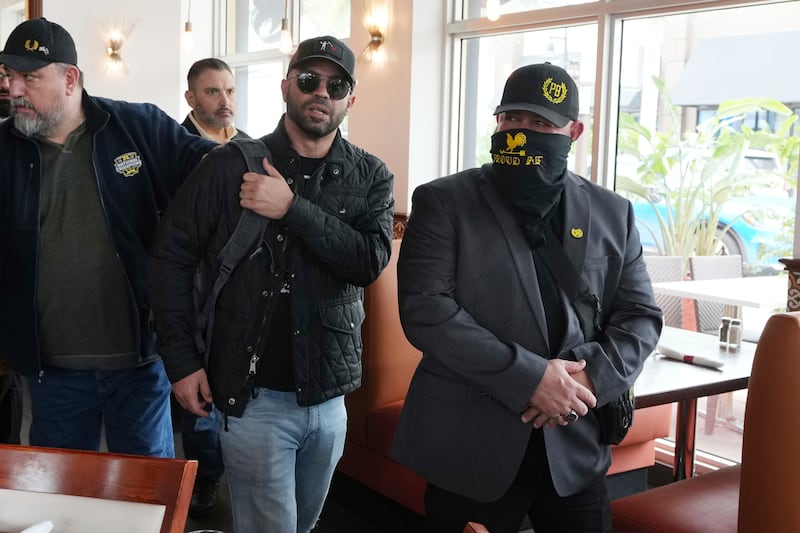
By comparison, he said, Trump not only pardoned individuals charged for acts on Jan. 6, 2021, on his first day of office, he openly promised this during his campaign. “I don’t think we’ve seen a modern president using pardons as a campaign promise before,” Ulrich said. “That was unique to him.”
Alongside the timing, the scope of pardons is also unique. Compared to Franklin D. Roosevelt’s all-time high of 3,687 acts of clemency, most presidents haven’t even reached 1,000 in their term of office (Bill Clinton was 459 and Ronald Reagan, 406). While Trump’s granting of clemency was far less during his first term (234), his 1,700 acts of clemency in the first year of his second term stand out.
Previous presidents pardoned or commuted high numbers of low-level, nonviolent drug offenders in their final year in office (Obama, 1,715 in 2016, and Biden around 1,700 in 2024), due to a perceived excess in the law.
Ulrich suggests a heightened focus on political or personal pardons may be a function of a unique, angry age in which most recent presidents “have felt the need to protect family members, close personal allies, political allies, because they feel, in our era of partisanship and polarization, that they are worried that they might be unjustly targeted and prosecuted.”
Bernadette Meyler, Stanford University
Our suspicions about pardoning are not new, says Bernadette Meyler, associate dean for research and intellectual life at Stanford University. Meyler is also the author of the 2019 text “Theaters of Pardoning,” tracing our modern understanding of clemency to 17th-century English politics and culture.
While early English monarchs most often extended mercy based on exercising godlike power “over life and death in the way that no one else can,” Meyler tells the Deseret News there was still another strand of thinking apparent about “mercy for the good of the people.”
This same idea showed up in the New York ratifying convention for the Constitution, Meyler noted, which listed pardons among the documents that ought to be “in the name of the people of the United States.”
Meyler has written about how to “reinvigorate the pardon as a democratic practice” and regain as a country “a democratic version of pardoning and mercy that could revitalize our polity today.”
This wouldn’t take pardoning power from the president, she says, but would rather clarify that “it’s not just the president kind of exercising this power, but that it’s representing the people” — reflecting a core assumption in many early American leaders “that what would be good for the people should be present in any exercise of the pardon power.”
“There’s so many other issues of political import that then get eclipsed if a sort of retribution mindset takes over,” she adds.
The president has more recently “doubled down on the use of pardon as a kind of amnesty power” more generally. How do Trump’s sweeping Jan. 6 pardons compare with George Washington’s Whiskey Rebellion pardoning? Meyler says the main difference is these early American pardons were used as a bargaining chip to establish peace amid an active conflict.
These scholars described how clemency historically has been mostly a bureaucratic review of many quiet, small-bore cases, filtered case by case to a subset submitted to the president. In the Trump presidencies, Meyler describes a pattern of pardons to make a political statement (about immigration restrictions, in pardoning Arizona Sheriff Joe Arpaio, or about corruption, in pardoning former Illinois Gov. Rob Blagojevich).
All of this speaks to the new suspicions many feel about how presidential pardoning power is being exercised. It was early statesman George Mason who expressed fear at the Virginia ratifying convention that these clemency powers granted to the president could “frequently pardon crimes which were advised by himself” to “stop inquiry and prevent detection” in a way that threatened the Republic as a whole.