


WASHINGTON — The Senate rejected two competing health care proposals on Thursday, sending lawmakers back to the drawing board just three weeks before the enhanced Obamacare subsidies expire, leading to a surge in health care prices for millions of Americans.
The Senate voted on a Democratic-led proposal and a Republican-led one, but neither had enough support to reach the 60-vote threshold and overcome a filibuster. The failed votes leave the chamber without a plan to address the expiring subsidies, heightening concerns for those who rely on the tax credits to help pay for their health insurance.
Lawmakers have disagreed for months on how to address the enhanced subsidies as Republicans have largely supported letting the credits expire and instead replace them with a new health care system. However, the party has not coalesced on what those changes should entail.
Meanwhile, Democrats have pushed to extend the COVID-era tax credits for up to three years without any reforms — a proposal that has been soundly rejected by the majority party.
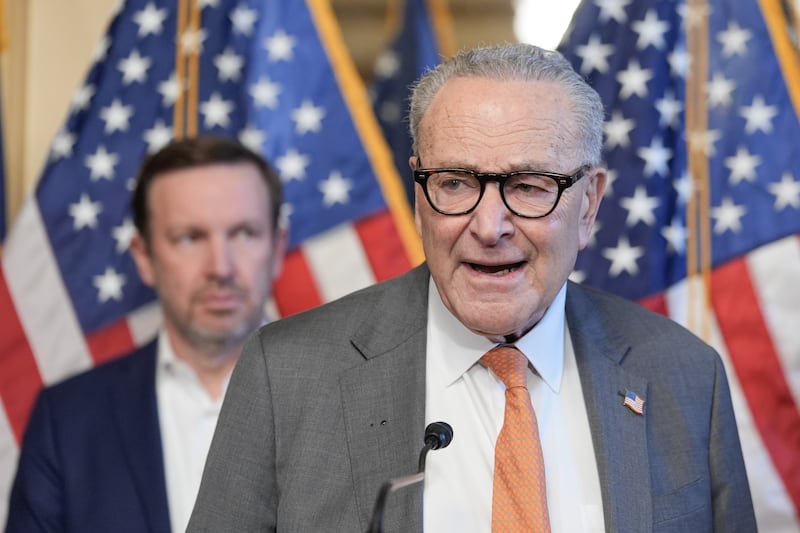
Senate Minority Leader Chuck Schumer, D-N.Y., introduced the three-year clean extension last week, falling in line with House Democratic leadership who proposed a similar plan weeks earlier. That package failed in a 51-48 vote on Thursday. Sen. Susan Collins, R-Maine, Dan Sullivan, R-Alaska, Josh Hawley, R-Mo., and Lisa Murkowski, R-Alaska were the only four Republicans to vote in favor.
Democrats would have needed 13 Republicans to cross party lines in order for the resolution to advance.
Senate Republicans offered a counterproposal led by Sens. Mike Crapo of Idaho and Bill Cassidy of Louisiana, to replace the system with new comprehensive health plans rather than extending the enhanced subsidies.
At the heart of the framework is a proposal to expand Health Savings Accounts, which are usually offered by companies and allow employees to set aside pre-tax dollars to use for out-of-pocket health care expenses. The proposal would require the Department of Health and Human Services to deposit payments directly to those accounts rather than using insurance companies as middlemen.
The direct payments would be paired with specific plans that insurance holders can opt into while also implementing certain restrictions pushed by Republicans in recent months. That includes language prohibiting any health insurance funds from going toward abortions or gender treatments, among other things.
That plan failed in a 51-48 vote. One Republican, Sen. Rand Paul of Kentucky, voted against it.
The vote tallies were not surprising to leadership, and Senate Majority Leader John Thune, R-S.D., had suggested ahead of the vote that Democrats’ failure could be what finally spurs bipartisan negotiations.
“When we get through this exercise this week the question is, are there enough Democrats who want to fix the problem?” he told reporters Wednesday. “Obviously we don’t have a lot of time to do this, but I think there are ways in which you could, where there’s a will.”
Meanwhile, the House is exploring its own options next week before lawmakers break for the holiday recess — although it’s not yet clear if any of the proposals have enough support to pass the narrowly divided chamber.
Rank-and-file Republicans filed two discharge petitions on Thursday that would bypass traditional House rules and force votes on extending the subsidies even as GOP leadership has pushed to let them expire. It’s not clear if Democrats will support either of those proposals because they include stricter requirements for health care coverage, but a handful have already signed on.