


- The number of street arrests in Utah by federal immigration authorities surged to 118 in September.
- Immigration attorneys report an increase in arrests during traffic stops and late night raids in Utah.
- Law enforcement experts say these tactics are normal and needed to address illegal immigration.
Street arrests conducted by federal immigration authorities spiked in Utah during the month of September to five times the level of President Donald Trump’s first six months in office — and 50 times the average under President Joe Biden.
Newly released U.S. Immigration and Customs Enforcement data, running through mid-October, confirms a reported shift in tactics that have escalated in the 11 months since the Trump administration asked ICE field offices to each conduct 75 arrests per day of immigrants suspected to be in the country illegally.
Utah immigration attorneys said they have identified another change in removal operations in recent weeks that includes a pattern of ICE officials — and increasingly Customs and Border Patrol agents — pulling over suspected illegal immigrants on their morning commute, or pulling them into an unmarked van in the middle of the night.
Former New York City ICE field office director Scott Mechkowski said these strategies are not unusual for Border Patrol, and that ICE has always pursued “noncustodial” arrests. These street arrests, including of individuals with no criminal record, are necessary, he said, following the largest surge in illegal immigration in U.S. history.
“It was never illegal, or never frowned upon, if we picked somebody up regardless if they were a criminal or not,” said Mechkowski, who worked in immigration law enforcement for 24 years before his retirement in 2025. “This is a national security priority. We don’t know who these people are.”
ICE arrests by the numbers
Monthly ICE arrests have risen steadily in Utah and surrounding states since Trump returned to the White House, according to a Deseret News analysis of government data provided by ICE in response to a FOIA request for the Deportation Data Project.
In Utah, total ICE arrests increased from an average of 115 per month before Trump entered office, to more than 290 during his first six months. Arrests rose again to around 380 per month from July to mid-October, driven by an increase in street arrests and arrests of those with no criminal record but who have violated federal immigration law by overstaying a visa or otherwise being in the country illegally.
September saw a dramatic jump in noncustodial arrests — which are those that occur outside of the criminal justice pipeline which ICE traditionally relied on for the vast majority of enforcement actions. In custodial cases, ICE picks up detainees from local jails where they have been kept for breaking the law.
Street arrests, which can take place almost anywhere, have increased in Utah from less than three per month under Biden, to around two dozen per month during Trump’s first six months, before jumping to 118 in the month of September, contributing to an average of 72 per month between July and mid-October.

The monthly average of arrests of those with no pending charges or convictions likewise increased in Utah — from an average of seven per month under Biden, to more than 40 per month between January and June, and surpassing 70 per month from July to October.
Once arrested, individuals are typically taken to county jails in Tooele County, Salt Lake County or Uinta County, Wyoming, until space opens up at the official ICE detention center in Pahrump, Nevada, according to Christopher Vizcardo, an immigration attorney at Trujillo Acosta Law in South Jordan.
Arrested individuals are nearly always given the right to see a judge in order to request asylum, agree to voluntary departure or sign a deportation order, Vizcardo said. But in cases when individuals are unable to secure legal representation, they often choose deportation over remaining detained during a process that can take anywhere from one month to one year.
“Not everything is doom and gloom,” Vizcardo told the Deseret News. “That piece of the system is still working. There are still cases being reviewed by immigration judges. That’s not a line the administration has dared to cross, but they have made it harder.”
Vizcardo echoed complaints made by Murray-based immigration attorney Nicholle Pitt White, that since Trump entered office, ICE operations have become less transparent, the ICE Online Detainee Locator System has become less accurate and arrests appear to have become more indiscriminate.
A similar trend has played out in Arizona, where total average arrests have tripled from 300 a month under Biden, to more than 950 during the late summer and early fall. During that time, average monthly noncustodial arrests increased tenfold from around 30 to 325, and arrests without a criminal record increased from around 55 to over 280 per month.
Nevada has seen total average monthly arrests quadruple from 65 to more than 270, with noncustodial arrests and arrests of those without criminal records multiplying by at least that much. Idaho has not seen the same level of ICE enforcement action, with total average monthly arrests increasing from around 30 to 80.
Change in tactics?

While ICE arrests appeared to slow down in Utah during the November federal government shutdown, they have multiplied in recent weeks, according to Tiffany Young, a local activist who has built an online community of around 20,000 residents who report and verify ICE activity in the state.
There has been a notable increase in enforcement efforts that take the form of early morning traffic stops targeting work trucks along roads like Bangerter Highway in west Salt Lake County, Young said. Several photos and videos obtained by the Deseret News appear to show such interactions with immigration authorities.
A new emphasis on traffic stops has coincided with a change of leadership over the ICE Salt Lake City Field Office located in West Valley City, with the new director coming from Customs and Border Patrol, according to Young and Pitt White. Deseret News confirmed this change with local law enforcement, and the name of the new director, Brian Henke.
Before the past few months, Pitt White, who specializes in immigrant removal defense at Contigo.Law, said her clients never reported being stopped and arrested while in their vehicles. Now it has become commonplace, often leaving family members at home with no idea of what has happened, Pitt White said.
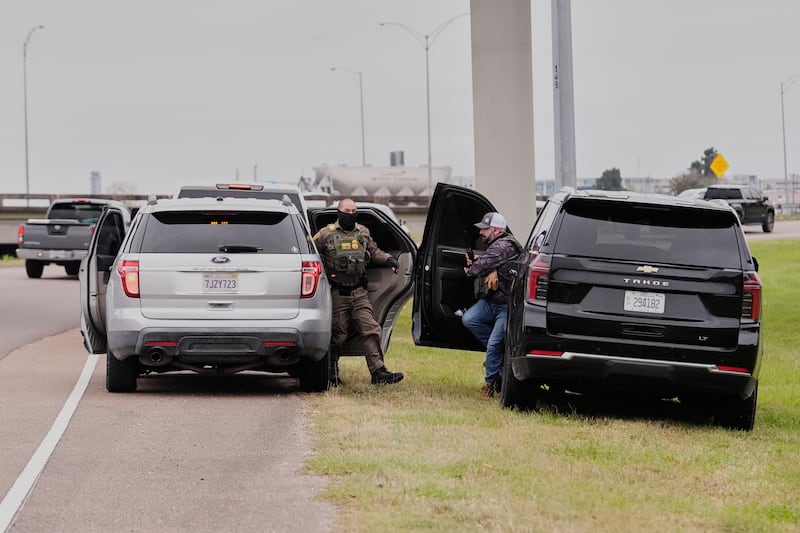
“I’ve seen them break windows in Utah and pull people out of their cars, even while children are inside — kind of the worst bits of humanity is what we’re seeing,” Pitt White told the Deseret News. “Any empathy or sympathy that did exist in this system is basically gone now.”
Pitt White said these instances were relayed to her directly by individuals seeking legal consultation, and in one case included personal dashcam footage of the interaction, which the Deseret News could not independently verify.
In another video taken in Taylorsville on July 9, which the Deseret News independently verified through video metadata information, a man in a Border Patrol vest can be seen questioning Hispanic workers in a truck, which the immigration authorities said they had followed from a nearby 7-11.
Border Patrol are known for using this approach as part of their “area control” enforcement, typically done within 100 miles of the southern border, according to former ICE field office director Mechkowski.
Salt Lake is more than 800 miles from the border but it appears that the Trump administration is using Border Patrol as a “force multiplier” for ICE, Mechkowski said.
“I don’t see any cons in using any law enforcement agency,” Mechkowski said. “I say it’s all hands on deck, and I don’t see anything negative about it. ... I don’t think they’re arresting people fast enough.”
From January to June, the ICE Salt Lake City area of responsibility, which covers Utah, Nevada, Idaho and Montana, conducted an average of 21 arrests per day — less than one-third of the quota established by the administration early on. This average increased to 25 from July to October.
During his time leading ICE Enforcement and Removal Operations in New York City during the first Trump administration, Mechkowski said arrests typically targeted convicted criminals with easily accessible case files. But ICE also regularly conducted raids looking for those with deportation orders and no criminal record.
Mechkowski believes the public is being “lied to” by the mainstream media when they are told ICE has changed its tactics. It hasn’t, according to Mechkowski — it has only expanded its focus to target more heavily those who are in the country illegally without criminal charges: “everybody is fair game.”
What’s behind public perception?
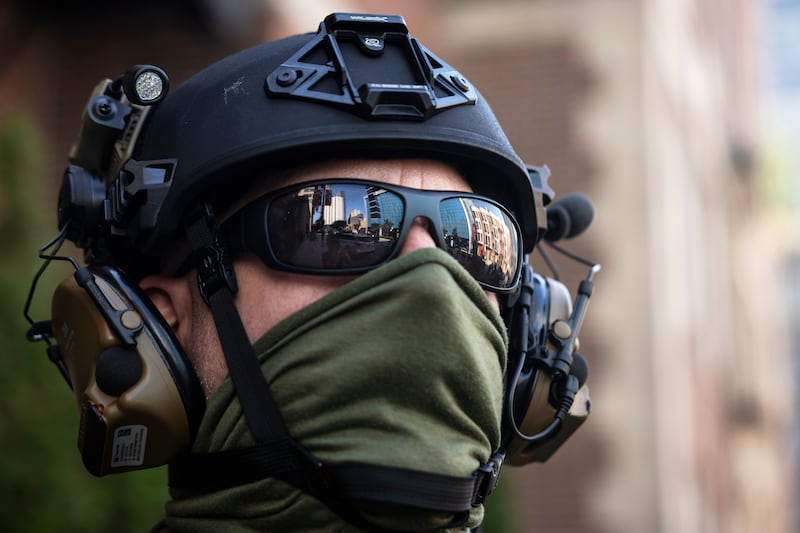
But the tactics that are increasingly impacting the clients of Vizcardo appear far outside the realm of typical immigration law enforcement efforts, he said.
Just in the past month, Vizcardo said the number of people seeking help for themselves or a loved one who was arrested by immigration authorities has more than doubled, with many reporting that arrests took place while they were going about their normal days.
In one such instance, a client, who is currently detained in the Nevada detention center, was heading home from work, and was surrounded by unmarked SUVs while leaving a fast food restaurant in Kearns during the early morning hours of Dec. 6, Vizcardo said.
The client was then allegedly put inside a van which drove around for the rest of the night picking up other suspected illegal immigrants.
“And in that time they would stop the vehicle for 20 minutes, half an hour, and then drive somewhere real fast, and then another person would be chucked in the back of the van,” Vizcardo told the Deseret News. “By the time they headed to the office, some four hours later, the van was full of people that had been detained during that night.”
Vizcardo said he has “no idea whatsoever” why ICE chose to target his client. He said he does not know whether ICE works from a list of suspected illegal immigrants that it uses to identify individuals to arrest, or whether the arrests are based on other factors.
ICE did not respond to a request for comment on these changing tactics.
The types of immigration enforcement actions appear to be continually changing. Mirroring trends from around the country, last week multiple immigrants were arrested while attending appointments at the U.S. Citizenship and Immigration Services office in Salt Lake City, according to Young, Pitt White and multiple media reports.
Manhattan Institute fellow Rafael Mangual expects one reason why federal agencies have focused more on noncustodial arrests is because it has become harder to work with some so-called “sanctuary city” municipalities to transition detained immigrants into ICE custody.
Pulling in Border Patrol to help expand deportation efforts beyond convicted criminals also aligns with what Trump has long campaigned on, which Mangual said is at least partially in response to the largest immigration wave in U.S. history, with at least 10 million immigrants entering the country from 2021 to 2024, according to census data.

“To the extent it’s a problem, it’s one that was invited by the Biden administration’s malfeasance on the border,” Mangual told the Deseret News. “That creates a mess, and cleaning up that mess is not always going to be efficient. It won’t always look great on camera.”
But Mangual suspects the uproar over Trump’s immigration policies has more to do with ideological opposition to the president than with ICE tactics. Many of Trump’s detractors would be displeased with any level of enforcement of immigration law, Mangual said.
Critics of the administration have also gone out of their way to interfere with ICE activities, whether that be following agents around with cameras, or blocking the streets, Mangual said.
At the end of November, the Department of Homeland Security, reported a more than 1,000% increase in assaults against ICE officers compared to 2024.
In Salt Lake City and West Valley City, anti-ICE organizations have reportedly placed around 400 signs at businesses that read “Immigrants are welcome here,” “No I.C.E. allowed,” “I.C.E. cannot enter private areas of this business without a judicial warrant signed by a judge” and “I.C.E. out of Utah.”
“I don’t think that that reaction is a byproduct of the style of the Trump administration’s immigration enforcement efforts,” Mangual said. “I think it’s just a backlash to the fact that any immigration enforcement is being done at all.”