



Shortly after Charlie Kirk died, Scott Jennings was on CNN trying to make sense of what had happened and explain why conservatives were so upset.
“I am angry. And I’m channeling the emotions of millions of conservatives who are angry,” he said.
It wasn’t just another sound bite for Jennings, but rather his mode of operation at CNN, where he represents the conservative viewpoint — and by extension, the viewpoints of like-minded conservatives across America.
Over the past eight-plus years as a commentator at the network, “I came to see my job at CNN as a representative for Flyover Country, USA,” he writes in his new book, “A Revolution of Common Sense.”
It is a role Jennings takes seriously. “I’m trying to do the best I can to tell the truth every day and give half the country something to watch,” Jennings said in an interview with the Deseret News.
A married father of four sons (ages 16, 12, 10 and 8), Jennings sees himself as a spokesperson for the 77 million Americans who voted for the president in 2024, ordinary Americans who don’t have a platform like he does.
It’s a platform that’s getting even larger this year.
The Salem Radio Network announced in December that Jennings’ radio show would expand to two hours in the time slot once held by Charlie Kirk, beginning Jan. 5. (Alex Marlow, Breitbart’s editor-in-chief, fills the other hour, and “The Charlie Kirk Show,” now co-hosted by Turning Point’s Andrew Kolvet and Blake Neff, will continue as a podcast on the Salem Podcast Network, per Axios.)
There could be other news in the coming year.
There have been rumors that Bari Weiss is courting Jennings to come to CBS, and that he might run for the Senate when the man he calls his mentor, Kentucky Sen. Mitch McConnell, retires next year. On these matters, Jennings is noncommittal. He is enthusiastic about his work at CNN, and busy with his radio show and other media, writing for various publications and promoting the book.
The book, his first, is primarily about Donald Trump and the first 100 days of the president’s second term. But it provides not just a glimpse into the inner workings of the White House and the “revolution of common sense” that the president promised in his inaugural address, but also helps Jennings’ fans (and detractors) understand his own personal revolution.
It is a journey that not only transformed him physically — Jennings lost more than 50 pounds through intermittent fasting and drastically cutting back on sugar — but one in which he morphed from a behind-the-scenes political strategist who supported mainstream politicians like Bush and former Utah Sen. Mitt Romney (he managed Romney’s Ohio campaign in 2012), to a front-of-camera MAGA defender.
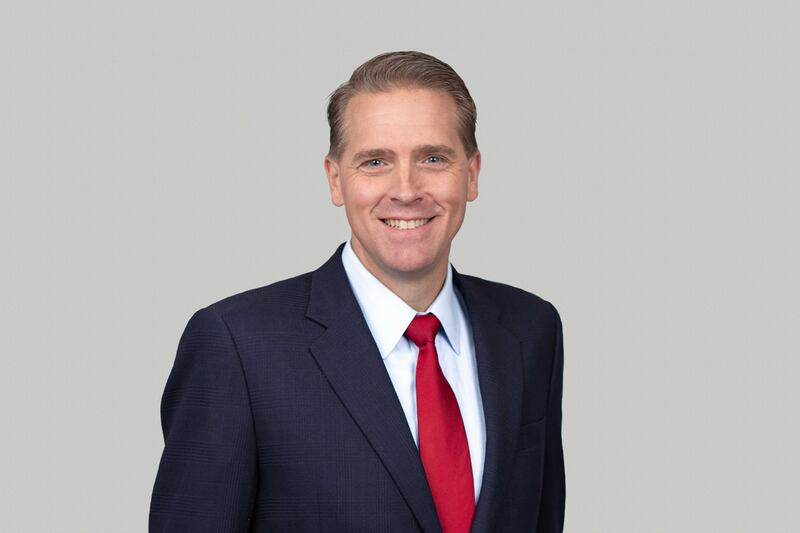
That’s not to say that he agrees with the president on everything — Jennings writes that he has ridden the Trump roller coaster “mostly thrilled but a little green around the gills during certain loops.” But he has come to believe, he says, that Trump’s “aggressive style” is necessary for what he’s up against.
“For whatever policy quibbles any old-guard establishment Republicans might have with Trump, you cannot deny that he’s fighting a much larger battle against forces that believe the American founding was somehow rotten at its core, that the speech of their political enemies should be suppressed and even censored, and that Western Civilization itself should be upended in favor of a world divided into two groups: the oppressors and the oppressed,” he writes in “A Revolution of Common Sense.”
In a conversation over Zoom with the Deseret News, Jennings talked about the input the president had in the development of the book, the effect of his demanding work schedule on his home life, and why he’s so unabashedly MAGA, despite having worked in the past for politicians who are not.
The conversation has been edited for clarity and length.
Deseret News: The No. 1 question I see people ask about you online is “Does Scott Jennings ever go home?” Where are you now, and how much are you on the road?
Scott Jennings: I’m in a hotel in New York right now, getting ready to do CNN tonight. The last couple of months have been hard because of the book. I’ve been on a perpetual book tour. I’ve been in 20 states and all kinds of cities. I haven’t been home that much. On a normal week, what I like to try to do is be home on the weekends: fly on on Tuesday and be home on Friday or Saturday. That’s the cadence I’m hoping to achieve, this year not always successfully. I’ve never done a book before, so I didn’t exactly understand what that was going to do to my schedule. Next year, I really won’t have that problem, so I’m hoping to be home a little more.
I’d like to tell you I’m super magical, but sometimes I’m just there to not be super emotional, be logical, be rational, know the facts and be able to tell the difference between what’s real and what’s just being passed around on Bluesky.
DN: Speaking of the book, why is Donald Trump on the front of the book, and not you? It seems that having him on the cover might alienate some potential readers.
SJ: Well, the book isn’t about me; it’s about Donald Trump. I’ll tell you a story about how I arrived at that photo. I didn’t really know what to do with the cover. The publisher mocked up three ideas. And I asked the White House, what do you think of this? They didn’t have any veto rights over my book, but they were cooperating with me about writing it. So I showed it to them, and I got back this message: He hates it. (Laughs.) So I said, OK, well, what’s his favorite photo of himself from his first 100 days? ... And that’s the photo I got back, and I thought, well, if I’m going to write a book about the first 100 days, and he’s the principal subject, well, it seemed like a good thing to do.
DN: Has the president read it?
SJ: I don’t know. I delivered a copy on Nov. 17, and he’s done a couple of Truth Social posts about it. He seems to like it, but I don’t know if he’s read it or not. It’s a pretty honest book. I take the issues I thought were defining for the first 100 days, I add my own observations. It’s a pretty good solid analysis, and frankly, defense. I told him back in February when I pitched him on it, I thought a hundred of the usual subjects would come around writing books crapping on him, no matter what he does. And I thought someone who voted for him, liked him, and sort of understood how his politics were landing in middle America should get a chance to write (about his first 100 days), and he agreed.
DN: The president used the phrase “a revolution of common sense” in his 2025 inaugural address. In the book, you quote from Thomas Paine’s “Common Sense,” in which he wrote “a long habit of not thinking a thing wrong gives it a superficial appearance of being right.” Who do you think is responsible for the decline of common sense in America?
SJ: I think on a great many issues, the progressive left is responsible, and you saw that reflected in the president’s actions, trying to swing back against what the progressive cultural left had done to the country on a number of fronts. I would put them at the top of my list. And No. 2, probably, media.
I think media has, in some cases, amplified the most nonsensical of viewpoints and positions. If he stands for common sense, a lot of people have decided to stand for uncommon nonsense, and I think this sort of alliance between the political radical left and their defenders and their amplifiers in the press ... it threw a wet blanket on the country. You have people were walking around too afraid to say something that 90% of Americans believe, whether it’s on transgender stuff or paper straws or you name it. The decline of common sense, to me, is when average, everyday people can’t say what’s on their mind, even if what’s on their mind is a view held by the majority of Americans.
I would also say I don’t think there’s any common sense in having an open border. In many cases for Trump, he winds up on the 80 of a bunch of 80-20 issues, I would regard the 80 as being the common-sense view, and his opponents reflexively take the 20.
DN: In what you see in your travels, do you think Americans are as divided as they seem to be online?
SJ: I’ll tell you this, I go all over the country, and I hear two things: I love you, and I love the debates. And, I don’t care for you, or I don’t agree with you, but I love the debates. The commonality is the debates. And so I think what I’m doing on CNN has appeal to a lot of people, because they’re hungry for debates. They like debates.
I’m actually shocked there isn’t more debating content on TV. Everybody seems to want it.
I think we seem divided because we’re in these ideological bubbles that are of the algorithm’s making. We get in these bubbles, and it’s really easy to only be confronted with information that confirms your priors. You don’t have to see anything that challenges your viewpoint. ... That causes us to forget, we do have a lot in common even if we have different politics. But I do think there’s a recognition of this happening in America right now. People realize we’ve been divided against ourselves, and people realize it’s OK to have debates, and we’re not always going to agree. But that’s how we solve problems in this country. We debate, and we vote. The alternative is violence. And Lord knows, we’ve seen enough of that this year.
I think people are waking up to the idea that it’s OK to debate, it’s OK to disagree, but that doesn’t mean we’re divided against ourselves. It may feel that way because of the way we get information, but deep down, I think most Americans have more in common than not, in terms of what their goals are in their lives and what they want for their families.
DN: You’ve been a commentator on CNN for more than eight years, but it’s just within the past few years that you become something of a household name. Was there a moment in particular where you exploded, so to speak, and became viral?
SJ: I’m certainly more famous, or infamous, than I ever was. I attribute it to two things: the ’24 campaign, and the advent of the debating show. ... You know that show was supposed to be temporary, it was supposed to be just during the election. But it was so popular, they left it on the air because everybody loves the debates.
In terms of individual moments, there’s a few moments I look back on at CNN and see as seminal: the night that I had it out with Randi Weingarten about her role in Covid school closures, the night of the Biden-Trump debate, and then election night, when I talked about why I thought Trump won, that was a big night. And the convention coverage was huge for me as well.
DN: Some people say that you’re not so much debating as you are “owning the libs” ... that’s it not a fair fight because your oratory skills are so advanced compared to some of the people you come up against.
SJ: Well, practice makes perfect. I do it a lot, and it helps. Number 2, preparation leads to confidence, and confidence leads to stellar moments. If you’re confident in what you’re doing, and you know you’re prepared, you’re not nervous about it, you lean in to your arguments, which is what I do on CNN.
Number 3, I often find myself debating people who live in such a small bubble that they seem almost unaware of the facts or the basic contours of an issue ... very basic, rudimentary things, they seem to be unaware of. So oftentimes, I’m not so much “owning the libs” as I am educating the libs. Sometimes I think I say things to them and it’s the first time they’ve ever heard it. They marinate in these small ideological bubbles and they trade narratives with each other, and they tell each other stories and they begin to believe they live in an alternative reality. Half the time, I’m there to give a basic fact, or ask a very simple basic question, and that’s how the debate unfolds.
I’d like to tell you I’m super magical, but sometimes I’m just there to not be super emotional, be logical, be rational, know the facts and be able to tell the difference between what’s real and what’s just being passed around on Bluesky. I think for a lot of people I come up against, I might be the only Republican they know, so it’s somewhat jarring for them to have to talk to a Republican. That’s the danger of living in a bubble. You lose touch with half the country or, on some issues, more than half the country.
DN: Are there any moments you wish you could take back, things you said on TV that you wish you hadn’t said?
SJ: On any given night, you always come off the stage and go, ah, I wish I’d said this. That happens every day. And there have been a couple of times where I lost my temper a little, and I shouldn’t have. But 99.9% of the time, I’m the calmest person out there. (Laughs.) And that’s how I want people to know me, as someone who can keep their head about them even in the middle of an intense conversation.
I’ll be honest with you: I don’t have a lot of regrets. Look, it’s live TV, and I said what I said. And I’m happy to answer for or explain anything I said in the moment ... but other than the moments where I wish I’d come up with a great quip — you know, 10 minutes too late — I don’t really have any regrets about anything I’ve done, and I’m happy to defend anything I’ve done.
DN: You talk about the media being part of the problem. Have you seen any changes in the past year or so that give you hope?
SJ: I think there is some reform in some quarters of the media, and it needs it. Look at the Gallup confidence numbers: confidence in media as an institution is as low as it’s ever been. This is painful to me, because I believe in the media. I believe in a free, trusted press, a fair, free and trusted media is vital. We don’t have that right now, at least in the eyes of the American people if you look at the polling. It needs reform. I think there are some bright spots out there. I actually think the 10 o’clock (ET) show we do on CNN (NewsNight with Abby Phillip) is a good thing; it’s showcasing viewpoints from around the country and from around the spectrum. I’m actually shocked there isn’t more debating content on TV. Everybody seems to want it.
Bari Weiss going to CBS is unequivocally a good thing. I think she’s one of the most fair people in media and understands the dangers of having all media live in such an insular environment. But some people haven’t reformed, and because they won’t or haven’t, this is what has led to the rise of independent journalists and independent news outlets. I said on election night that I think the election marked the death of the Political Information Distribution Complex, the people who control our narratives and our political campaign coverage were just completely obliterated and proven wrong on election night. ...
I remember when I was a kid going to work with my dad sometimes. He was a garbage man, and a factory worker sometimes. But those moments when you can be with your parents when they’re doing what they’re supposed to be doing, actually I think are pretty important.
It was also, I think, the first election where what the political media were doing mattered the least. The narratives they were promoting, voters ignored. Trump was able to get his message out through a lot of other means other than sitting down with traditional media. ... For most of my career, what the mainstream media would do or say in a presidential campaign was paramount. That wasn’t true in 2024, and I don’t think it will be true in 2028. We’re living through an upheaval in the business. A needed upheaval. Millions and millions of Americans are looking elsewhere for information, and they’re doing it for a reason.
DN: But do you think there is hope for say, CBS under Bari Weiss, or are habits ingrained now in alternative spaces or silos?
SJ: I think there is hope for any property that presents a compelling product. Like any business, you have to give consumers products that they want and they can use. ... Competition is not going away, but if you improve your product, you don’t have to be put out of business by the competition. You can compete. ... Is there a place for CBS News or CNN or MSNBC or Fox, you name it? Of course. Of course there is. But it will depend on their ability to make news and information products that people find credible and creative and compelling.
DN: You are a founding partner/owner of a communications firm in Kentucky (RunSwitch Public Relations). Do you consider yourself part of the media?
SJ: Yes, I do. I’m on CNN almost every night. I’ve got a radio show on 300 terrestrial stations, I write newspaper columns for the Daily Mail and other outlets. I started in the media. When I was a teenager, I worked in radio, I was a reporter when I was in college. Even in my professional life outside of all this, I’m creating media content all the time and have been for most of my career, and because of that, I feel like I have a special responsibility to tell the truth, to be honest, to be authentic, and to try to make whoever I’m working for in that space as good as they can be. That’s why I’m putting so much effort into this CNN show; I want it to be as good as it can be. ... Political programming doesn’t have to be boring. It doesn’t have to be dumbed-down and certainly doesn’t have to be presented in a way that people don’t want to watch. We can do this in an entertaining way, in a creative way, and still deliver an informative, education experience to the audience. That’s what I’m trying to do.
DN: Switching from your professional to your personal life, how are you managing being a dad to your four sons while being on the road so much?
SJ: Well, this is the thing that I dislike and worry the most about, regarding how my career has unfolded. Truthfully, I miss them every day. We talk every day. We do a lot of FaceTimes and Zooms and things, but it’s not the same. I miss things. There’s no doubt about it. When I’m there, I try to have as much focus time as I can with them and do the things that they want to do. And I travel with them, when they’re available, I’ll bring them to New York with me, or Washington. I’m trying to include them as much in my life as I can. But more nights than they’d probably care to say, they’ve had to sit quietly and patiently at a TV studio, waiting for Dad to finish so we can go get a pizza.
I remember when I was a kid going to work with my dad sometimes. He was a garbage man, and a factory worker sometimes. But those moments when you can be with your parents when they’re doing what they’re supposed to be doing, actually I think are pretty important. Bringing them with me, those are my favorite trips when one or two of them can come with me. You just never want to bring all four, because that’s a recipe for disaster.