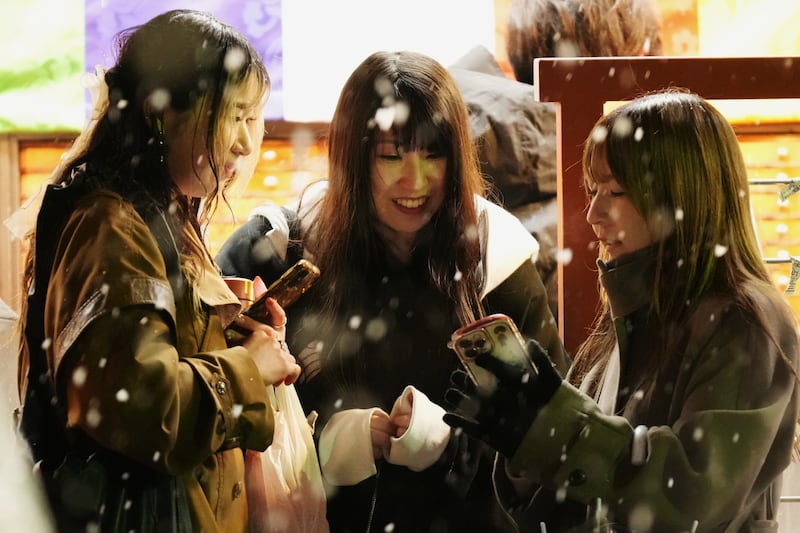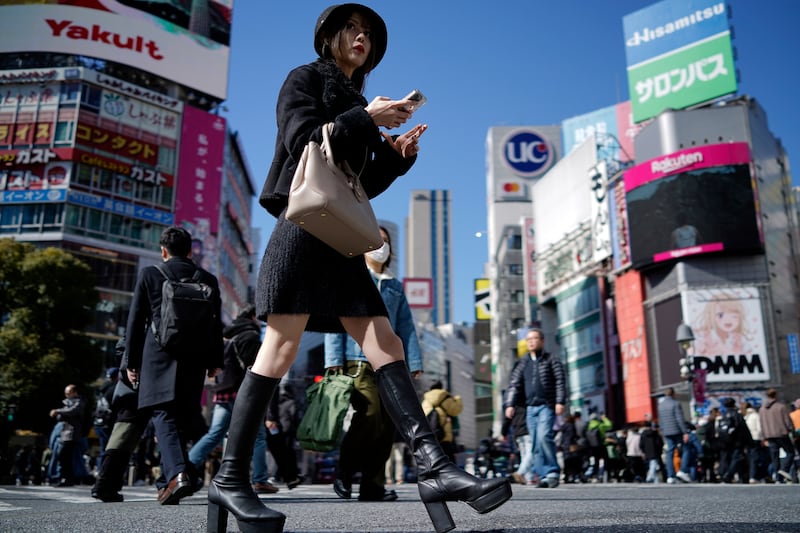

In the late 1990s and early 2000s, millennials developed a fascination with India. Backpacking through this South Asian country became a rite of passage for many, giving them a vision of the globalized world. Tie-dyed T-shirts, tapestry and yoga all experienced a popularity bump.
Lately, another Asian country has come into focus for American youth: Japan.
This interest has evolved into an obsession. Take the latest social media trend for example. Simply labeling mundane scenes with “Tokyo” creates a romanticized effect.
But young people’s admiration goes beyond surface-level curiosity. They talk about admiring Japan’s civility, technological advancements and rich cultural tapestry, viewing it as an intricate blend of the old and the new, the serious and the whimsical.
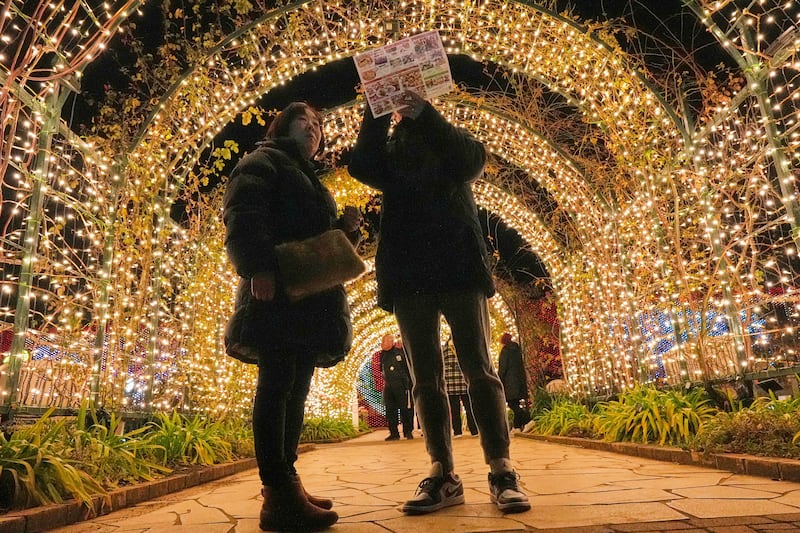
Japan’s increased global influence is thanks to the cultural export of everything from food to movies over the course of decades.
Many of these exports adopt a cultural universality. Consider Hello Kitty, ramen or sushi.
“Somebody going out to get some sushi doesn’t say, ‘I’m going to go eat Japanese food.’ They say they’re going to go eat sushi,” said Merry White, an anthropology professor with expertise on Japan at Boston University.
She described it as the ‘Japan, not Japan’ phenomenon.
“The interesting thing about sushi is,” she added, “in Japan, it’s a very high-end thing to eat. You do not walk down the street with a Styrofoam box of sushi.”
Its status changed as it traveled across the oceans.
White said she thinks the culinary scene in Japan is also a big draw. That includes the pricey and chef-curated Omakase, typically a few hundred dollars, as well as the egg salad sandwich available at local convenience stores like Lawson or 7-Eleven.
Anthony Bourdain, the late celebrity chef and travel documentarian, once articulated, “I love Tokyo. If I had to eat only in one city for the rest of my life, Tokyo would be it.”
“Most chefs I know would agree with me,” he said in the second season of “Explore Parts Unknown.”
It’s worth noting that Tokyo has more Michelin-starred restaurants than any other city globally, a title it has held for over 15 years.
Japan-U.S. relations through the ages
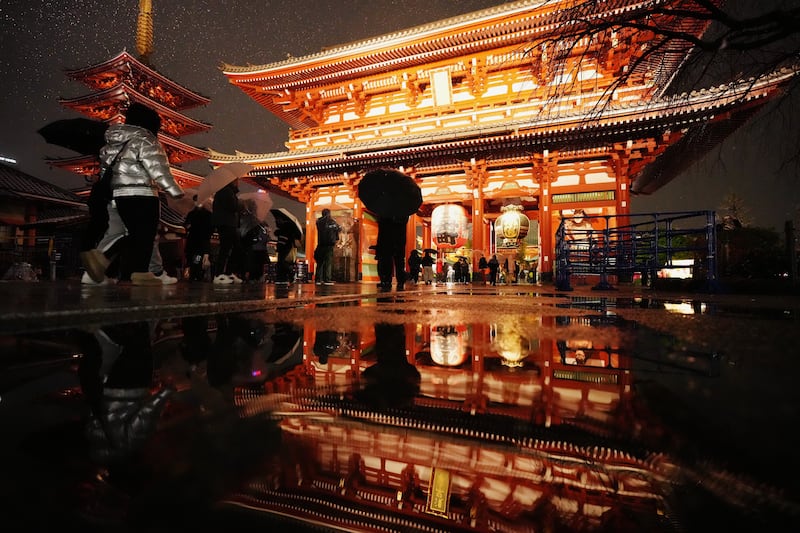
Japan’s influence over the world, especially the U.S., has transformed over the decades. After decades of economic growth following World War II, Japan became an economic superpower in the 1980s.
“The people who were buzzing about Japan in the bubble years — they felt they were super reasonable because Japan had so much to teach the West,” said White. American midlevel managers visited this country in droves “to learn the secrets of Japanese success,” displayed by global companies like Toyota and Sony.
But the eagerness to learn led to oversimplified buzzwords and mantras about commitment and teamwork while ignoring the essence of Japanese corporate culture, which promotes values like commitment and loyalty.
“They would say, ‘Here’s the formula, you just apply this to your company and you’ll be successful too.’ Never mind that the people they were applying it to had not been raised in Japan,” said White.
The economic bubble burst in 1991 as this East Asian country grappled with recession and waning influence.
This shifted Japan’s influence from an economic power to a cultural exporter.
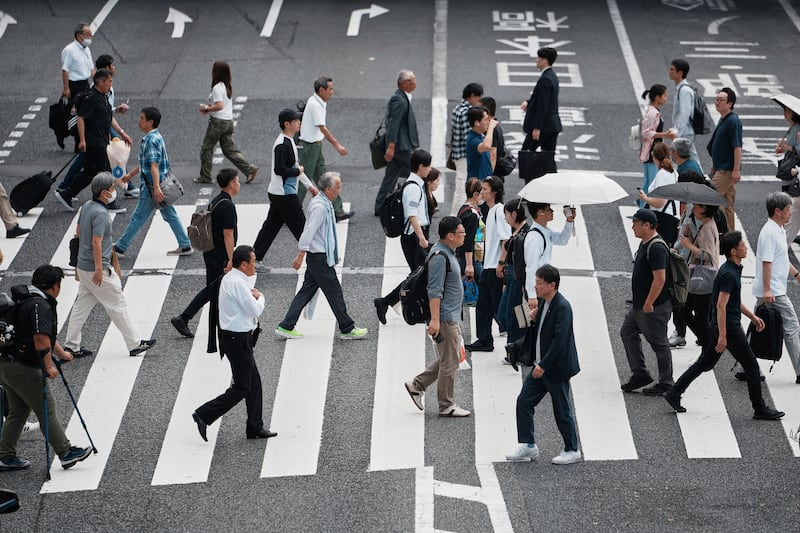
Following the burst of Japan’s economic bubble in the early 1990s, there was a significant shift in Japan’s influence on the U.S. from economic dominance to cultural exports or soft power, as Harvard political scientist Joseph Nye theorized.
“When you can get others to admire your ideals and to want what you want, you do not have to spend as much on sticks and carrots to move them in your direction,” Nye wrote in "Soft Power: The Means to Success in World Politics." “Seduction is always more effective than coercion, and many values like democracy, human rights and individual opportunities are deeply seductive.”
Japan’s soft power came in the form of anime, manga, video games and technological innovations like the Tamagotchi, a virtual pet.
White was teaching summers at the University of Hawaii in the late ’90s and remembers the public swimming pools in Honolulu at the time had installed a Tamagotchi babysitter “so that kids who went swimming could be sure that their Tamagotchi wouldn’t die from their absence.” These virtual pets hung along a wall while someone watched over them.
“We all thought, ‘This is insane,’” she recalled. But she also saw the value in it. “You don’t always have to be deadly serious or have proof of rationality,” White said.
By the 2000s, series like “Pokémon,” “Dragon Ball Z” and “Naruto” became staples in Western television.
“Each era has its Japan, in a way,” she added.
Now Gen Z seems more obsessed with Japan than other generations. The statistics agree.
In 2025, Netflix said that anime viewership tripled over the past five years. American Express Travel’s research into its own booking data found that Japan’s popularity skyrocketed among Gen Z and Millennials. Bookings to this country have increased by 1,300% since 2019.
Meanwhile, clothing brands like Uniqlo and designer labels such as Comme des Garçons and Issey Miyake, automotive makers like Toyota, and electronic manufacturers like Sony are well recognized globally.
As blogger Noah Smith wrote in a Substack post, “I often joke that the U.S. is in the middle of a great shift — in the 19th and 20th centuries, high class in America was defined as ‘anything French’ while in the 21st century it’s defined as ‘anything Japanese.’”
A place of civility

Aside from food, the tech and everything Kawaii, the Japanese word for cute, this East Asian country represents a place where young tourists go searching for comfort, safety and civility.
Take public cleanliness, for example. Tokyo is widely considered clean despite being one of the most populated and dense cities. “Yet it’s really hard to find a public wastebasket in Japan. There’s almost none.”
“It means that people are taking personal responsibility,” said White. “Sure, there are littering laws … but I think that it lends closer to public civility, a quality we lack deeply now.”
“You don’t have to love everybody you happen to be talking to but you do need to be civil. Here, we just think civility is a personal choice,” said White.
According to a report from Berkshire Hathaway Travel Protection, a major American travel insurance company, Japan is ranked ninth in the world for the safest country to travel, ranking No.1 in safety from crime and on public transportation.
Young people view Japan as a leading example of modern progress and social order, often describing the country as “living in the future” with its high-speed rails, innovative vending machines, and clean, safe walkable cities.