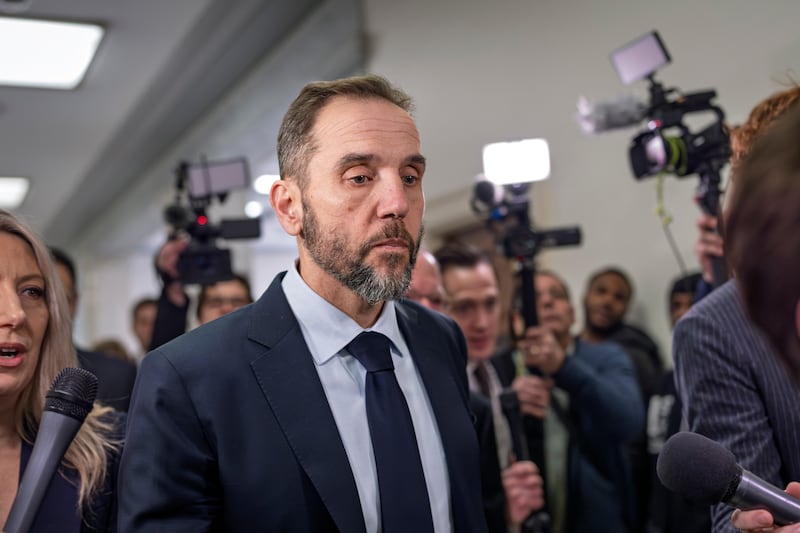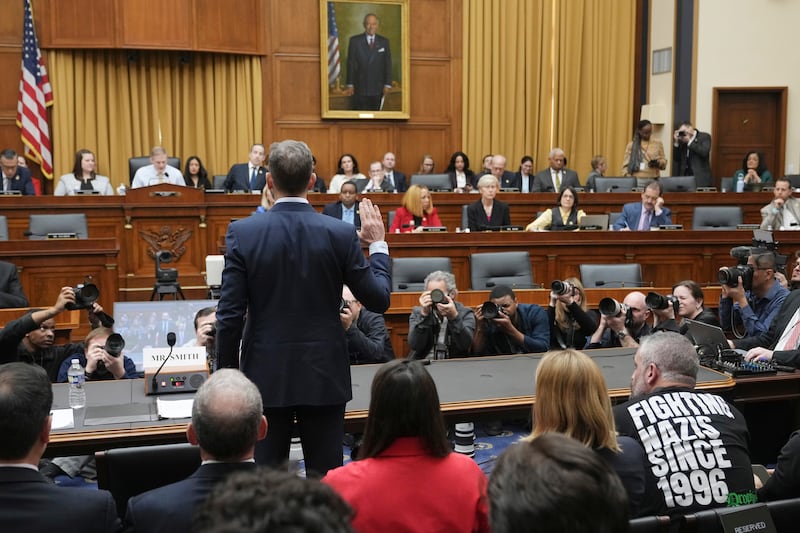

Former special counsel Jack Smith appeared before Congress to answer questions about his high-profile investigations into President Donald Trump while he was out of office, marking the first time the Biden-era official has testified publicly before lawmakers.
The hourslong testimony was marked by tense exchanges with Republican members of the House Judiciary Committee followed by attempts to defend his work by the Democratic members of the panel. Smith detailed his inquiries into Trump, attempting to justify his decision to indict the president two separate times on possible criminal charges.
Those attempts, Republicans sought to argue, were politically motivated to thwart Trump from winning reelection.
“It was always about politics and to get President Trump, they were willing to do almost anything,” Judiciary Chairman Jim Jordan, R-Ohio, said in his opening remarks.
Trump appeared to tune into the high-profile testimony throughout the day, offering his reactions on his Truth Social account — at one point even suggesting that Republicans were “DECIMATING” Smith with their questions. By the time the hearing concluded, Trump then called for his prosecution.
“Based on his testimony today, there is no question that Deranged Jack Smith should be prosecuted for his actions,” Trump wrote. “He destroyed the lives of many innocent people, which has been his history as a prosecutor. At a minimum, he committed large scale perjury!”
Here are the major takeaways from Thursday’s hearing.
Smith says Trump is ‘most responsible’ for Jan. 6 riot
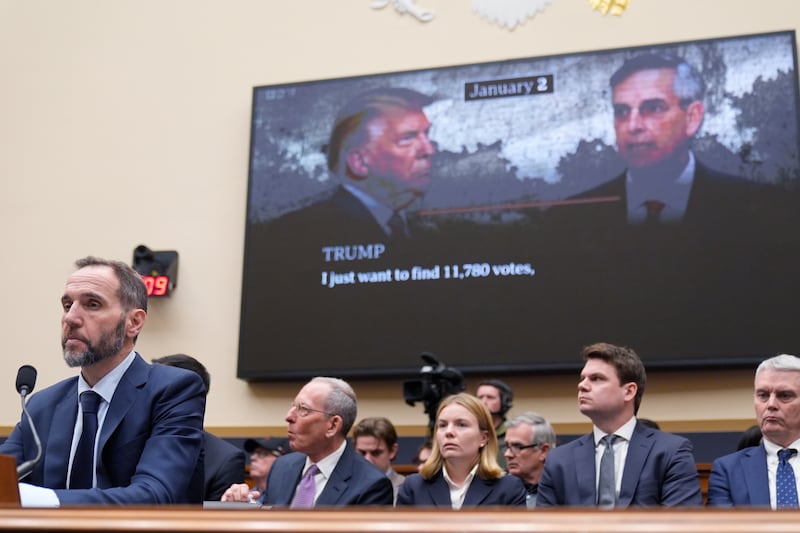
Smith was first appointed by the Biden Department of Justice to lead a federal investigation into Trump’s alleged involvement in the riot on Jan. 6, 2021, during which thousands of the president’s supporters breached the U.S. Capitol in an attempt to stop the certification of the 2020 election results.
Smith was instructed to investigate the events leading up to the Capitol attack, Trump’s actions during the riot, and the president’s efforts to pressure officials to overturn his electoral loss. Trump was ultimately indicted on several charges by a grand jury, including conspiring to defraud the United States and obstructing an official proceeding.
“Our assessment of the evidence is that [Trump] is the person most responsible for what happened on Jan. 6,” Smith said. “He caused what happened, it was foreseeable to him — and then, when it happened, he tried to exploit it.”
“These crimes were committed for his benefit,” he added. “The attack that happened at the Capitol, part of this case, does not happen without him. The other co-conspirators were doing this for his benefit.”
Republicans have sought to absolve Trump of blame for the attack, with some suggesting it was the failure of the Capitol Police to secure the building or even that FBI agents helped coordinate the attack.

Charges against Trump were later dropped after he was reelected in the 2024 election as federal law states a sitting president cannot be prosecuted.
Smith says Trump would’ve been prosecuted if he wasn’t reelected
However, Smith testified on Thursday that he believed his team had gathered enough evidence that Trump would have been convicted if he wasn’t reelected, including in his second investigation on whether Trump had mishandled classified documents after leaving office the first time. Those charges came about after an FBI raid at Trump’s Mar-a-Lago home in 2022 where thousands of classified materials were found.
Smith said that Trump was charged not because of political motivation but because he “willfully broke the very laws he took an oath to uphold” as sitting president at the time.
“Grand juries in two separate districts reached this conclusion based on his actions as alleged in the indictments they returned,” he said.
“If asked whether to prosecute a former president based on the same facts today, I would do so regardless of whether that president was a Republican or a Democrat,” Smith added. “No one should be above the law in our country, and the law required that he be held to account. So that is what I did.”
Republicans say Smith abused his position
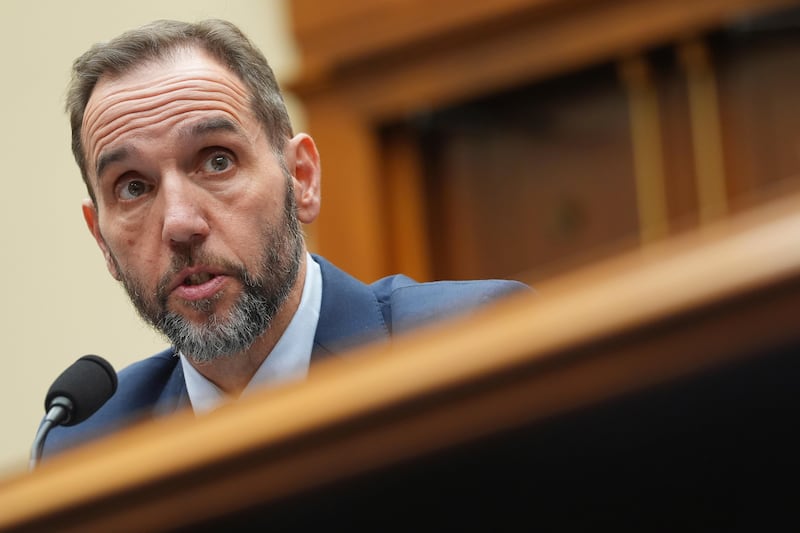
While Smith defended the criminal charges and how he carried out the investigation, Republicans said the former special counsel abused his power.
Rep. Kevin Kiley, R-Calif., said Smith acted without “humility and restraint” as part of his position, instead alleging the former special counsel stretched “criminal statutes beyond the breaking point” in order to charge Trump.
“I see a very different mode of operation — one that sought maximum litigation advantage at every turn,” Kiley said.
Republicans also looked into reports that Smith had collected phone toll records of some of the top congressional Republicans, including former Speaker Kevin McCarthy, without their knowledge during his investigation. Accessing those records, Jordan said, was an act of spying on Biden’s political opponents.
“The guy is second in line to the president,” the Judiciary chairman said. “They know who he called, who called him, when the call took place and how long it lasted. You can pattern an individual’s life.”
Rep. Brandon Gill, R-Texas, engaged in a tense back-and-forth with Smith, during which the freshman Republican accused him of lying to obtain those records.
“At the time you secured those non-disclosure orders, was Speaker McCarthy a flight risk?” Gill asked.
“He was not,” Smith replied.
“Why did your non-disclosure order refer to him as a flight risk?” Gill asked. “It says right here that the court finds reasonable grounds to believe that such disclosure will result in flight from prosecution. I think you are using clearly in reference to speaker McCarthy, and you were using clearly false information to secure a non-disclosure order to hide from speaker McCarthy and from the American people the fact that you were spying on his toll records.”
Smith defended obtaining those records, telling lawmakers that Trump allies were calling lawmakers inside the Capitol to pressure them to overturn the results.
Gill said Smith tried to skirt the Constitution’s speech or debate clause, which gives congressional lawmakers added protections.
Republicans say they were ‘spied on’
Republicans pointed to other materials that Smith had seized as part of his investigation, including the subpoenas he used to obtain phone records of eight senators without their knowledge as part of his investigation into the Jan. 6, 2021, riot.
Those senators include Sens. Lindsey Graham of South Carolina, Bill Hagerty of Tennessee, Josh Hawley of Missouri, Dan Sullivan of Alaska, Tommy Tuberville of Alabama, Ron Johnson of Wisconsin, Cynthia Lummis of Wyoming, and Marsha Blackburn of Tennessee.
Smith defended those calls with the same justification, that the subpoenas were crucial to determine who Trump was contacting during the riot. Smith noted the log only provided information on the times and lengths of the calls and texts but did not disclose any contents of the conversations.
Despite being upset about Smith obtaining those records, House Republicans passed a spending bill on Thursday with a last-minute provision to repeal a law allowing senators to sue any federal department or agency for seizing phone records without prior notice — with each payment coming out to $500,000 per violation. That law was passed in response to Smith’s investigation.
Smith says Trump is seeking revenge
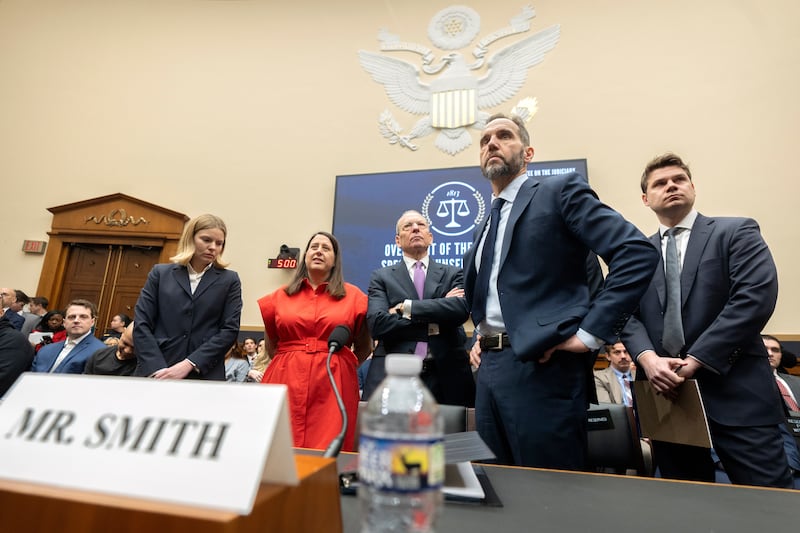
Although Smith offered few new details of his investigations during the hearing on Thursday, the former special counsel accused Trump of using his reclaimed power in the White House to exact “revenge” on federal prosecutors and others who played a part in his criminal investigations.
Smith told lawmakers he expected to be indicted by the Trump administration, claiming Republicans will push for charges because “they’ve been ordered to by the president.”
Smith has previously expressed concerns about testifying before Congress, acknowledging that he could risk prosecution if Republicans think he has lied or intentionally misled their efforts.
“My fear is that we have seen the rule of law function in our country for so long that many of us have come to take it for granted,” Smith said. “The rule of law is not self-executing. It depends on our collective commitment to apply it. It requires dedicated service on behalf of others, especially when that service is difficult and comes with costs.”