


When Utah Rep. Blake Moore first joined the congressional Friends of Denmark Caucus as the group’s co-chairman, he considered it to be mostly ceremonial.
The caucus is largely symbolic, as it doesn’t hold all that much power, mostly serving as a way to convey a lawmaker’s interest on a certain issue and let them host events. There are hundreds of niche groups that exist like this on Capitol Hill, and very rarely do they get thrust into the spotlight.
Then again, not every caucus represents a country directly targeted by the president of the United States.
For Moore, he joined the bipartisan caucus after being approached by a Democratic colleague who he’s worked closely with during his time in Congress. The Republican who represents Utah’s 1st District also has familial ties with the country of Denmark, so he decided to join as “a cool way to honor that tradition.”
“I didn’t expect all of this about Greenland to pop up two months after” becoming co-chair, Moore told the Deseret News in an interview. “President Trump’s always talked about Greenland, but when I became the co-chair, it wasn’t expected there would be a whole bunch of stuff like this going on.”
Moore releases statement on Greenland
Shortly after the U.S. carried out missile strikes against Venezuela and captured the country’s president in early January, President Donald Trump began suggesting publicly that he would next seize the territory of Greenland — citing national security reasons and the strategic location to prevent adversarial actions from Russia or China.
Trump has long mused about taking control of Greenland, with suggestions to do so dating back to his first term. But this time around, it raised eyebrows from several lawmakers in both parties, including Moore.
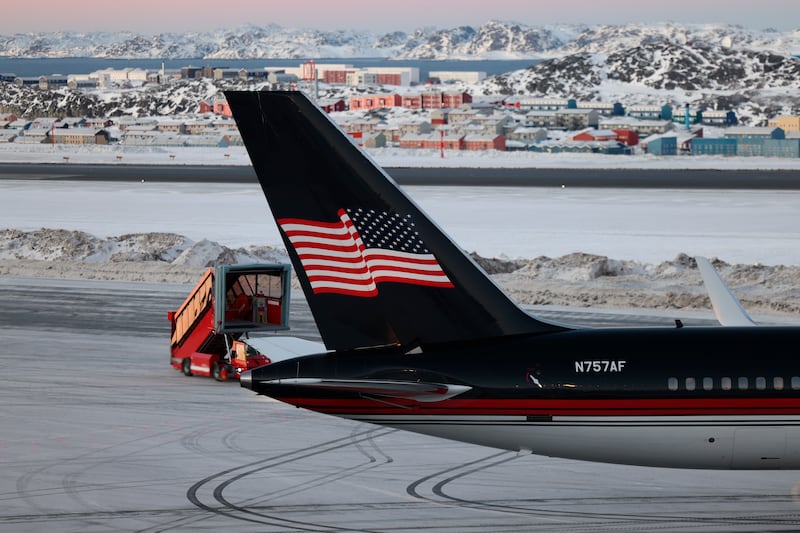
That’s when Moore put out a joint statement with Rep. Steny Hoyer, the Democratic co-chairman of the Friends of Denmark Caucus — catapulting the Utah Republican onto the national stage as the de facto Republican voice on the issue.
“There was a nexus point for me to be the person to make the statement, and that, I think, is what drew the attention to me,” Moore said, who has been cited in national and local outlets as one of the top GOP lawmakers breaking with Trump on the issue. “I put out a very strong statement that says what I think we all agree with. And we heard from a lot of folks back home that they appreciated my clear statement that any type of military intervention against a NATO ally is absurd and not something that we would ever consider. I wanted to reinforce that.”
Moore acknowledged that his position as the fifth-highest ranking member in Republican leadership also contributed to the headlines. But the Utah Republican told the Deseret News that title also put the onus on him to tamp down concerns.
“I know the administration was never going to move on Greenland, but they were saying things here or there of, you know, ‘All options are on the table,’” Moore said. “I knew that was mostly jockeying, so I put out a very strong statement.”
One week after the attack on Venezuela, the Trump administration carried out bipartisan briefings for lawmakers on Capitol Hill to detail the operation and justify the lack of advance notice. Those meetings, Moore said, “cleared up” a lot of confusion about what the administration’s plans might be for Greenland.
During the classified briefing with House members on Jan. 7, Greenland wasn’t mentioned by White House officials or by lawmakers asking questions, Moore previously told the Deseret News.
The Utah Republican met with the Danish ambassador to the United States later that day to reassure them that there was no real threat of U.S. military action in the country.
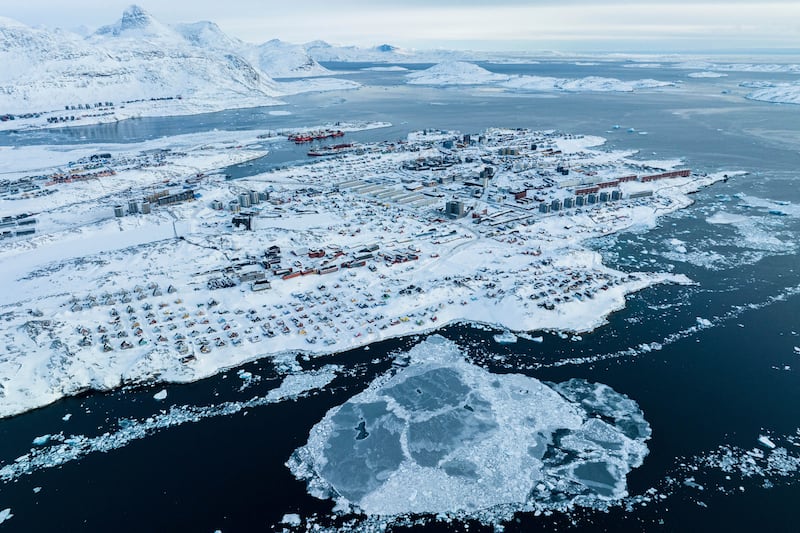
“To the Danes’ credit, they take our relationship very seriously,” Moore told the Deseret News. “Even though I don’t think they were expecting military intervention, I’m confident that they didn’t think there was anything like that was going to come to it. But they take the relationship seriously … and they just wanted to make sure that we steered away from as much of this as possible.”
Trump’s rhetoric escalated last weekend, when the president said he would impose 10% tariffs on seven NATO countries until a deal was made to acquire Greenland, and he hinted at possible military force to do so.
Moore: Davos Greenland deal ‘not needed’
Those tensions began to cool when Trump traveled to Davos, Switzerland, for the World Economic Forum earlier this week, where the president ruled out using the military — and even announced a “framework” for a deal on what to do with the territory.
Details of such a deal are not yet known, but reporting from The New York Times indicates part of the agreement would allow the U.S. to have control over its own military bases, treating them as U.S. territory. Doing so would give the U.S. more control over its military operations.
Moore told the Deseret News the options being floated “could potentially be good” compared to earlier suggestions to use military force or purchasing the entire territory from Denmark.
“But,” he added, “I go back to my original statement: It’s not needed.”

In his initial joint statement with Hoyer, Moore made clear that Danish officials have long cooperated with the U.S. when it comes to deploying forces or building missile defense systems. Dedicating resources to obtain what Denmark has already given access to would be unnecessary, he said.
“It doesn’t cost us anything, per se. Like we don’t have to own Greenland to be able to help secure the region,” Moore said. “I don’t want to sound too flippant, but you know, when you’re getting the milk for free, you don’t have to buy the cow.”
Moore’s defense extended to other NATO countries during Trump’s remarks this week, especially when the president questioned whether the North Atlantic Treaty Organization would protect the U.S. if needed — suggesting the alliance had stayed “a little off the front lines” during the conflict in Afghanistan.
Moore told the Deseret News he was frustrated with that characterization, noting he disagrees with any “narrative that NATO allies, in particular Denmark, merely paid lip service to the U.S. military campaign in Afghanistan and didn’t put themselves in harm’s way.”
“This is not true. Afghanistan was, at its core, a NATO mission because the entire alliance recognized the threat of radical Islamic terrorism to their security and their way of life,” Moore said. “While individual NATO countries had varying levels of involvement, the Danish Armed Forces suffered the highest per-capita casualty rate of any NATO member and joined us for risky missions in places like Helmund Province. Commentary like this is not reflective of the sacrifices made by these fallen soldiers, nor is it respectful to their families.”
Moving forward, Moore said he would be keeping an eye on the developments of Trump’s framework, pointing to his strong relationship with the White House as an advantage. Although Moore acknowledges he has no negotiating power in his role as the caucus co-chairman, he said he would push for transparency as things unfold.
“All I’m going to be able to do is share perspective on what the reality is,” he said. “We have the best opportunity to deter Russian aggression as well as Chinese expansionism through the belt road. The best way to deter that is strong partnerships with allies from Europe, Australia, Asia. There’s so much more to be gained by good, strong partnerships that serve our interests really well.”