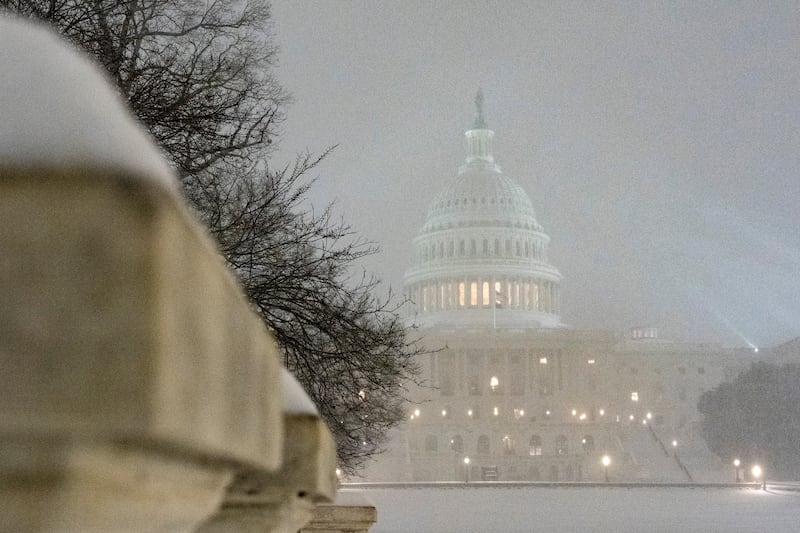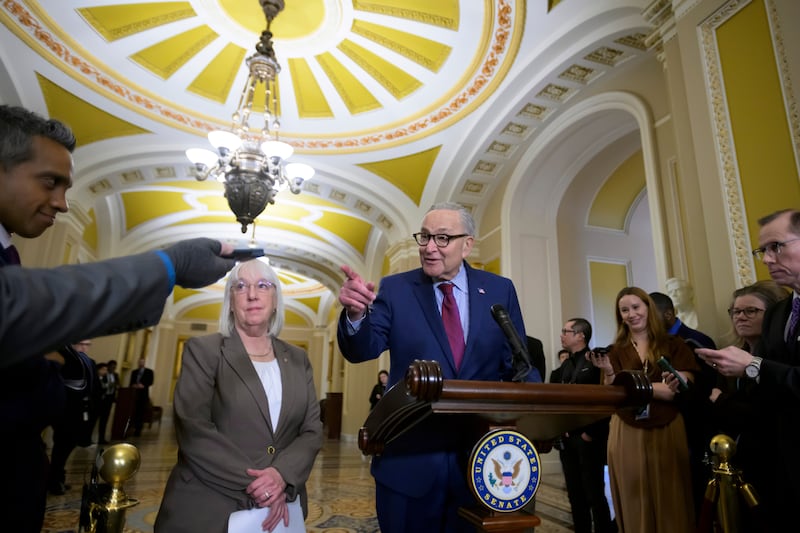

A majority of Senate Democrats say they won’t vote to fund Immigration and Customs Enforcement in the latest spending package, increasing the risk of a partial government shutdown later this week.
The Senate is expected to consider the final government funding package sometime this week that contains the six remaining appropriations bills for the 2026 fiscal year. But after federal immigration officers fatally shot a man in Minneapolis over the weekend, Democrats are pushing to remove the Department of Homeland Security portion.
“Senate Democrats will not allow the current DHS funding bill to move forward,” Senate Minority Leader Chuck Schumer, D-N.Y., said in a statement. “Senate Republicans must work with Democrats to advance the other five funding bills while we work to rewrite the DHS bill. This is (the) best course of action, and the American people are on our side.”
Schumer’s stance heightens the risk of a partial government shutdown, which is scheduled to take effect at the end of this week if a spending deal is not passed.
It’s not yet clear how Senate Republicans will move forward. The majority party will need at least seven Democrats to help advance the funding bill, and nearly all Democratic senators have publicly said they will not vote in favor.
Although Democrats have called on Senate Majority Leader John Thune, R-S.D., to remove the DHS portion from the full package, Thune’s office on Monday said it would keep the six-bill tranche intact. The Senate will instead move forward with plans to vote on the package as-is.
Even if Thune changes course, stripping DHS from the bill would require House approval — and the lower chamber is not scheduled to return to Washington until February.
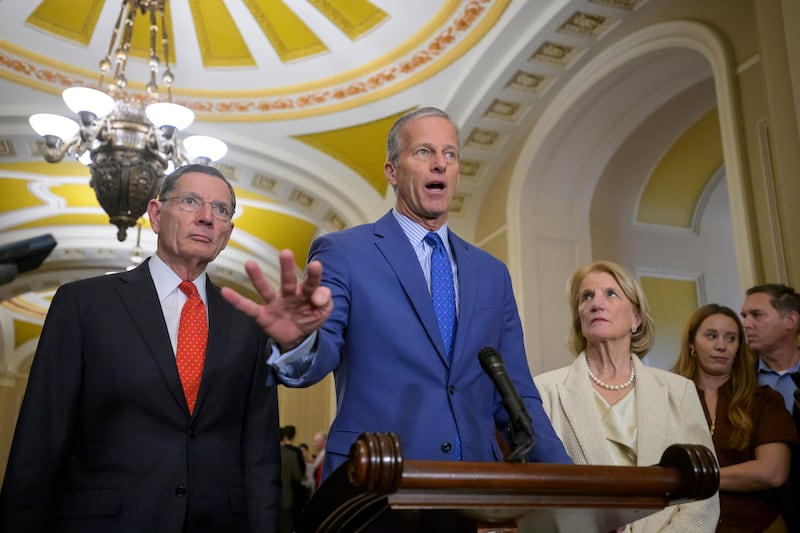
Meanwhile, other Republican senators such as Mike Lee, R-Utah, are refusing to remove DHS funding from the spending bill.
“We’re not defunding ICE,” Lee said in a post on X. “Live with it.”
“I’ll oppose any effort to defund DHS,” Lee said in another post. “Every Republican should.”
Sen. John Curtis, R-Utah, released a statement responding to the shooting over the weekend, calling for “empathy, restraint, and respect for the rule of law.” He did not say whether the incident would change his vote on the spending bill.
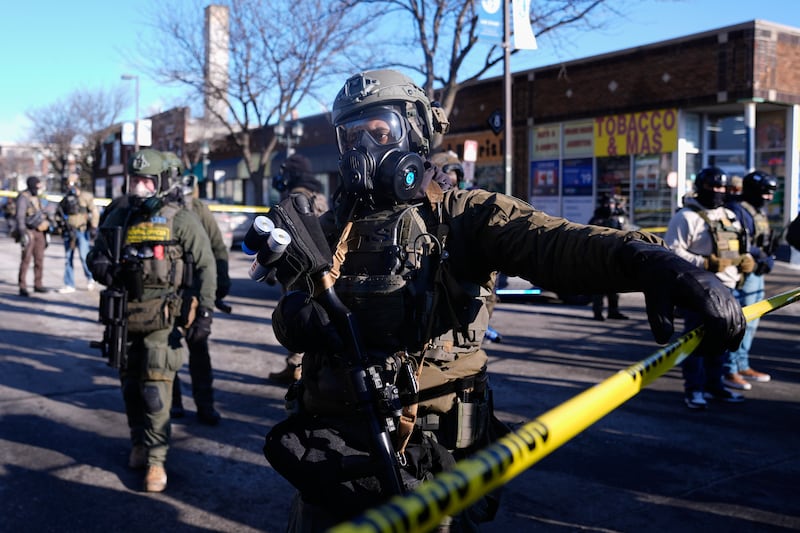
The growing opposition from Democrats comes after an altercation in Minneapolis on Saturday, during which an immigration officer shot and killed a man who was filming in the streets. DHS officers say the man was armed and the agents believed he was a threat, while Democrats argue he did not brandish a weapon. Details of the shooting at this point are limited.
The objection also marks a stark reversal for some Democrats, including those who helped negotiate the spending bill who now say they will vote against it.
“Federal agents cannot murder people in broad daylight and face zero consequences. I will NOT support the DHS bill as it stands,” Sen. Patty Murray, the top Democratic appropriator, said in a statement. “The DHS bill needs to be split off from the larger funding package before the Senate — Republicans must work with us to do that. I will continue fighting to rein in DHS and ICE.”
Nearly every Senate Democrat who has weighed in has said they will not vote to advance the spending package. All but Sen. John Fetterman, D-Penn., who said he would like to strip DHS from the final package — but would still vote against a shutdown if that wasn’t possible.
What’s in the Department of Homeland Security spending bill?
The DHS appropriations bill allocates a total of $64.4 billion to the agency, including $513 million to maintain 22,000 Border Patrol agents and another $3.8 billion for custody and deportation operations. But the package also includes increased guardrails on the department, especially for ICE and Border Patrol officers.
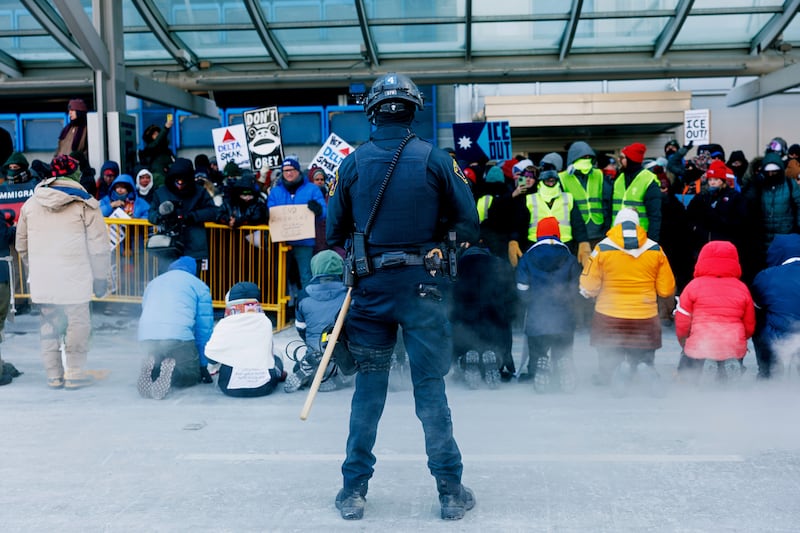
The spending bill provides $20 million that “must be used” to purchase body cameras for ICE and Border Patrol officials while conducting operations as well as another $2 million to provide de-escalation training for agents who regularly interact with the public.
The bill mandates that the Federal Law Enforcement Training Centers brief Congress on the training curriculum and engagement standards given to immigration officers as well as quarterly reports on the number of personnel trained on the de-escalation tactics.
However, Democrats now say that language is not strong enough and are demanding to reopen negotiations.