
Democrats officially released their list of demands for reforms to Immigration and Customs Enforcement, pressing Republicans to implement the changes in the pending spending package ahead of the government shutdown deadline at the end of this week.
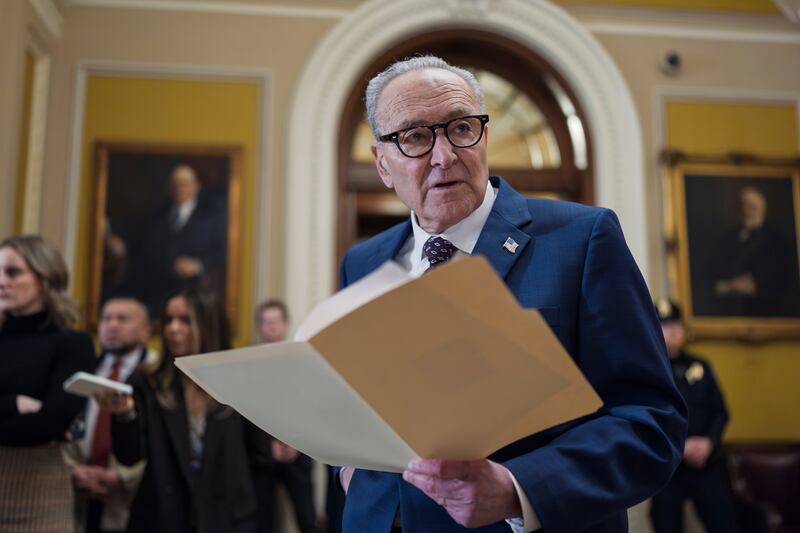
Senate Minority Leader Chuck Schumer, D-N.Y., laid out the three main demands after a closed-door meeting with Senate Democrats on Wednesday just one day before the Senate is scheduled to vote on the final spending package to fund the federal government. The finalized set of demands reflects what individual Democrats have floated publicly in recent days but had not yet been formally compiled.
“Senate Democrats are united on a set of commonsense and necessary policy goals that we need to rein in ICE and end the violence,” Schumer said. “These are commonsense reforms, ones that Americans know and expect from law enforcement. If Republicans refuse to support them, they are choosing chaos over order.”
The three legislative proposals include tightened rules on requiring warrants for arrests; prohibiting agents from wearing masks and requiring them to wear body cameras and identification; and implementing a universal code of conduct for use-of-force policies that reflect what is required by state and local law enforcement officials.
“No more anonymous agents, no more secret operatives,” Schumer said.
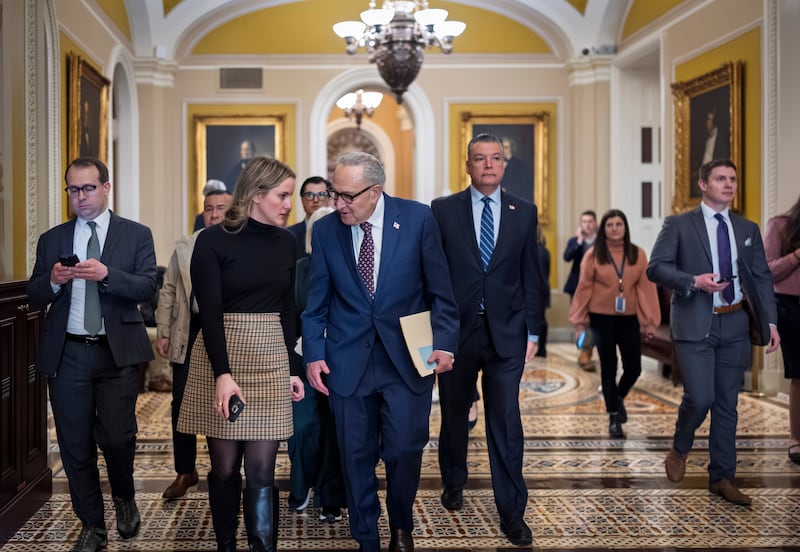
The demands are backed by Senate Democratic leadership, including Sen. Patty Murray, the top Democratic appropriator who helped negotiate the current funding package. Just last week, Murray urged her Democratic colleagues to support the spending bills — later reversing course to say she won’t vote for the legislation after a federal immigration officer shot and killed a man in Minnesota last weekend.
“We cannot ignore what happened on Saturday, especially after what we have seen over the last four months,” Murray said.
Murray suggested that Senate Majority Leader John Thune, R-S.D., remove the Department of Homeland Security portion of the larger funding bill to renegotiate its contents while still ensuring the other five spending bills can be approved, reducing the impact of a potential partial shutdown.
“We need members on both sides to sit down and include critical reforms and accountability measures within the DHS bill, and there is no reason whatsoever for that work to hold up the other five bills and cause a shutdown,” Murray said. “We do this all the time. We move forward on the areas where we have agreement. We roll up our sleeves and keep negotiating on other issues. And it’s not like the House can’t come back and vote on this too.”
Republicans split on path forward

Senate Republicans met for an hourslong lunch meeting on Wednesday to discuss a path forward on the government funding package after a handful of party members came out to say they’d support removing DHS from the larger bill.
Sens. Mike Rounds and John Kennedy, both on the Senate Appropriations Committee, said they’d be open to removing the DHS portion of the package in order to avoid a shutdown, although they acknowledged the challenges of accomplishing that before the deadline. The government is scheduled to enter a partial funding lapse at 12:01 a.m. on Saturday.
“Is it my first preference? No, my first preference is to go ahead and pass all the bills,” Kennedy told reporters on Wednesday. “I say, let’s go in and pass what we can … and then we can sit down and talk about Homeland Security.”
But Thune has not committed to splitting the package apart, noting the short timeline and procedural hurdles.
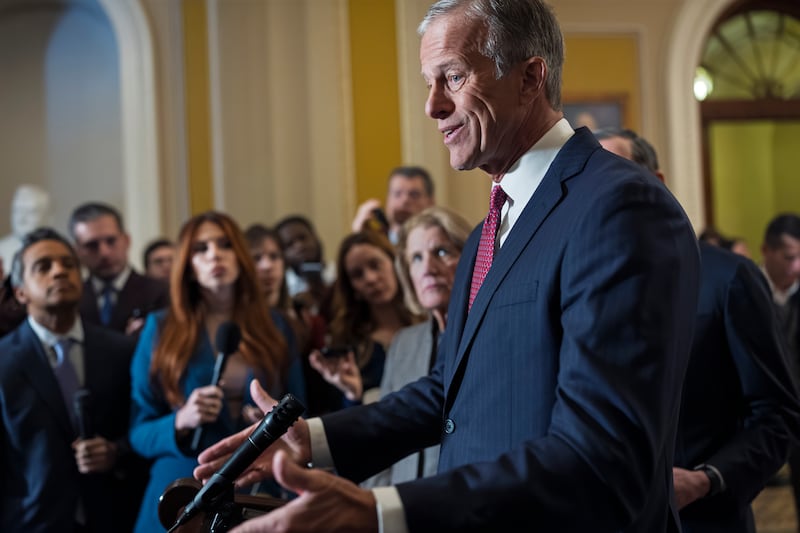
In order to remove the bill from the larger package, the Senate would need unanimous approval from both parties to expedite the process. However, some Republicans such as Sen. Mike Lee of Utah say they’ll reject any effort to strip DHS from the package, meaning that process could take days to complete.
Even if the Senate did manage to remove DHS ahead of the deadline, it would need to transfer the bills back to the House for approval before it can go to President Donald Trump’s desk for his signature. But the House is not scheduled to return until next week, and GOP leaders have no plans to return early.
Meanwhile, some Republican conservatives have already hinted they would not swallow substantial changes without getting something in return.
Another option is to replace the DHS funding language with a short-term extension paired with the other five spending bills, which may be more palatable to Senate Republicans who do not want to see a lapse in funding. Thune did not rule that option out on Wednesday, telling reporters he “will reserve optionality to consider that.”
Still, that plan could still run into the same procedural hurdles that extend any votes past the shutdown deadline.
Meanwhile, the White House is pressing lawmakers to pass the funding package as-is, arguing the demands for reforms “with a government funding deadline just 48 hours away is a demand for a partial government shutdown.”
“This bipartisan appropriations package, which the Democrats agreed to and have now walked away from, has been under negotiation for more than a month,” a White House official told the Deseret News in a statement. “The White House urges congressional Democrats not to subject the country to another debilitating government shutdown.”
The White House invited Senate Democrats to a “listening session” on Wednesday, but a senior administration official told the Deseret News that meeting was declined by Democratic leaders. That meeting was requested before Democrats unveiled their demands.
Even if the DHS component was removed from the package and lapses in funding, it would leave several federal agencies that are unrelated to border security without a budget. Those include FEMA, the Transportation Security Administration, the U.S. Coast Guard, and more.