
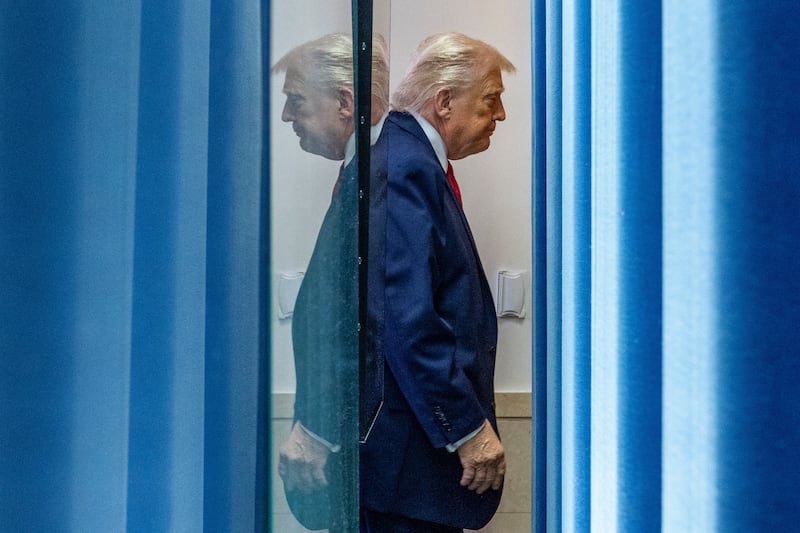

As President Donald Trump begins his second year in office, both supporters and critics are analyzing recent months of political tumult.
From threats to use force to take Greenland, to lethal confrontations in Minnesota involving Immigration and Customs Enforcement and protesters, New York Times contributing opinion writer E.J. Dionne Jr. believes “something snapped in the country.”
“We are in the midst of a rupture, not a transition,” Canadian Prime Minister Mark Carney said at the World Economic Forum last Tuesday
Trump is at the center of so many fast-changing events. Below are excerpts from five different observers — both supporters and critics — analyzing the president against the backdrop of recent events.
Thomas Friedman: Trump ‘simply does not share the values’ of prior presidents
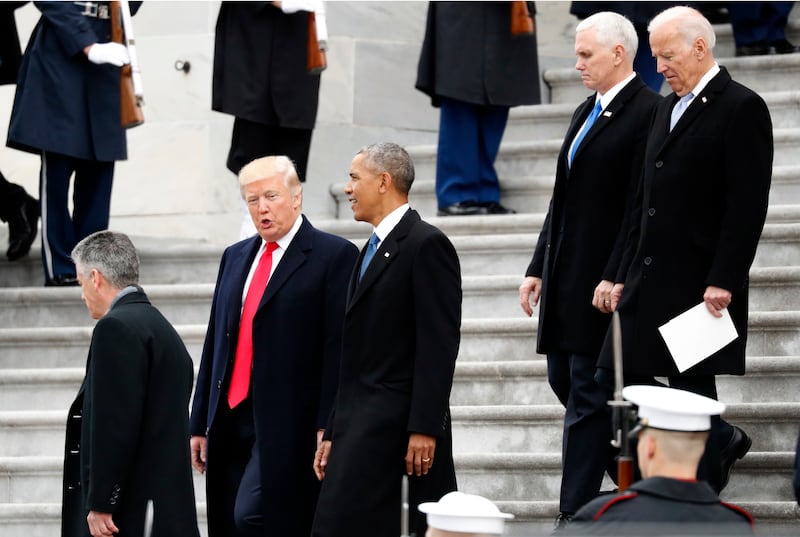
Dismissing the many conspiracy theories about Trump in relation to Russia, New York Times columnist Thomas Friedman said he’s come to believe something worse. Namely, “that Trump, in his heart and soul, simply does not share the values of every other American president since World War II when it comes to what America’s role in the world should be and must be.”
Friedman described long believing that the president “has an utterly warped value set that is not grounded in any of our founding documents, but simply favors any leader who is strong, no matter what he does with that strength; any leader who is rich and can thus enrich Trump, no matter what the leader does with that money or how he got it; and any leader who will flatter him, no matter how obviously phony that flattery is.”
That’s how Friedman explains Trump’s affinity for Russian President Vladimir Putin over Ukrainian President Volodymyr Zelenskyy. But it’s the recent message Trump wrote to Norway’s prime minister, Jonas Gahr Støre, that the columnist highlights: “Considering your Country decided not to give me the Nobel Peace Prize for having stopped 8 Wars PLUS, I no longer feel an obligation to think purely of Peace.”
“Read those words over slowly,” Friedman wrote. “They don’t scream ‘America first.’ They scream ‘Me first.’”
“It would be one thing for Trump to say he is ready to break up NATO over a matter of geopolitical principle affecting the security of the American people,” he continued. “What is unimaginable to me is an American president so obsessed with winning a Nobel Peace Prize to feed his ego … that he would be ready to wreck the whole NATO alliance and trading system with Europe because he did not get it.”
Niall Ferguson wishes critics ‘had a little more humility’
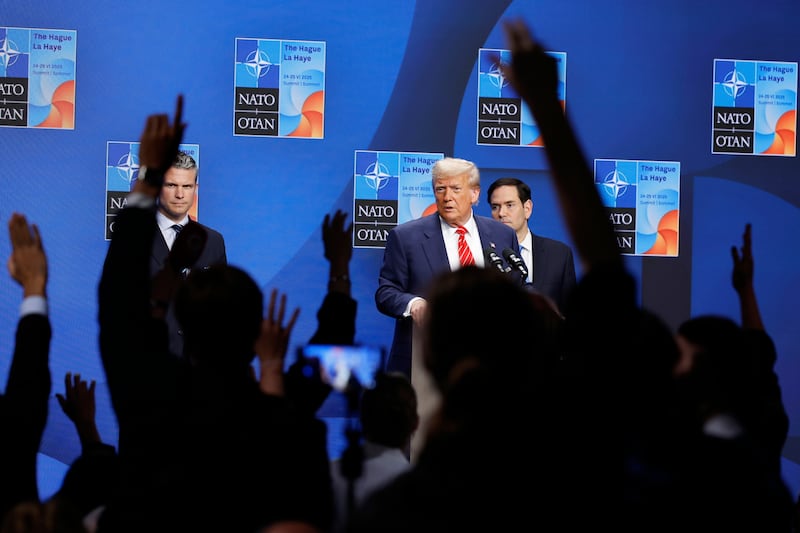
“I never cease to be amazed by the high conviction of so many journalists and academic commentators in their judgments on President Donald Trump,” wrote Ferguson, a senior fellow at Stanford’s Hoover Institution who also teaches at Harvard, in the Free Press. “They remain unshakeably convinced of their own superior intelligence.”
A few days earlier, Ferguson made the case for “how Trump won Davos.” Noting a Wall Street Journal analysis of 6,000 social media posts by the president that found he bluffs half the time, Ferguson suggested Greenland threats had been bluster, strategically distracting others who might interfere with other American priorities.
Ferguson argued that critics tend to neglect the real successes, mentioning Trump’s deal that got the Israeli hostages out of Gaza and the strikes on Iran’s nuclear facilities as evidence that this administration might get “some things right.”
But instead, he says, critics “unthinkingly assume that everything Trump does is bad” — cautioning against becoming overly “wedded” to political judgments “with partisan fanaticism.”
“I think it’s possible that what the Trump administration is doing will work,” he concludes — highlighting positive economic signs, evidence of America’s principal enemies becoming weaker and America’s principal allies “get(ting) their acts together” — while expressing hope at prospects for peace both in the Middle East and in Ukraine, where he says “we are closer to it today than at any time since 2022.”
“I just wish people who love to opine had a little more humility,” he concludes, instead of going in for “schoolyard taunts.”
David Brooks: ‘One man’s damaged psyche’
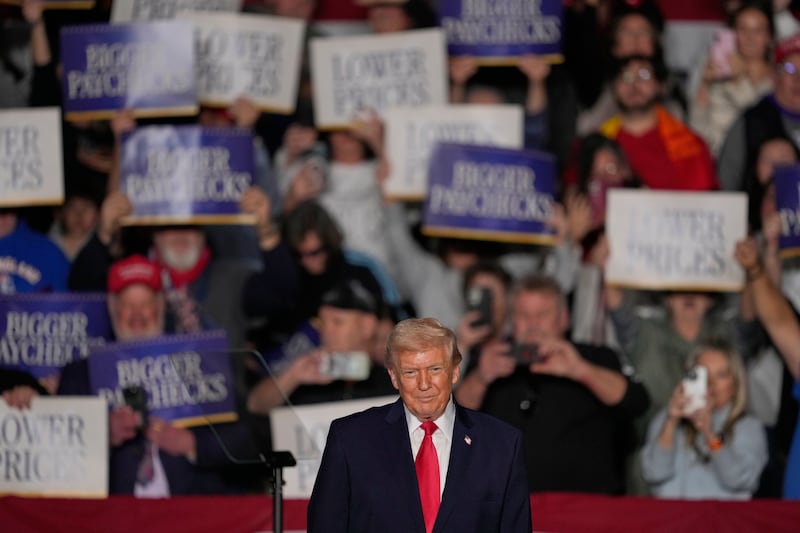
In a recent New York Times column, David Brooks cited Minneapolis’ police chief, Brian O’Hara, saying recently that what he fears most is the “moment where it all explodes.”
Admitting he shared this worry himself, the columnist wrote: “If you follow the trajectory of events, it’s pretty clear that we’re headed toward some kind of crackup.”
Alongside the unravelings of the postwar international order, the democratic order and domestic tranquility, Brooks argued, is “the unraveling of President Donald Trump’s mind.”
“Every president I’ve ever covered gets more full of himself the longer he remains in office,” Brooks acknowledged. “And when you start out with Trump-level self-regard, the effect is grandiosity, entitlement, lack of empathy and ferocious overreaction to perceived slights.”
Brooks continued: “History does not record many cases in which a power-mad leader careening toward tyranny suddenly regained his senses and became more moderate. On the contrary, the normal course of the disease is toward ever-accelerating deterioration and debauchery.”
“Narcissists,” Brooks wrote, ”sometimes get worse with age, as their remaining inhibitions fall away. The effect is bound to be profound when the narcissist happens to be president of the United States.”
“No, I don’t think America is headed toward anything like a Rome-style collapse,” Brooks wrote by way of reassurance. “Our institutions are too strong, and our people, deep down, still have the same democratic values.”
“But I do know that events are being propelled by one man’s damaged psyche.”
Marco Rubio: Trump is securing American interests overseas
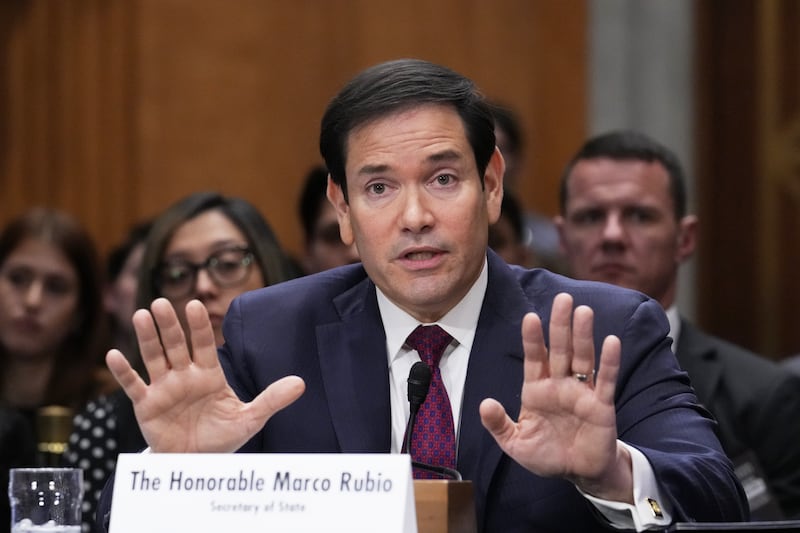
Like some Republican lawmakers have rallied behind the president’s actions on foreign policy, Secretary of State Marco Rubio has been an articulate voice highlighting the rationale for the president’s international actions.
“This is the Western Hemisphere. This is where we live — and we’re not going to allow the Western Hemisphere to be a base of operation for adversaries, competitors and rivals of the United States,” Rubio said in a Jan. 4 NBC broadcast.
About the operation in Venezuela, Rubio also stated separately, “Maduro is not just an indicted drug trafficker; he was an illegitimate president. He was not the head of state. I continue to see these media reports referring to him as ‘President Maduro’ and the ‘head of state.’ He was not the head of state.”
Noting that the Biden administration had a $25 million reward for Maduro’s capture, Rubio highlighted on NBC’s “Meet the Press” Trump’s willingness to do “something about it.”
“No more drug trafficking. No more Iran, Hezbollah presence there. No more using the oil industry to enrich all our adversaries around the world,” Rubio emphasized. “We want Venezuela to move in a certain direction because not only do we think it’s good for the people of Venezuela, it’s in our national interest.”
Jonathan Rauch: It’s time to talk about fascism
A year ago, Rauch suggested that Trump’s governing approach resembled patrimonialism, “in which the state is treated as the personal property and family business of the leader.”
Events of the last year have changed his mind.
“What originally looked like an effort to make the government his personal plaything” has drifted toward something more serious, Rauch writes in a new Atlantic article. When considering the “totality” of Trump’s actions, Rauch writes, something begins to emerge in the “constellation of characteristics.”
Previously, Rauch admits to eschewing the term “fascism” as overused and ill-defined.
“But now, the resemblances are too many and too strong to deny,” he writes.
As a scholar, Rauch is hardly prone to excess. And like Brooks, Rauch writes with confidence about the overall health and future of the U.S. democratic system, with courts, states and media that remain independent.

The patterns that led Rauch to his conclusion can be grouped into a few broad themes.
First, aggression. Second, undermining of democratic structure. And third, undermining truth-seeking institutions through attacks on news media, attacking private entities (law firms, universities and corporations) and the co-option of Christianity.
A fourth theme is particular messages about identity. Along with a pattern of “leader aggrandizement,” Rauch highlights the continuing dehumanization of rivals and of immigrants in the U.S. — while emphasizing more of a “blood-and-soil nationalism,” centered on prioritizing whom some on the MAGA right call “heritage Americans.”
Rauch also highlighted a theme of “politics as war,” which he said contrasts with the Madisonian view of “politics as a social negotiation in which different factions, interests and ideology come to agreement.” He hearkened back to the early-20th-century German political theorist Carl Schmitt, who “saw politics as a state of war between enemies, neither of which can understand the other and both of which feel existentially threatened — and only one of which can win.”