



- Census projections show Republican leaning states gaining at least eight votes in the electoral college.
- Almost all of the top states by population growth, including Utah, voted for Trump in the 2024 election.
- Conservative Americans are more than 30 percentage points more likely than liberals to have children.
The U.S. Census Bureau 2025 population estimates predict a shift in political representation that benefits traditionally Republican states, potentially influencing control of Congress and the winner of the White House for years to come.
Growth trends from the past year could result in red states picking up 8-10 U.S. House seats following the 2030 census, according to two projections published on Tuesday by the American Redistricting Project and Carnegie Mellon University professor Jonathan Cervas.
Both projections identify the same seven states as likely to gain seats in 2030: Texas would gain four seats, Florida would gain two to four, Arizona would gain one, Georgia would gain one, Idaho would gain one, North Carolina would gain one and Utah would gain one.
President Donald Trump won each of these states in 2024.
The projection means red-leaning swing states, like Arizona, Georgia and North Carolina, would each gain a vote in the presidential electoral college, which is calculated by combining the total number of U.S. senators and representatives representing a state.
Midwestern swing states like Minnesota, Pennsylvania and Wisconsin would each lose a seat. So would five solidly Democratic states: California would lose four, New York would lose one to two, Illinois would lose one to two, Oregon would lose one and Rhode Island would lose one.
“If this projection holds, the 2030 Census will net 8-9 electoral votes to traditionally red states away from blue states,” GOP pollster Frank Luntz posted on X. “That means Republican candidates next decade could win presidential elections without needing any of the WI-MI-PA trifecta states.”
As states, including Utah, battle over the redistricting of congressional districts, Republicans could see a boost in representation in the U.S. House and an advantage for GOP presidential candidates in the general election starting in 2032.

Population growth driving political shift
The projections released on Tuesday are consistent with one published last year by the progressive Brennan Center, largely reflecting a trend in which conservative states are experiencing higher birth rates, in-migration and population growth.
The same Census report found that eight out of the 10 states with the largest population growth between 2024-2025 voted Republican in 2024. Half of the states with the greatest population growth were among the states projected to gain House seats.
Here are the top 10 states by percent growth between 2024-2025:
- South Carolina — 1.5%
- Idaho — 1.4%
- North Carolina — 1.3%
- Texas — 1.2%
- Utah — 1.0%
- Delaware — 0.9%
- Washington — 0.9%
- Arizona — 0.9%
- Nevada — 0.9%
- Tennessee — 0.9%
In addition to having booming economies, many of these states have higher birth rates, as well.
An analysis published in 2024 by The Institute for Family Studies found that counties where less than 25% of voters supported Trump had a median fertility rate of 1.31 child births per woman. In counties where more than 75% voted for Trump that rose to 1.84.
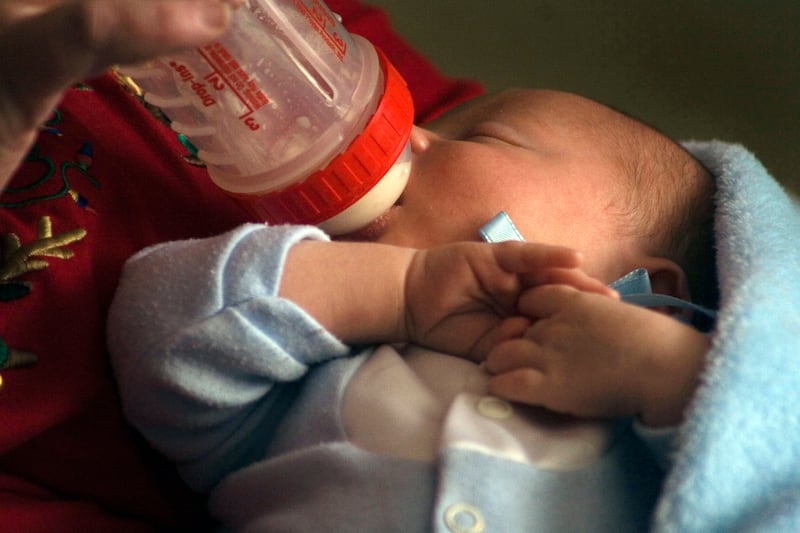
“That might not sound like much, but across time, it’s a big difference,” wrote Wall Street Journal columnist Louise Perry on Wednesday, referencing a study of twin siblings published in 2020 showing that “political ideology is about 40% heritable.”
Another Family Studies report, published in November, found that in the 2020s, 71% of young conservative women reported being parents, compared to just 40% of liberal women between ages 25 and 35. That is a 31-percentage point gap between conservatives and liberals.
Not only are they more likely to have children, conservative women — and men — are also increasingly more likely to get married than self-identified liberals.
The same Family Studies report found that 60% of young conservative women, and 57% of young conservative men, reported ever having been married. Just 44% of young liberal women, and 35% of young liberal men, reported ever having been married.
“Of course, children do sometimes diverge from or react against their parents’ politics,” Perry wrote. “But in general, expect the partisan fertility gap to usher in a U.S. that is more conservative. In fact, the whole of the developed world is on track to become more conservative.”