

In 2020, a $200 million campaign led by Big Tech in Silicon Valley reshaped voter sentiment in a matter of weeks.
Dubbed the most expensive ballot measure campaign in U.S. history, Proposition 22 created exceptions for app-based delivery companies like Uber and Lyft to classify their drivers as independent contractors instead of employees.
This allowed the tech companies to skirt California’s labor laws for minimum wage, overtime and unemployment insurance. “The public was very much in favor” of these benefits for gig workers, which is why voters passed a 2019 law, AB 5, that forced delivery apps to categorize their drivers as employees in the first place,” said Rob Lalka, a business and management professor at Tulane University, to the Deseret News.
He explored this case in his 2024 book “The Venture Alchemists: How Big Tech Turned Profits into Power.”
Prop 22, which largely overturned AB 5, ultimately passed. One of the campaign tactics for Prop 22 was sending push notifications to voters’ phones, saying their Uber ride would cost more if Prop 22 didn’t pass.
“That actually changed people’s minds in a short amount of time,” said Lalka. And this change came through the heavy involvement of the big players in Silicon Valley.
Now six years later, California may be on the cusp of another proposition disliked by many in the tech industry — a proposed wealth tax on billionaires.
The proposition would impose a retroactive one-time 5% wealth tax on those residents with a net worth of over $1 billion. A wealth tax is on a person’s assets, as compared to an income tax, which is levied on how much a person brings home in a given year.
As many in Silicon Valley prepare to try to keep the proposition off the ballot, a group of millionaires is advocating for the ultra wealthy to pay their fair share.
As the Deseret News reported, if California approves the wealth tax and a person owns property or a business worth more than $1 billion but they don’t have enough cash or liquid assets on hand, they would have to sell some of their assets in order to pay their tax bill.
“It’s still in the early innings,” said Lalka. The proposal still needs about 900,000 signatures to qualify.
California’s billionaire tax and the populist right
From experts like Lalka to California Gov. Gavin Newsom, the consensus is that worries about the billionaire tax in California are overblown, especially since the proposed measure is far from getting on the ballot in November just yet.
But this discourse struck a nerve, morphing into a political fight or even a litmus test of where people stand on the debate to tax the rich, said Lalka.
Taxing the wealthy is a populist sentiment embraced by many on the political left — as well as some on the political right.
Although populist policies are associated with the MAGA movement, tax policy has become a “double-edged sword” for the Trump administration, Lalka said, as more billionaires throw their support behind President Donald Trump, putting him in a difficult spot with some of his supporters.
This proposal to tax billionaires would affect some of the most successful venture capitalists and entrepreneurs of all time, including David Sacks and Peter Thiel, PayPal veterans, and Elon Musk, the owner of X and CEO of Tesla and SpaceX, the professor said.
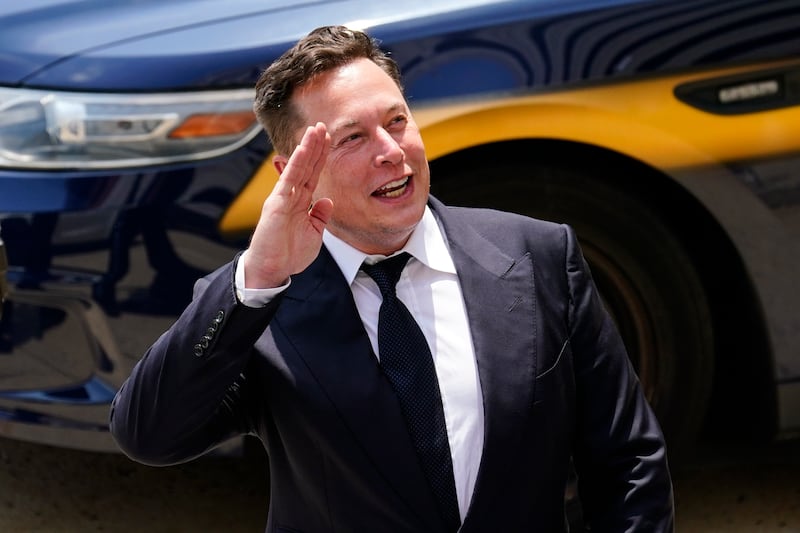
David Sacks, a longtime venture capitalist who serves as Trump’s crypto czar, said he is considering an exit from the Golden State, home to more than 200 billionaires because of the proposal.
“After blindly funding the Left for years, Silicon Valley is finally realizing what time it is. Dinner time,” Sacks wrote in a post on X recently. “And they’re on the menu.”
In another more recent post on New Year’s Day, Sacks wrote, “As a response to socialism, Miami will replace NYC as the finance capital and Austin will replace SF as the tech capital.”
Tech giants like Sacks or Musk aren’t part of “a monolith that supports one political ideology,” said Lalka.
In 2016, Sacks donated to Hillary Clinton’s presidential campaign and Gavin Newsom’s first campaign for California governor the following year.
But his views toward the Democratic Party soured during the pandemic as he grew critical of Newsom and even backed the recall effort against the California governor in 2021.
Musk’s relationship with Newsom also fractured around the time of the COVID-19 pandemic.
Silicon Valley companies and executives have time and again worked hand in hand with the federal government. Under the Biden administration, Facebook, Twitter and YouTube suppressed posts that questioned vaccines, social distancing or other pandemic-era regulations as well as the controversial story about Hunter Biden’s laptop.
At the 2025 inauguration in Washington, D.C., the people who shared the stage with Trump and Vice President JD Vance included many Big Tech CEOs, like Sacks, Musk, Meta’s Mark Zuckerberg and Amazon’s Jeff Bezos.
Newsom’s argument on the billionaire tax
Newsom has said he doesn’t think the billionaire tax is a good idea for his state, arguing that it will incentivize those with capital to leave.
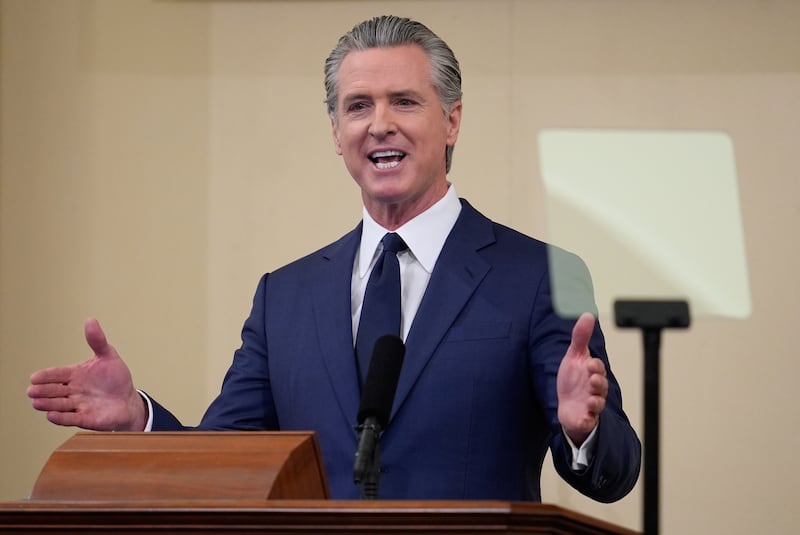
“The impacts are very real — not just substantive economic impacts in terms of the revenue but startups and the indirect impacts of people questioning long-term commitments,” Newsom said.
Lalka noted that Newsom’s argument is simple. “This is one state versus 49,” he said. This tax would force California to lose business to Florida and other competitors.
“I think Newsom is evaluating what this means for his state and the future of Big Tech companies and investors versus the broader picture. If that were a national conversation,” it would be a different story,” said Lalka.
Millionaires come out in favor of higher taxes
As many billionaires are expected to work behind the scenes — or out in the open — against the ballot measure, a group of millionaires is uniting behind the scenes to “preserve Democratic capitalism.”
Scott Ellis, a Silicon Valley resident and former McKinsey consultant, is a member of the Patriotic Millionaires group.
“I really do believe in the overall vision that wealthy folks like myself should be really proud to pay more and proud to contribute back to the country,” said Ellis. “It’s not a crazy thing to be rich and patriotic.”
For him, society is focused on the wrong conversation.
He said he thinks the country should think about wealth differently, starting with a defining question: What does it mean to be financially successful?
“Look, if you say the goal of financial success is that you never have to work again, good job. You won capitalism,” said Ellis.
This can take the shape of a nice home, fancy cars, college funds for children, vacations and an overall luxurious lifestyle. If you do the math, about $30 million would be enough to afford that kind of life, said Ellis.
“Once people get beyond that, you get to a point where you really can’t improve your life that much, and then wealth becomes power, and people use that power to influence elections and undermine capitalism,” said Ellis.
In his support for Prop 22, he said he isn’t worried when the likes of Sacks threaten to leave California because of the billionaire tax. He touted California as a desirable place to live that will continue to attract talent and businesses.
“I would like to live in a society where people and companies can and should move when they wish for whatever reason,” he said.
“Silicon Valley is still here. Everybody else got snow but it’s sunny and 65 degrees for me today. We’ve got the beach, the redwoods and Disneyland. … I’m sure there will be lots of people excited to live here.”
Utah knows plenty about charitable giving
Former U.S. Sen. Mitt Romney, R-Utah, in an opinion article for The New York Times from December 2025, proclaimed it was time “for rich people like me to pay more.”

“I believe in free enterprise and I believe all Americans should be able to strive for financial success,” said Romney. “But we have reached a point where any mix of solutions to our nation’s economic problems is going to involve having the wealthiest Americans contribute more.”
The former Utah senator pointed to the urgency of addressing the national debt, which has risen to $38 trillion.
While Romney didn’t endorse a wealth tax, a form of tax many oppose, he did endorse increasing taxes to help save Social Security.
But Romney has always modeled doing more than his fair share.
In 2011, Romney, who was running for president, and his wife Ann made headlines for donating nearly 30% of their income, about $4 million, to charity. That same year, Barack and Michelle Obama gave away more than $170,000 and President Joe and Jill Biden gave away a little more than $5,000.
Romney’s principles align with the Utah way. The Beehive State has a reputation for being one of the most charitable states in the U.S., often ranking high in categories like “Volunteering & Service” along with “Charitable Giving.
Jeffery noted that these values Utah champions “are American values.”
“It isn’t just about that wonderful dry snow up in Park City — it’s a lot more than that.”