



- A new Deseret News/Hinckley Institute poll found just 28% of Utah voters have a great deal or a fair amount of confidence in Congress.
- Utahns have more confidence in state-level institutions with 46% for governor, 46% for Legislature and 55% for state Supreme Court.
- Utah voters appear to still have 10-20 percentage points more confidence in federal political institutions than the rest of the country.
The theme of America’s 250th birthday might be distrust.
A decades-long trend of falling confidence in government institutions continues with no sign of slowing as economic uncertainty, elite failure and technological changes fuel suspicion toward elected and appointed officials.
A new Deseret News/Hinckley Institute of Politics poll finds similar trends in Utah, but with some signs of hope that state-level institutions and strong communities could point to a way out of spiraling skepticism.
“The good news is it’s a cultural issue we can potentially repair and work on together,” said Samuel Abrams, a scholar at the American Enterprise Institute. “Utah is one of the few places ... where we can have these conversations.”
As the American experiment reaches a quarter of a millennium, it faces new catalysts of distrust. But, according to Abrams, the solutions remain grounded in the civic principles that made the U.S. strong from the start.
How deep is Utahns’ distrust?

Utahns have less confidence in federal political institutions than state ones, according to the Deseret News/Hinckley Institute poll conducted by Morning Consult between March 6-10 among 800 voters. It has a margin of error of +/- 3 percentage points.
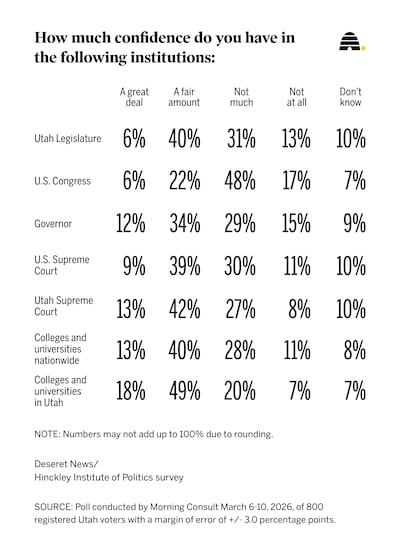
Just 28% of Utah voters said they have a great deal or a fair amount of confidence in Congress. The largest share, making up 48%, said they did not have much confidence in federal lawmakers and 17% said they were not at all confident.
The state Legislature, on the other hand, has the confidence of 46% of voters, with 44% expressing little to no confidence. This was the same percentage voters gave to the institution of the governor. The poll did not ask about the presidency.
Landscape worker Mike Nielsen said the best description of his confidence in federal government is “not at all” because a struggling economy produces wages that do not keep up, even as leaders spend resources on foreign wars.
“It’s really hard to survive,” Nielsen told the Deseret News, explaining that he moved to West Valley City from his home of Sanpete County because “there’s no jobs down there.”
Utahns also have more confidence in state courts: 48% of Utah voters expressed a great deal or a fair amount of confidence in the U.S. Supreme Court, while 55% said the same of their confidence toward Utah’s highest court.
Voters indicated that the most trustworthy institution out of the options given were colleges and universities. A majority of voters expressed confidence in higher education nationwide and two-thirds expressed confidence about Utah universities.

Trust along party lines
Confidence was largely mediated by partisanship.
Utah Democrats had 41 percentage points less confidence in the governor, 34 points less confidence in the Legislature, 32 points less in the U.S. Supreme Court, 23 points less in Congress and 22 points less in the Utah Supreme Court.
The political institutions included in the poll are currently all controlled by Republicans or Republican appointees. But Democrats had more confidence than Republican voters in colleges and universities, especially at the national level.
Recent events have led to a drop in confidence among voters on both sides of the aisle, especially among younger ones, Lindon resident Isaiah Hardman said.
On Friday, Hardman, age 25, filed to run as a Republican challenger to U.S. Rep. Mike Kennedy in the newly drawn 4th Congressional District. He said he feels the greatest distrust toward Congress.
After excitedly voting for President Donald Trump in 2024, Hardman said he expected Congress and the White House to work together to prevent new wars and eliminate wasteful spending. Hardman says he has seen the opposite.
“Just the things that I believed were about to change didn’t change,” Hardman told the Deseret News. “I still have belief that we can fix it electorally. I still have hope in that. But I see hope deteriorating with a lot of the young people that I know.”
Hardman has more trust in state government. But he said that persistent problems with housing affordability and a shrinking Great Salt Lake have negatively impacted his confidence that leaders are making the necessary hard decisions.
Is Utah a confidence outlier?

Since Trump entered office, the economic and foreign policy concerns that shaped the administration of former president Joe Biden took a sharp turn, but in a similarly unstable direction.
Coming on the heels of extended inflation exacerbated by Biden’s massive COVID-19 stimulus spending, Trump announced a world-historic tariff regime that created uncertain trade conditions for U.S. businesses.
The percentage of Americans who give the economy a good grade sits below 30%, according to Pew Research. A 2025 CNBC poll found 73% of Americans said they felt “financially stressed,” citing inflation, interest rates and tariffs.
Meanwhile, a series of polls find a majority of voters oppose U.S. military action in Iran. Republicans tend to be much more supportive, including in Utah. The Deseret News/Hinckley Institute poll found that 46% of Utah voters — including 74% of Republicans — support the war and 39% oppose it.
Utah State University student Emma Wilson told the Deseret News nothing has hurt her confidence in federal government more than the perception that actions by the president and Congress are making global tensions worse not better.
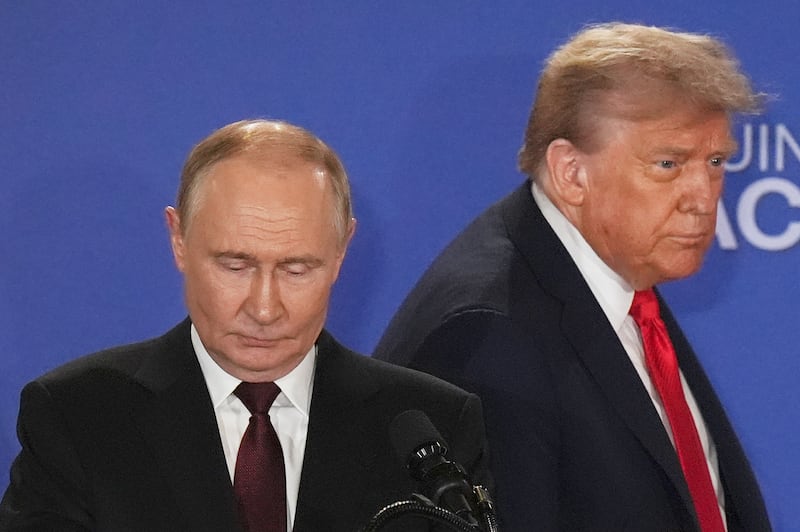
“A lot of the interactions they’re having with some of the other countries around the world that we used to be allies with and then also ones that we didn’t have as great a relationship with really seems like we’re straining all ties,” Wilson said.
However, Utahns appear to have maintained more confidence in institutions than the rest of the country.
The share of Utahns who expressed a “great deal” or “a fair amount” of confidence in Congress, the U.S. Supreme Court and higher education is 10-20 points larger than the share of Americans identified in Gallup‘s annual poll.
So, what’s the solution?
America’s crisis of confidence has many sources, according to Abrams, including a media ecosystem that pairs constant coverage with internet algorithms that reward vitriol.
Polarizing issues and demonizing rhetoric are nothing new — just take a look at some of the pamphlets between early U.S. political figures, Abrams said. But the pace of trust-destroying tactics in the 21st century is unprecedented.
“We’re in a terrible, terrible feedback loop,” he said.
A lack of trust has created a demand for excessive transparency of the legislative process, preventing healthy negotiations, and elevating politicians who use the spotlight to turn their position into an online platform, Abrams said.
To pull out of the spiral Abrams said there must be “profiles in courage,” lawmakers willing to put their political careers on the line to repeatedly call for unity; a return to political norms and the practice of building consensus through conversation.
As someone who has centered his reputation on improving political dialogue, Utah Gov. Spencer Cox actually saw his approval rating fall from 52% to 47% during the legislative session, the Deseret News/Hinckley Institute poll found.
From February to March, the state Legislature also saw a dip in approval from 49% to 43% as legislators passed major laws to expand the state Supreme Court while passing up opportunities to overhaul elections and immigration policy.
But Abrams is convinced the problem underpinning the decline in confidence is actually bottom-up, requiring regular Americans to “put their phone down,” talk to their neighbors, attend church and find the common ground that exists next door.