A plurality of Utahns are supportive of the war in Iran, but they also believe President Donald Trump should have gone to Congress before launching strikes, according to a new Deseret News/Hinckley Institute of Politics poll conducted by Morning Consult.
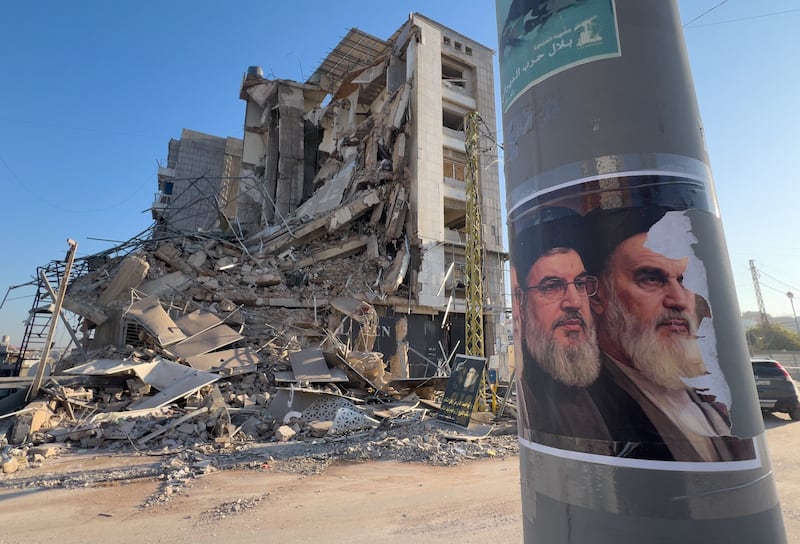
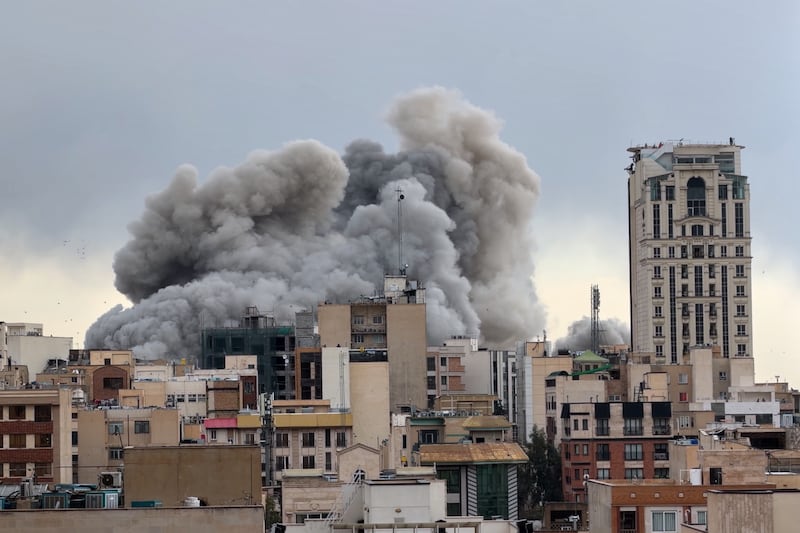
It’s almost been two weeks since the United States and Israel launched an operation in Iran, killing the ayatollah and other military leaders in strikes, and hitting nuclear weapons facilities among other military sites. Iran immediately retaliated, hitting U.S. bases and other infrastructure across the Middle East and blocking oil transport in the Strait of Hormuz.
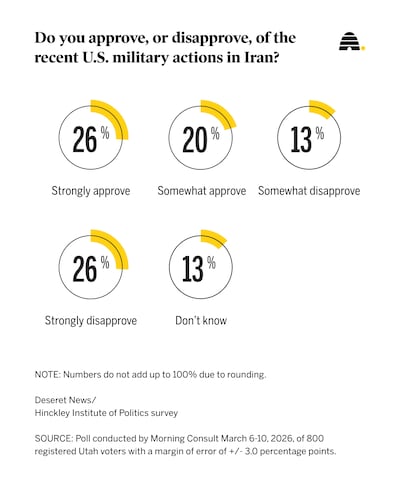
The new survey shows 46% of Utahns either somewhat or strongly approve of the military action, while 39% either somewhat or strongly disapprove of it. About 13% say they don’t know how to feel about it.
The age group that was most supportive of the war was Utahns age 45-64 and the least supportive was the youngest generation of respondents, 18-34.
Utah Republicans were much more likely to support the war, with 74% strongly or somewhat approving of the military action. Only 10% of Democrats and 30% of independent voters in Utah said the same.
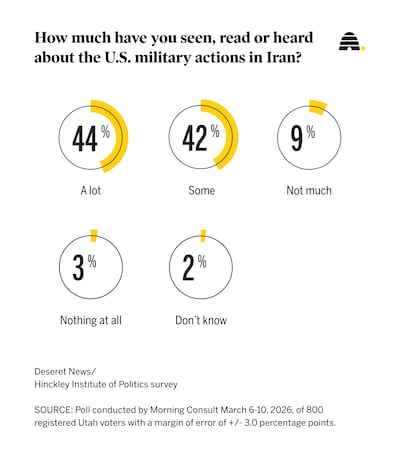
Most Utah voters say they have either seen, read or heard “a lot” (44%) or “some” (42%) about the U.S. military action in Iran.
Respondents were also asked if Trump should have notified Congress before starting the strikes, regardless of whether they support the military operation or not.
In a message announcing the strikes early on Feb. 28, as they began, Trump said the Iranian regime was seeking to kill Americans.
“That often happens in war, but we’re doing this not for now. We’re doing this for the future, and it is a noble mission,” he said.
Only Congress can declare or authorize war, but Trump and other presidents have been able to launch military action by citing the Constitution’s Article II, which says the commander in chief has the power to direct military actions necessary to advance American national interests abroad.
The survey found that a large number of Utahns believe Trump should have gotten approval from Congress before launching the attacks.
Among respondents, 38% said yes, he “definitely” should have gotten congressional approval, while 16% said he “probably” should have. Another 18% of respondents said no, he “probably” didn’t need to, and 18% said he “definitely” didn’t need to. About 10% said they didn’t know if Trump should have gone to Congress first.
Jason Perry, director of the Hinckley Institute, pointed out the desire to include Congress in the decision crossed party lines.
“What’s interesting in the poll is that this view isn’t limited to one party,” he said. “Democrats overwhelmingly support congressional involvement, but a majority of independents and even a share of Republicans agree. That suggests many Utah voters still want Congress to have a role in decisions about military action, even when a president says there was not time.”
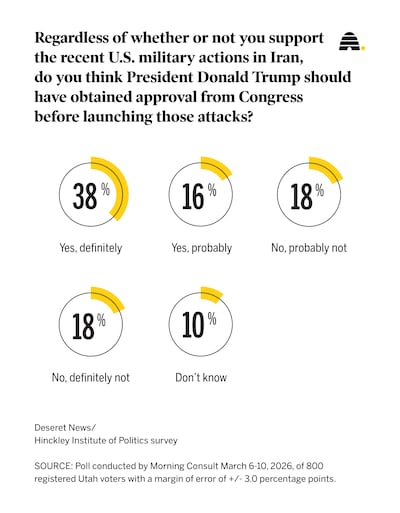
While support for the president going to Congress was strong across most age groups, younger respondents were more critical of Trump’s decision not to go to lawmakers first.
Democrats and independents were far more critical of his decision than Republican respondents, the survey found. Only 32% of Republicans said he definitely or probably should have gone to Congress first, compared to 67% of independents and 88% of Democrats.
Trump’s job approval among Utahns holds steady
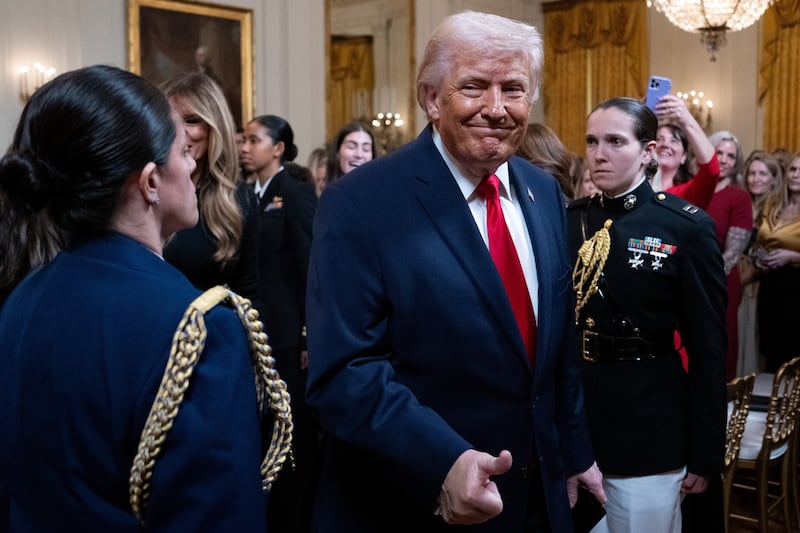
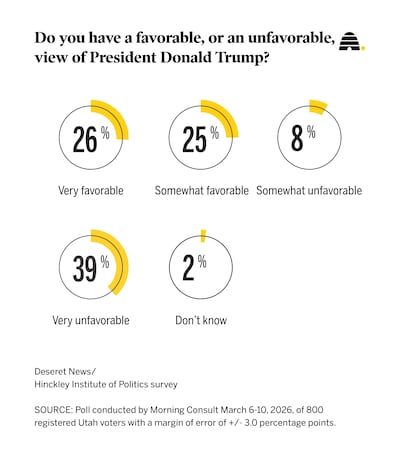
That also holds true with Trump’s approval rating among Utahns. He earns a 51% approval rating among all adults. Among Republicans in the state, he’s very popular, with 84% either strongly or somewhat approving of how he’s performing.
Jeremy Pope, a political science professor at Brigham Young University, said it’s not surprising that more Republicans are saying Trump didn’t need to go to Congress first.
“You’ll certainly hear partisans say that they’ll be supportive of presidential actions that their party’s president is. So, whether it’s (Joe) Biden pushing student loans on his own or Trump extending tariff rates, people of the president’s party want to be supportive,” he said.
He also noted that he hasn’t seen a “compelling case” for why the Trump administration couldn’t have gotten approval from Congress before the strikes began. Lawmakers were reportedly only briefed on the matter hours before they started and when the plan was already in motion.
“The public just has a lot more faith in Congress making decisions than it does the president, because people have this baseline instinct that Congress represents them, and that for whatever reason, presidents don’t represent them and shouldn’t make decisions on their own,” Pope continued.
Pope argued that if the administration would have gone to Congress, there likely would have been more obstacles to and debate about the operation. Trump even noted that Vice President JD Vance was hesitant and they shared different views about the strikes.
Republican lawmakers, Pope noted, are backing the president in public, but behind closed doors, they are likely expressing concern.
Pope said that the data shows Utahns’ potential nervousness about the quick and unexplained action. Trump didn’t make his case before the American people about why the military operation was necessary at this exact moment until after the war began.
The survey is a snapshot of public opinion in Utah, and Pope said that while the state is divided over its support for the military operation, in the past, public opinion on military engagements tends to drop with time.
It’s unclear how long the operation in Iran will last. Trump has repeatedly said that it’s going better than anticipated, while he floated a four- to six-week timeline, but also wants to be sure the operation is complete as well as aid in the process of finding a new leader.
“I’m having trouble imagining it will get more popular, but you know, the world is big and strange,” Pope said. “I’m not going to say it’s impossible, I just think it’s unlikely.”
The survey was conducted March 6-10 among 800 registered voters in Utah. It has a margin of error of plus or minus 3 percentage points.