

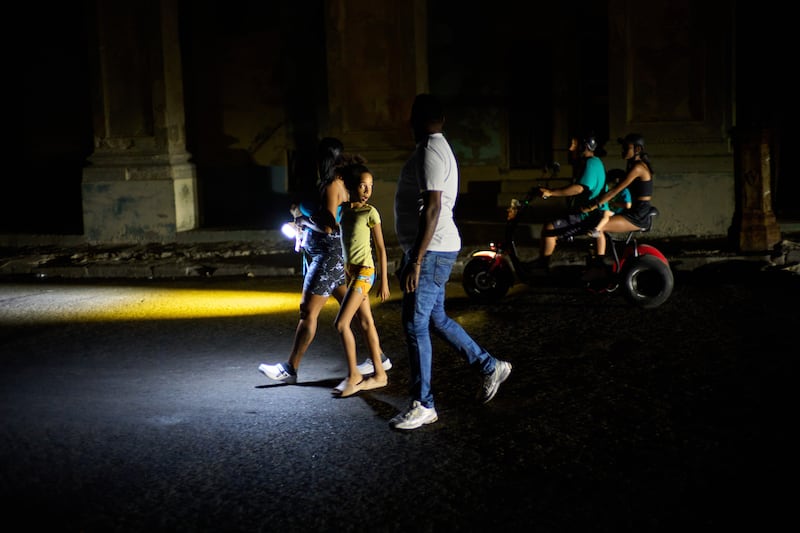

Cuban officials confirmed an island-wide blackout on Monday as the country’s economic crisis worsens and President Donald Trump says he is focused on the country.
Cuban President Miguel Díaz-Canel said late last week that his administration was holding talks with the United States after a monthslong pressure campaign. He said they would try to find “solutions” to the “bilateral differences between our two nations,” but it’s unclear what could come out of the discussions.
The communist country’s relationship with the United States has been difficult for decades. Here’s what we know about the situation:
Cuba’s blackout
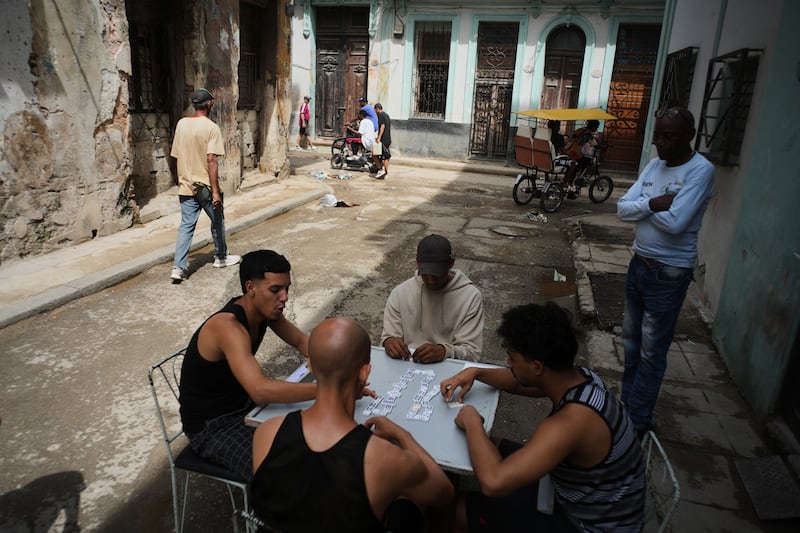
In 2024, Cuba experienced a nationwide blackout after having its electrical grid collapse. It’s been a recurring problem for the country since then.
During the Cold War, Cuba aligned itself with the Soviet Union, and agreed to allow the Soviets to deploy nuclear missiles on the island, leading to a U.S. naval blockade and standoff. Previously, the U.S. had severed diplomatic ties with Cuba and placed a trade embargo against the country, restricting commercial and economic activity.
Relations slightly improved during former President Barack Obama’s second term but they have since deteriorated due to disagreements over domestic and foreign policy. On his first day back in office, Trump reinstated Cuba’s designation as a state sponsor of terrorism, reversing the Biden administration’s decision to ease sanctions.
During the U.S. military operation in Venezuela earlier this year, more than 30 Cuban troops were killed. Once the U.S. had more control over Venezuelan leadership, after former President Nicolás Maduro was captured, Trump said Venezuelan oil would no longer be sent to Cuba and urged the country to make a deal.
Trump also signed an executive order declaring a national emergency in late January, which allowed the U.S. to impose tariffs on countries that continued to supply Cuba with oil. As a result, there have been widespread electricity outages and disruptions to other services in Cuba. The United Nations criticized the move and warned that there could be humanitarian impacts.
Rubio leading talks
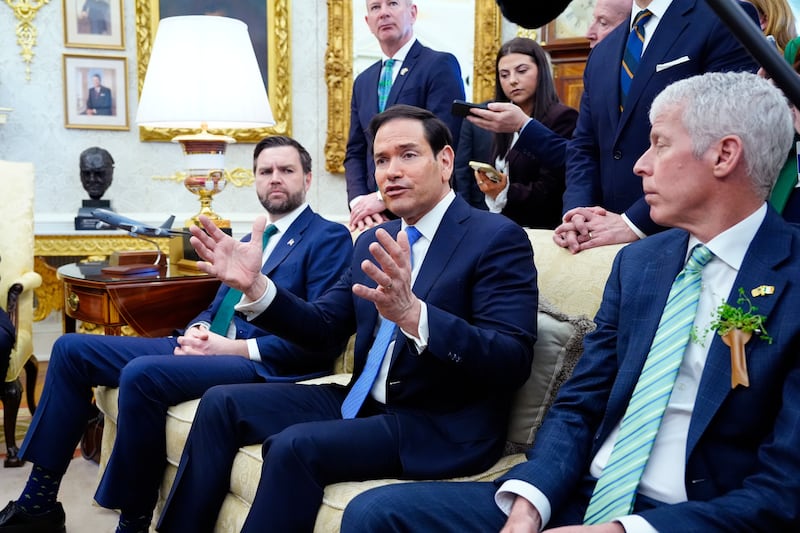
Secretary of State Marco Rubio has been leading discussions with Cuba and he has plans to make major changes in the country. Rubio is the son of Cuban immigrants who he said had to flee the country amid Fidel Castro’s rise to power.
U.S. officials confirmed to The Associated Press in recent days that Rubio and top aides met at the end of February with the grandson of former Cuban leader Raúl Castro. They said Rubio also secretly met with Raúl Guillermo Rodríguez Castro on Feb. 25.
Trump confirmed Friday that the U.S. was in discussions with Cuban officials and raised the possibility of a “friendly takeover.”
“The Cuban government is talking with us,” he said. “They have no money. They have no anything right now. But they’re talking to us, and maybe we’ll have a friendly takeover of Cuba.”
On Monday, the president said he believes that he will have “the honor of taking Cuba.”
“I mean, whether I free it, take it. Think I can do anything I want with it. You want to know the truth,” he said.
During a Tuesday press conference with Trump and Irish Taoiseach Micheál Martin, the president was asked about where things stood with Cuba.
“Well, Cuba, right now, is in very bad shape. They’re talking to Marco (Rubio) and we’ll be doing something with Cuba very soon. We’re really focused on this,” he said of Iran. “But we’re dealing with Cuba.”
He passed the baton to Rubio, who said Cuba has an economy that doesn’t work “in a political and government system they can’t fix.”
“So, they’ve got some big decisions to make over there,” Rubio said.
Rubio was also asked about potentially easing the trade embargo placed on Cuba if the country were to change political leadership. He declined to provide details about the discussions and reiterated that Cuba has a “non-functional economy.”