
The U.S. military launched a high-stakes rescue mission into Iran over the weekend to rescue one of the service members who ejected from a jet after it was hit by Iranian fire.
On Friday, an F-15 fighter jet was shot down in the southwestern part of Iran. The two men ejected and the pilot was rescued that same day. The second crew member, a weapons system officer, was separated from the pilot and stranded in the region.
The stranded officer was in a remote mountain area for several days after sustaining injuries. The military had to race to his aid as well as keep Iran from knowing where he was located.
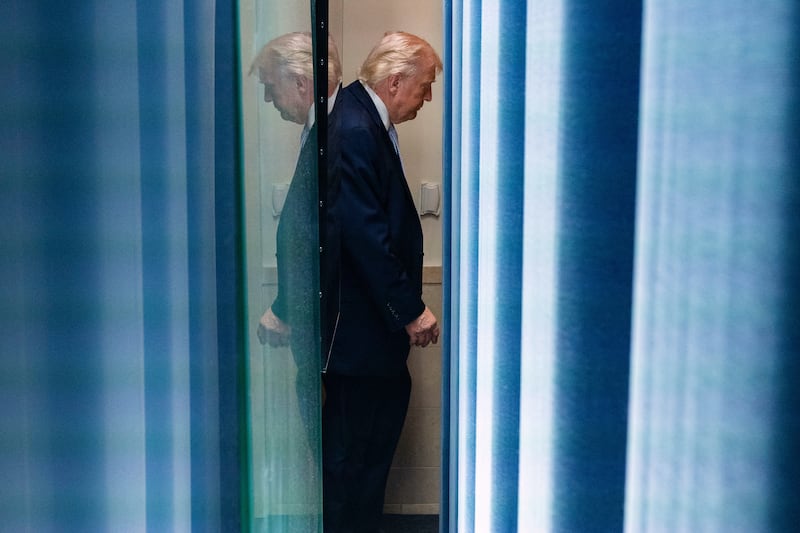
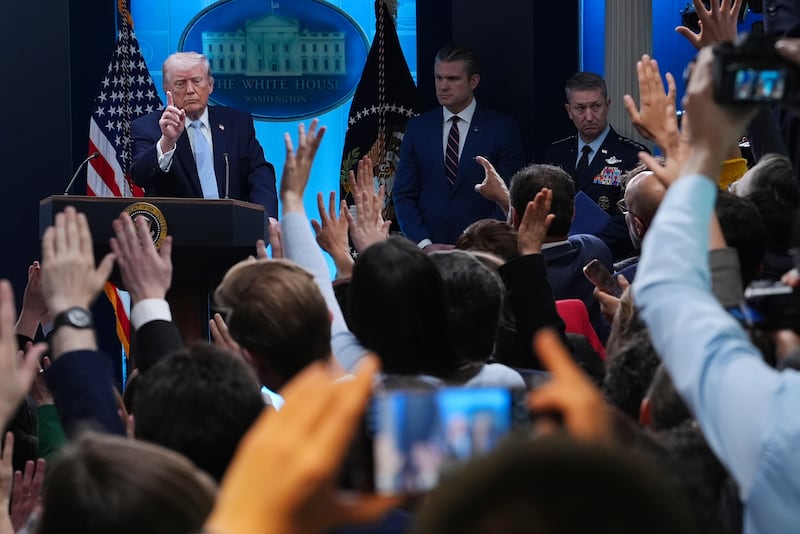
President Donald Trump, along with Defense Secretary Pete Hegseth, CIA director John Ratcliffe and Joint Chiefs of Staff general Dan Caine, detailed the mission and celebrated the successful rescue mission in the White House on Monday.
The CIA was able to track the officer’s exact location and the Pentagon had to rule out that the signal was not a trap from Iran. Trump said his location was monitored around the clock.
The president said the stranded crew member was “injured quite badly” but followed his training procedure to get far away from the crash site, where Iran would likely be looking. He climbed through “treacherous mountain terrain” and treated his own wounds. He then contacted American forces by transmitting his location and waited in a mountain crevice for his rescue.
During the rescue operation, U.S. officials tried to throw Iran off in multiple ways. The CIA falsely spread word that the man had already been found and the military sent many aircraft to the region, hoping to divert Iranian attention away from his location. Strikes were also conducted to keep Iranian troops away from the area.
The rescue mission included 155 aircraft, including four bombers, 64 fighters, 48 refueling tankers, 13 rescue aircraft and more, Trump said Monday. Navy SEAL Team 6 commandos were the ones to ultimately extract the officer from the mountainous region.
“We had seven different locations where they thought, and they were very confused,” Trump said, adding, “So, in a breathtaking show of skill and precision, lethality and force, America’s military descended on the area, the real area, engaged the enemy, rescued the stranded officer, destroyed all threats and exited Iranian territory while taking no casualties of any kind.”
However, as part of the mission, transport planes were unable to take off from a hastily-made runway they had used to land due to the soil. The U.S. later destroyed the planes to keep them out of Iranian hands.
Iran’s joint military command claimed that it had struck two U.S. Black Hawk helicopters that were part of the rescue mission. A person familiar with the situation said the helicopters were able to navigate to a safe airspace, but its unclear if the crew were injured, since Trump shared online that it was remarkable that no injuries occurred, PBS News reported.
There were 21 aircraft deployed to help with the initial search and rescue on Friday, flying for hours under “very, very heavy enemy fire,” Trump said.
Hegseth, who also delivered remarks, drew a parallel between Easter and the airman’s rescue. He said that the crew member was “hidden in a cave” on Saturday after being shot down on Good Friday. On Easter Sunday, he was “reborn, all home and accounted for.”
Ratcliff said there were “exquisite technologies” that no other country possesses used to locate the officer. He noted that the rescue mission was equivalent to “hunting for a single grain of sand” in the desert.
The U.S. officials noted how important and sensitive the mission was over the weekend and how they had to stay quiet about the details as it unfolded in the region. This could explain why the president did not make public appearances this weekend, staying in Washington and skipping out on Easter church services he was going to attend.
In a post online Sunday, Trump shared “WE GOT HIM” and said the military pulled off the rescue mission. The officer was now “SAFE and SOUND,” the president said, noting that no American warfighter would be left behind.
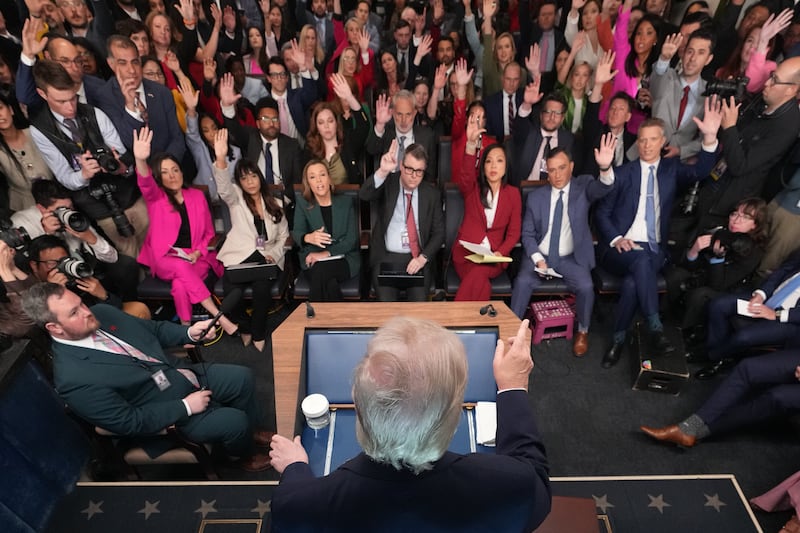
During the press conference on Monday, Trump was asked whether he thinks God approves of what the U.S. is doing in Iran.
“God is good and God wants to see people taken care of,” Trump said. “God doesn’t like what’s happening. I don’t like what’s happening.”
He followed up by pointing out that he has helped broker the end of several conflicts and said he doesn’t like seeing people get killed.
Trump explains ultimatum to Iran
Trump said more strikes would come to civilian infrastructure if Iran doesn’t make a deal by Tuesday evening, and was asked what Iran had to do in order to successfully meet the deadline.
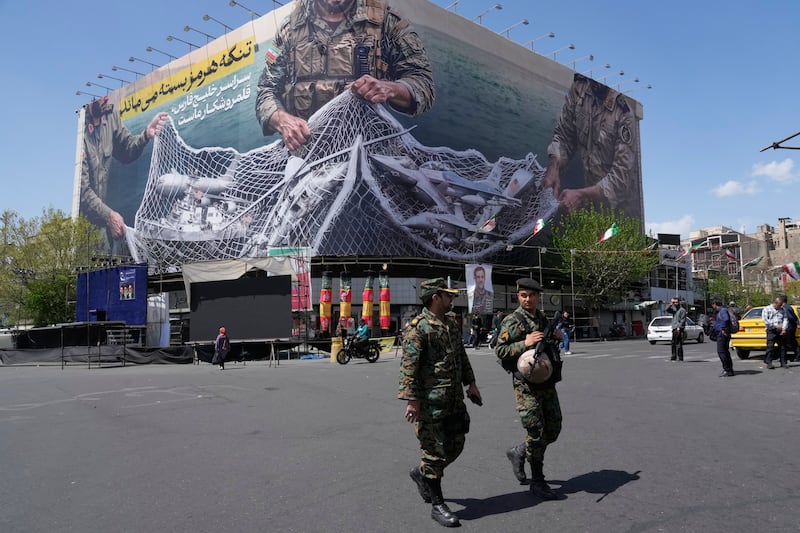
“We have to have a deal that’s acceptable to me, and part of that deal is going to be we want free traffic of oil,” he said of reopening the Hormuz Strait.
Trump said Monday that the new Iranian regime seemed to be negotiating in good faith and he extended the deadline for them to make a deal until Tuesday because he thought it would be inappropriate to have the deadline be a day after Easter.
“We’re giving them ‘til tomorrow, 8:00 Eastern Time, and after that, they’re gonna have no bridges. They’re gonna have no power plants. Stone ages, yeah, stone ages” he said.
During the briefing, the president criticized the media and one member of the administration who leaked information about the rescue of the pilot about an hour after it was conducted, given that the other crew member was still missing.
He said the administration would be seeking jail time for the reporter who broke the story and whoever leaked the information to the media.
“The person that did the story will go to jail if he doesn’t say, and that doesn’t last long,” he said.
Trump also criticized NATO allies who refused to get involved in reopening the Strait of Hormuz and their opposition to aid the U.S. military operation against Iran. He also said South Korea, Australia and Japan all were not helpful in reopening the vital waterway that transports about 20% of the world’s oil.