

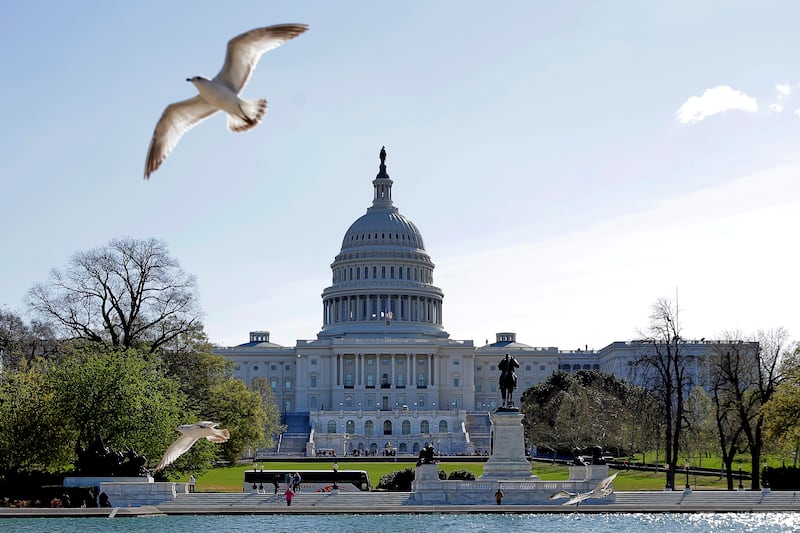

Republicans have an uphill battle to defend their slim majority in the House this November as they must contend with a narrower path to victory than their Democratic counterparts who are eager to win control of any corner in Washington, D.C.
Recent analyses show Democrats are favored to seize control of the lower chamber in the current political playing field. Of the 435 seats up for grabs, Democrats are expected to clinch 213 while Republicans are predicted to win 205, according to the nonpartisan Cook Political Report.
The remaining 17 seats are considered “toss-ups” and will offer the path to victory for either party.
Of those 17, Republicans would need to win at least 13 to hold on to its slim majority — and the ratings are not entirely in their favor. Fourteen of the toss-up races are currently held by Republicans, putting them on the defensive as Democrats only need to defend three toss-ups — and have a number of GOP-held seats that are projected to flip.
“The political environment for House Republicans continues to look bleak,” Erin Covey, House editor for Cook Political Report, writes in her latest analysis. “Even before President Donald Trump’s approval rating reached a nadir amid spiking gas prices and an unpopular war with Iran, special and off-year elections showed Democrats with a significant enthusiasm advantage and Republicans were trailing the national generic ballot by five to six points.”
Meanwhile, the latest ratings from Cook Political Report shifted five seats in Democrats’ favor and just one toward Republicans.
Historical trends show that the party of the sitting president typically loses control of the House during midterm elections — usually as a referendum on the president’s policies, which in turn gives the minority party an edge. Additionally, midterm elections usually have lower turnout than presidential years, making voter enthusiasm a major factor.
Still, Republican leaders in the House have projected confidence they can defend — or even grow — their slim margins. House Speaker Mike Johnson, R-La., last month told reporters he has no plans to lose in November, and other Republicans have noted that the historical precedent doesn’t necessarily apply.
“The typical ‘after the president’s first two years, the House always swings the other way,’ it’s a little different this time, because this isn’t President Trump’s first two years,” Utah Rep. Blake Moore told the Deseret News in March. “This is his first two years of his second term. And folks know where they are with President Trump for the most part.”