


The Interior Department is requesting $15.9 billion for fiscal year 2027, which is down about 10% from the 2022-2025 average.
If approved, the budget would allocate $1 billion to help restore Utah’s Great Salt Lake, which has experienced receding shores for several decades.
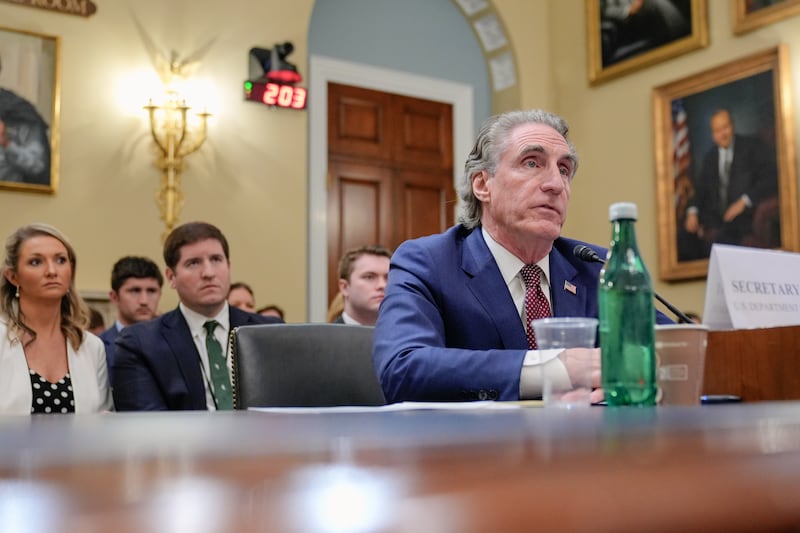
Secretary Doug Burgum defended the budget on Wednesday to members of the House Committee on Natural Resources.
“Interior is committed to increasing our energy production, reestablishing our dominance of critical minerals, and protecting our national and economic security,” Burgum said during his opening statement.
He added, “We have eliminated burdensome and ideologically counterproductive regulations that undermine efficient land management while maintaining appropriate protections of wildlife and our environment.”
Burgum weighs in on Colorado River conflict
Current rules governing Colorado River water allocations for dry years expire on Oct. 1.
Since the seven river states have failed to reach an agreement, the Interior imposed a plan under their drought authorities. The plan required a release of 600,000 to 1 million acre-feet of water from Flaming Gorge to boost lower reservoirs.
“We’re looking for a solution for how to get through with a resource that’s a smaller pie than we’d like to have,” Burgum said. “The one thing I know for certain is we’re not going to have enough water for any of the seven states.”
Burgum added that his department is concerned about the West’s low snowpack through the spring and summer.
Arizona Rep. Yassamin Ansari asked for details about the Interior’s plan during Wednesday’s hearing.
“People should presume that it’s going to be at the high range, unless we have some events this summer that would drive new information about the hydrology,” Burgum said.
The Interior Department makes new hydraulic assessments on the Colorado River every two weeks.
Utah Rep. Celeste Maloy asks about the $1 billion allocated to the Great Salt Lake
Dubbed “The Great Salt Lake Watershed Recovery Program,” the 2027 Interior budget requests $1 billion to work with the state of Utah to restore its largest lake.
The money is proposed to help increase water flows into the lake, restore ecosystems and remove invasive species.
Rep. Celeste Maloy, R-Utah, asked Burgum to agree to work with her team and the state of Utah to settle on a plan for appropriating the money.
“As the only appropriator in the state of Utah, I’m working to make sure we can get as much of that in the appropriation bills as we can,” she said.
Burgum then described the $1 billion allocation as “an investment back into the United States.”
Interior Department proposes budget cuts
Burgum’s proposed budget includes several large cuts to major agencies within his department, including the National Park Service, the Bureau of Indian Affairs and the Bureau of Land Management.
The budget makes cuts from the following agencies:
- National Park Service cut by $1.06 billion.
- Within the service, the Operation of National Park System is down $757 million, and the Historic Preservation Fund is down $170 million.
- Bureau of Indian Affairs cut by $647 million.
- U.S. Geological Survey cut by $528 million (37% reduction).
- Bureau of Land Management cut by $479 million.
During the hearing, Burgum said some of these cuts are results of consolidating redundancies within the department. For the sake of efficiency, the Interior Department moved all comms, IT and HR under the Secretary’s office.
“That’ll look like a cut … but it’s actually a place where we can be more efficient," he said, adding, “It’s a misstatement to describe these things as cuts when actually it is about unification.”
Rep. Val Hoyle, D-Ore., addressed staffing cuts. “I am concerned that the administration’s cut to agency staffing will leave us to respond to historically dry conditions with hands tied behind our backs,” she said.
Burgum said the department has an adequate firefighting force, with 5,700 permanent positions and a much larger group of seasonal firefighters.