

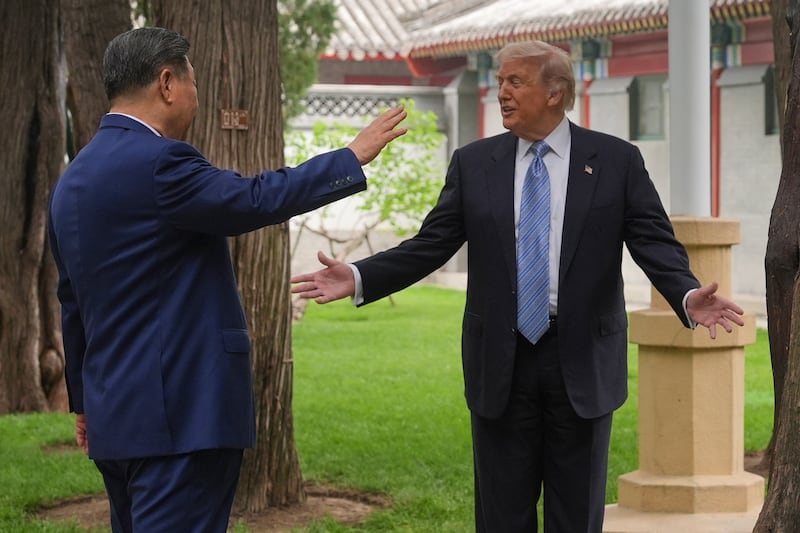

President Donald Trump on Friday wrapped up a multiday trip to China, meeting with several top American business executives and Chinese President Xi Jinping.
Trump is celebrating the meeting as a success for trade and being in agreement with China over Iranian nuclear power.
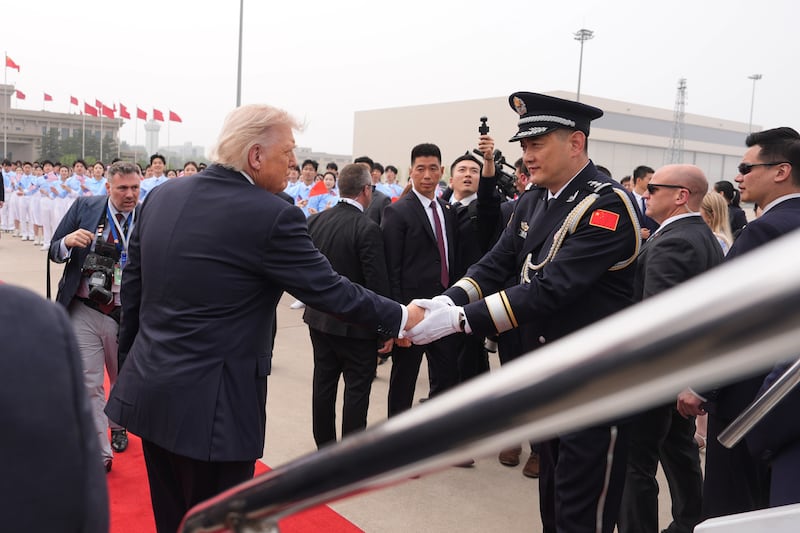
The red carpet was rolled out and pageantry was on full display for the state visit with military ceremonies, dances and a banquet dinner.
Here are six things to know about the trip:
Trump, Xi agree Iran can’t have nuclear weapon
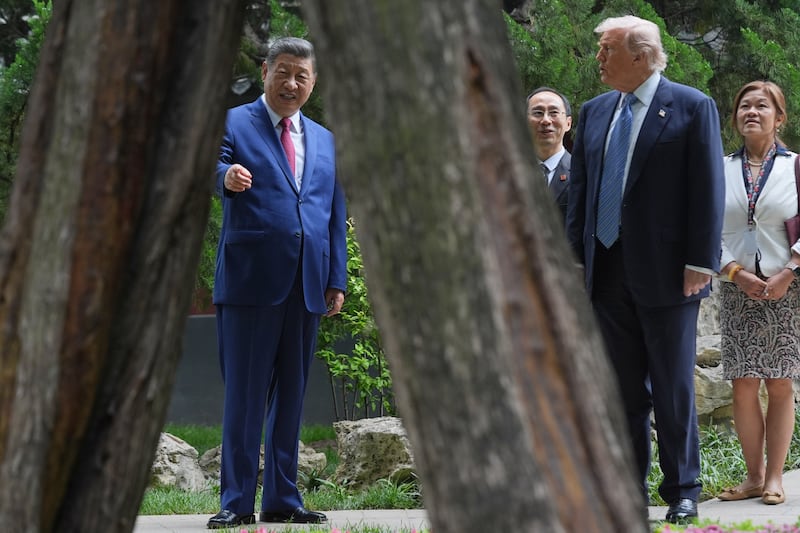
After traveling Wednesday, Trump’s first full day in China was Thursday, where he and Xi met with the backdrop of the Iran war.
The current Middle East ceasefire, reached early last month, is on shaky ground, as the U.S. and Iran have traded strikes that U.S. officials say hasn’t violated the ceasefire. Iran is a key ally of China and the discussion was delayed due to the ongoing conflict.
According to a readout from the White House, Trump had a “good meeting” with Xi, where they discussed ways the two countries could cooperate.
A topic of discussion was Iran. The White House shared that both sides agree that the Strait of Hormuz should be reopened. They agreed that the waterway should not be militarized or charged a toll for passage.
The White House shared that Xi “expressed interest” in purchasing more American oil to reduce China’s reliance on the strait in the future.
Both countries agreed that Iran “can never have a nuclear weapon,” the White House said.
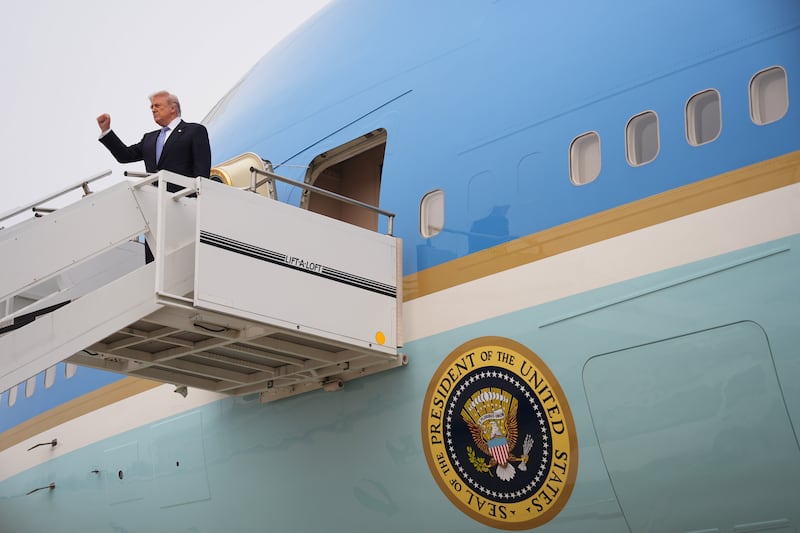
Aboard Air Force One on the way to China, Secretary of State Marco Rubio told Fox News’ Sean Hannity that Iran would have been able to possess a nuclear weapon within a year so the timing was important for the U.S. military action.
On the return flight, Trump told the media on board that he looked at the latest proposal from Iran to end the war, but anything that includes “any nuclear in any form” he throws out.
Xi to visit White House in September, first visit since 2015
Trump and Xi’s meeting was so successful that they want to do it again, this time, however, in the United States.
Xi will be making a visit to the U.S. in September, Trump shared. It would be the Chinese leader’s first visit to the White House since 2015, when he visited with former President Barack Obama.
The visit will take place on Sept. 24, Trump shared in his remarks Thursday at a banquet dinner.
On Friday, Xi welcomed Trump to his official residence, Zhongnanhai, for their final meeting before Trump’s departure.
They took a short walk through the grounds and had tea and lunch. Trump said the Chinese roses were the most beautiful he had ever seen and Xi promised to send him seeds to plant in the White House Rose Garden.
Trump maintains U.S. stance on Taiwan
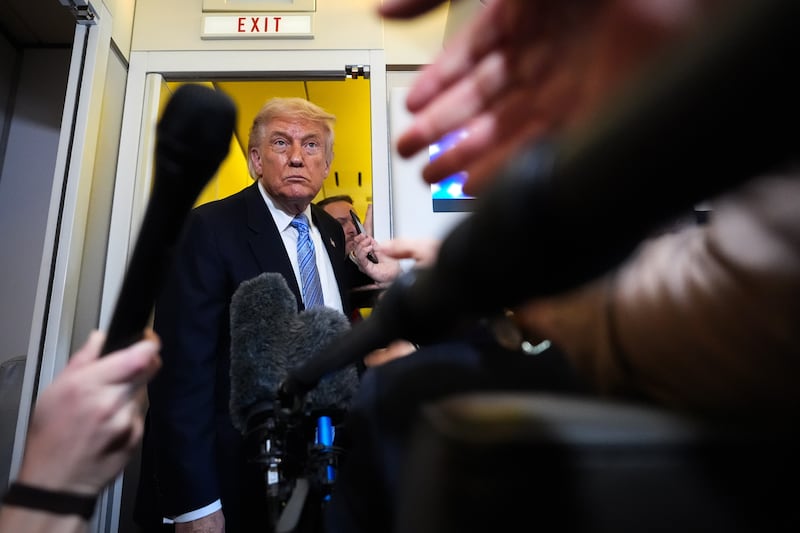
Little was publicly discussed about Taiwan, but Trump, aboard Air Force One following the meeting, maintained the U.S. stance about the nation.
He was asked about if the U.S. would defend Taiwan if China attacked.
“I don’t want to say,” he replied. “I’m not going to say that.”
Trump said Xi asked him that question on Friday and he said “I don’t talk about those things.” He said the only person who knows if the U.S. would back Taiwan is himself.
“I heard him out,” Trump said. “I didn’t make a comment.”
The position is consistent with longterm U.S. policy of ambiguity for strategy purposes. Former President Joe Biden was unusual in remarking that the U.S. would defend Taiwan if China attacked.
The U.S. stance on Taiwan is that China believes it is part of its country but the U.S. maintains a strong yet unofficial relationship with leaders in Taiwan.
Following the trip, Trump said he hasn’t made a decision about if he would be moving forward with a major arms deal for Taiwan after Xi expressed concerns.
“I will make a determination,” he said, adding, “I’ll be making decisions. But, you know, I think the last thing we need right now is a war that’s 9,500 miles away.”
Congress authorized a $14 billion arms package for Taiwan in January but it can’t move forward until Trump formally sends it to Capitol Hill.
Potential U.S.-Russia-China nuclear deal discussed
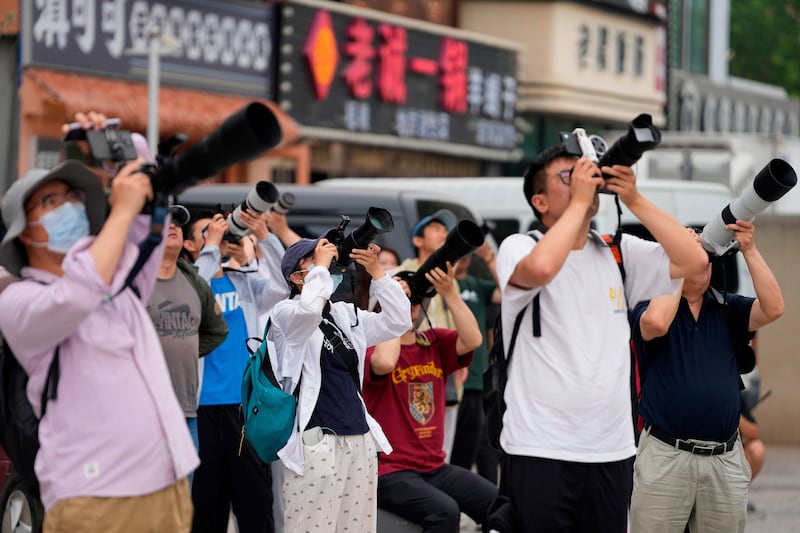
Trump shared that he proposed a three-way nuclear deal that would involve the U.S., Russia and China.
He is wanting the three countries to sign an agreement that would cap the number of nuclear warheads in each of their arsenals, The Associated Press reported.
China has previously been against entering an agreement on its more than 600 warheads. The U.S. and Russia are each estimated to have more than 5,000, the AP noted.
Trump shared this week that Xi seemed open to the idea and said he got a “very positive response.”
“This is the beginning,” he said.
The former nuclear arms agreement between Russia and the U.S. expired in February and when Russian President Vladimir Putin offered to extend it another year, Trump said no and that he wanted to include China in the next agreement.
Fentanyl, soybeans also were topics of discussion
Trade has been a major topic of discussion between the U.S. and China over the last year. After Trump implemented tariffs on the country, it has strained relations with China.
Before the trip, Rubio said there was “no doubt” that tariffs would be a topic of discussion. Trump confirmed on the way back to the U.S. that he and Xi “made a lot of great trade deals,” including 200 planes from Boeing. The aircraft manufacturing CEO Kelly Ortberg joined for the trip.
Trump also added that he and Xi talked about possibly working together to create “guardrails” for artificial intelligence.
The president shared that he got a deal on soybeans. China is the world’s leading consumer of soybeans for its agriculture industry. After Trump implemented his tariffs, China cut back importing U.S. soybeans and has shifted to buying from Brazil. Trump on Friday said he struck a deal.
“The farmers are going to be very happy. They’re going to be buying billions of dollars of soybeans,” he said.
Fentanyl was also a topic discussed by Trump and Xi. Trump said he put a tariff on China because of the flow of fentanyl to the U.S. and its killing of Americans. He said the Chinese discussed the tariff due to fentanyl and that it’s now “way down” from where it once was in the U.S. and it “could be because of the tariff penalty.”
Rubio said there were several “unique areas of cooperation” that the U.S. and China could work together on and fentanyl production was one.
“Their system can do this, can really crack down on that and that would help lower fentanyl deaths in the United States,” Rubio said.
Relations between Trump and Xi end on high note but still strained
Both Xi and Trump celebrated the summit as a successful meeting of the two world leaders and their delegations.
Trump shared on the flight home that it was a “very positive thing” to have the two nations getting along.
Throughout the trip, Trump and Xi praised one another as great leaders and the White House expressed confidence about them having a “good meeting.”
The business executives who also joined the trip also shared they had success, with Tesla and SpaceX CEO Elon Musk saying the meetings were “awesome.”
Xi, in translated remarks at the banquet dinner on Thursday, praised Trump’s MAGA movement and said China was having a “great rejuvenation” like America being made great again.
Trump thanked Xi for the invitation and said the relationship was “very special.”
“It’s been really a great couple of days,” he said.
While both were celebrating the few days as a success, China has not expressed it would get involved in Iran making a deal, despite Trump telling Fox News’ Hannity that Xi said he would help.
Additionally, the Taiwan issue is a thorn for the two leaders, but Trump on the flight back to the U.S. said he thinks the relationship with China wasn’t in danger and believes “we will be fine.”
Rubio, in speaking with Hannity before the trip, said he thinks China is both the country’s “top political challenge geopolitically,” but also the most important relationship to manage.