

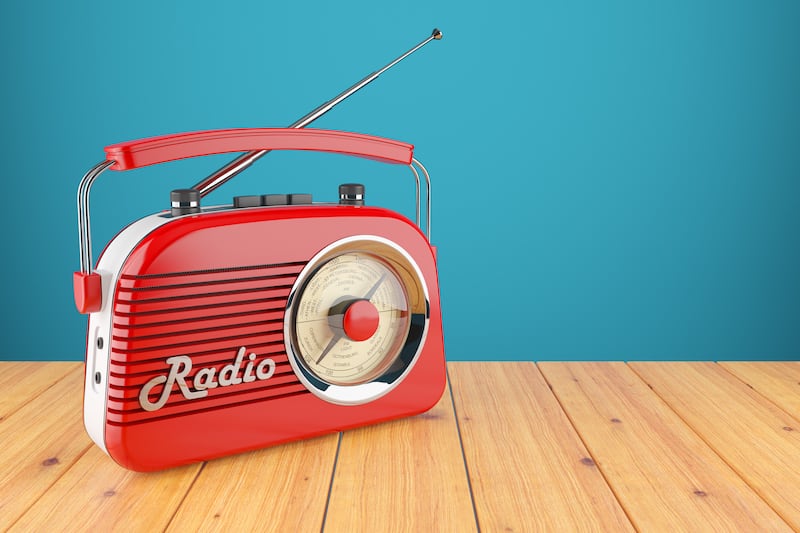

President Donald Trump this week commented on the future of AM radio, weighing in on a yearslong debate after automakers stopped including AM radio technology in newer car models.
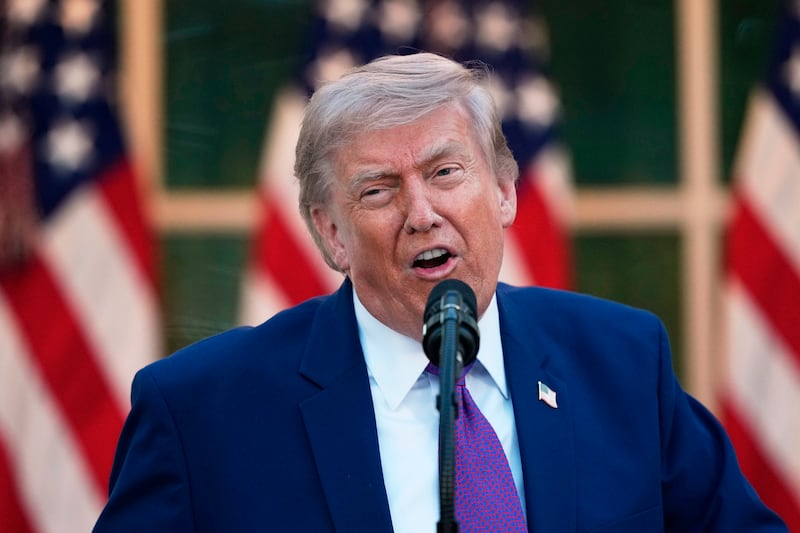
“What do they want to do? Take it off the cars or something?” he said Tuesday during an interview on “Sid & Friends,” a conservative talk radio show. “I’ve got to stop that. ... Why are they doing that? Why do they want to take AM radio? It’s so ridiculous.”
Trump, on the phone with a sympathetic station, acknowledged that AM radio is known for broadcasting more conservative content.
“It would tend to be right. It would tend to be conservative Republicans. I guess that’s why they want to do it,” he said.
The debate over whether to require vehicles to have AM radio technology is not new.
“They were going to do it in my first term and I wouldn’t allow it to happen,” Trump said.
During his most recent presidential campaign, Trump spoke on the issue at a National Religious Broadcasters convention in March 2024.
“I will protect the content that is pro-God,” Trump said. “To that end, at the request of the NRB, I will do my part to protect AM radio in our cars.”
National Religious Broadcasters have raised the issue of support for AM radio with their listeners, as many of them broadcast on AM channels, according to reporting by Religion News Service last year.
Legislation joins the discussion
The AM Radio for Every Vehicle Act, introduced last year, moves to require all new passenger vehicles to include AM radio capabilities.
Trump has advocated for the bill. “I like the AM In Every Car (bill),” Trump said earlier this year. “I’m in favor of it. It’s interesting. A lot of people don’t know about that, but it’s actually a very big subject, a huge deal — and we’re going to be doing something on that.”
And to many, it is a huge deal, but opinions on the bill’s merit differ.
Why the debate?
AM radio listenership has been declining for decades. In the last 10 years, 342 AM radio stations have gone off the air, representing a 7% drop since 2015. Several well-known broadcasting companies, including Cumulus Media, iHeartMedia, Audacy and Spanish Broadcasting System, have filed for bankruptcy during that time.
Luke Bouma, founder of Cord Cutters News, said the shift away from AM radio is a consequence of changing technological habits.
“Streaming music services and podcasts have captured increasing shares of listener time, particularly among younger audiences who favor on-demand, personalized content accessible via smartphones and smart devices,” he said.
Beyond listener preferences, the new technology common in cars creates a barrier to AM radio use.
“The band suffers from technical limitations, including susceptibility to interference from electronic devices, urban noise, and even electric vehicle systems, which has prompted some automakers to exclude AM tuners in newer models,” he said. “This reduces in-car exposure, a key listening environment for traditional radio.”
As listenership continues to drop and technology continues to improve, AM radio struggles to stay afloat, and the debate over what to do next amplifies.
The debate: Pro
Trump is one of many to advocate for measures protecting AM radio.
Farmers and trade associations have argued in favor of the AM Radio for Every Vehicle Act. Twenty-five agricultural groups sent a letter to Capitol Hill, declaring their support.
“Our members rely on AM radio and the vital services it provides daily,” the letter states. “AM radio is a source of weather, commodity, and national farm policy updates for our members.”
They also acknowledged that AM radio is a crucial safety resource. “Whether a thunderstorm is developing, a tornado is moving closer, or wildfires are spreading, our members need a reliable form of communication to access critical information,” they wrote.
Clay Travis, an American conservative commentator, argued that AM radio is being replaced by “infotainment systems” in newer vehicles, which he claims track users and collect their data to produce revenue for the manufacturers.
“Automakers, which have been subsidized by taxpayers to the tune of billions, are quietly removing AM radio altogether. If left unchecked, you may very well be forced onto platforms that monitor you,” he said. “That’s bad for free speech, it’s bad for privacy, and it’s bad for public safety.”
Voices in support of the bill, however, are not without opposition.
The debate: Anti
The Zero Emission Transportation Association, a federal coalition focused on advocating for electric vehicles in the U.S., says an AM radio mandate would harm automakers by creating technical challenges with EV technology, requiring costly redesigns and impeding innovation.
“Manufacturers will suffer billions in losses, and small businesses in the industry will experience the most strain,” the association said.
They further argued that fear over losing AM radio is unnecessary, saying the programming is not going away altogether — particularly not at the hands of EV adoption.
“Although AM radio listenership has been trending downwards for decades, EV drivers all have superior access to AM programming via digital and satellite services that allow access to national AM radio programming, not just stations that are within a receiver’s range,” they said.
Their argument: Even though traditional AM broadcasting is decreasing, access is still available by other means.
John Bozzella, a veteran auto industry executive and president and CEO of the Alliance for Automotive Innovation, shared a similar thought in an online blog post.
“Even if every automaker discontinued analog AM radio — starting today — it would take more than 30 years for the fleet of vehicles to turnover and analog AM radio to fully phase out.” Given the millions of vehicles already on U.S. roads with AM radio technology, he said, AM radio is not in danger of extinction.
Bozzella suggests other options that would keep AM radio in the conversation without imposing a government-regulated requirement.
Automakers could disclose if a vehicle does not contain AM radio technology to ensure customers make informed choices. If consumers request it, automakers could include an emergency, portable AM radio in the new vehicles.
Also, automakers could continue to make FEMA’s Integrated Public Alert and Warning System available inside all vehicles.
Bozella said these measures would address safety concerns without drastic action that might set a precedent for Congress interfering with vehicle equipment beyond the scope of safety measures.
“You could like an AM radio mandate today, but you might not like the next equipment requirement from a future Congress under this new authority,” he said.
What’s next for the bill?
The AM Radio for Every Vehicle Act was placed on the calendar in November 2025, meaning it is eligible for, but not guaranteed, floor consideration.
A recent article by the George Washington University Regulatory Studies Center analyzed whether the action would improve social welfare.
Dylan Desjardins, author of the article, warned against “rent seeking” — regulation proposed for economic advantage rather than public interest.
“Decision-makers involved in the draft legislation should make sure that it truly serves the public rather than supporting those with an economic interest in AM radio technology,” he said.
The AM Radio for Every Vehicle legislation must be considered and agreed upon by both the House and the Senate before being presented to the president. It currently has bipartisan support, with 317 co-sponsors.