

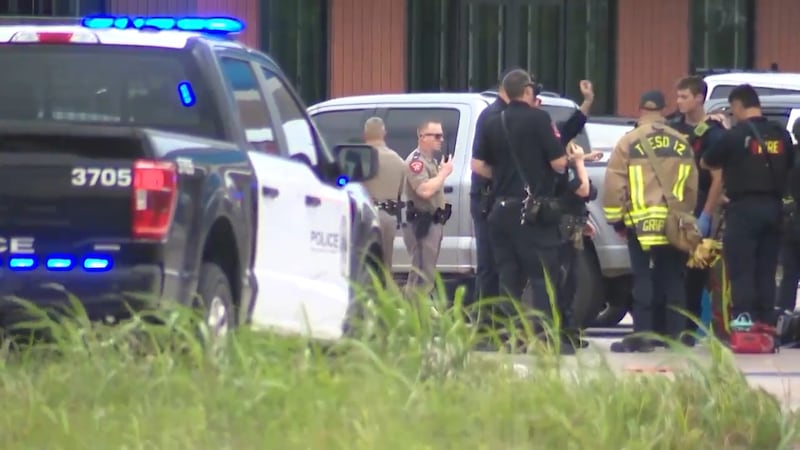

Three suspects were arrested after a string of weekend shootings and robberies in Austin, Texas. Authorities have asked whether the investigation could have been expedited using surveillance technology, adding to a yearslong public debate.
4 injured, 3 suspects, 2 firearms, no motive
Four people were injured in a string of 12 shootings and robberies that took place from Saturday afternoon through Sunday morning, according to police reports. Three of the victims sustained minor injuries. One victim remains in serious and stable condition, according to authorities.
Two of the three suspects, identified as teenage boys, ages 15 and 17, were arrested Sunday afternoon after being pulled over in a stolen car and attempting to run. A third suspect was arrested Sunday night at an H-E-B fuel station, per reports.
Authorities say the suspects fired at fire stations, apartment buildings and houses, using a firearm stolen by the 15-year-old earlier that day. The 17-year-old was wanted for a separate firearm theft from the same store.
The suspects allegedly stole at least four different vehicles, abandoning one before moving to another, which made it hard for law enforcement to track them, according to authorities.
Residents of the southern region of Austin were ordered to shelter in place while the suspects were at large. The order was later lifted once two suspects were in custody.
Authorities say the motive is still unclear. “We don’t have any specific motive that has been identified,” Austin Mayor Kirk Watson said in a press conference Sunday. “In fact, these actions appear to be random.”
Do Texas residents still trust the TRUST Act?
Austin Police Chief Lisa Davis said the weekend events add to a larger conversation surrounding the use of surveillance technology in Austin.
When the Austin City Council approved the use of automated license plate readers two years ago, local residents voiced their opposition, saying the technology violated their privacy.
The Transparent and Responsible Use of Surveillance Technology Act, or TRUST Act, passed last month in the city, coming in response to that opposition.
The TRUST Act regulates how city departments can use surveillance technology and requires greater transparency in the use of these tools. Under this act, technologies with the capacity to collect data on residents, including automated license plate readers, require approval by the city council, and limits may be placed on how data can be collected, stored and used.
Davis said the investigation could have been quicker if authorities were able to use automated license plate readers to track the suspects. This, she argues, suggests regulations set by the TRUST Act are worth revisiting. “We have the TRUST Act setting guidelines on where we are without technology. ... As we move forward, we can start having those conversations around that TRUST Act, those parameters.”
She added that, while limited in the technology they could use, Austin police were still able to conduct a successful investigation.
“When we think about cameras, could that have helped? Yes, it absolutely could have,” Davis said. “But we got these two individuals and we took them into custody. ... I think that’s a success.”
Watson said he did not want to speculate on whether the use of automated license plate readers would have supported a quicker investigation, but he thinks they would have been helpful.
“From my perspective, when we talk about Austin being safe and people feeling safe in Austin, we need to make sure that our law enforcement has the tools that they need so they can keep people safe,” Watson said during a conference. “We need to make sure that when we’re trying to reach balance and perspective, we take all of that into account.”