



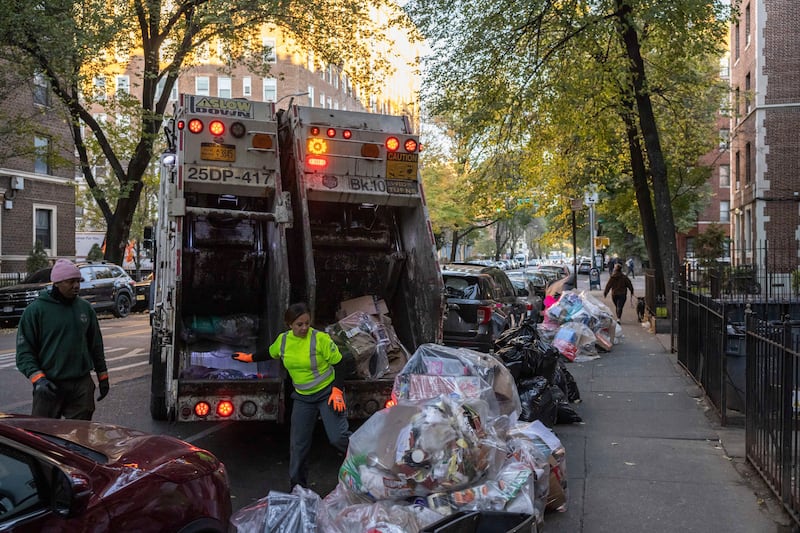
It’s not a coincidence that the term “sewer socialism” is enjoying a renaissance as Zohran Mamdani continues to make headlines as the mayor of New York City.
“You might as well have a tattoo of sewer socialism on your back,” journalist and podcaster Derek Thompson told Mamdani last year.
The term predates Mamdani’s administration by almost a century, originating in Milwaukee politics. And while the word “sewer,” like “gutter,” is often used as a negative adjective, in this context, it’s supposed to be something positive: a focus on providing exemplary public services, like sanitation.
In some ways, it’s the socialist’s equivalent of former New York Mayor Rudy Giuliani’s “broken windows” policy of policing, which aimed to improve public safety by focusing on small but important things.
“I think sewer socialism (means) that we want to showcase our ideals, not by lecturing people about how correct we are, but rather by delivering and letting that delivery be the argument itself,” Mamdani said on Thompson’s podcast.
Put another way, if democratic socialists like Mamdani can provide exemplary public services like sanitation, their constituents will be more likely to embrace other ideals of socialism. At least that’s their hope.
What is ‘sewer socialism’?
The term “sewer socialist” is believed to have originated with socialist leader Morris Hillquit’s speech at the party’s 1932 convention in Milwaukee. He intended to mock Milwaukee socialists’ “perpetual boasting about the excellent public sewer system in the city,” according to Gregg Hoffmann, writing for the political news site WisPolitics.com.
But in deriding “those to whom Socialism consists of merely providing clear sewers of Milwaukee,” Hillquit unwittingly gave rise to a political philosophy that is arguably ascendant today in the Mamdani administration in New York and in Mayor Katie Wilson’s administration in Seattle.
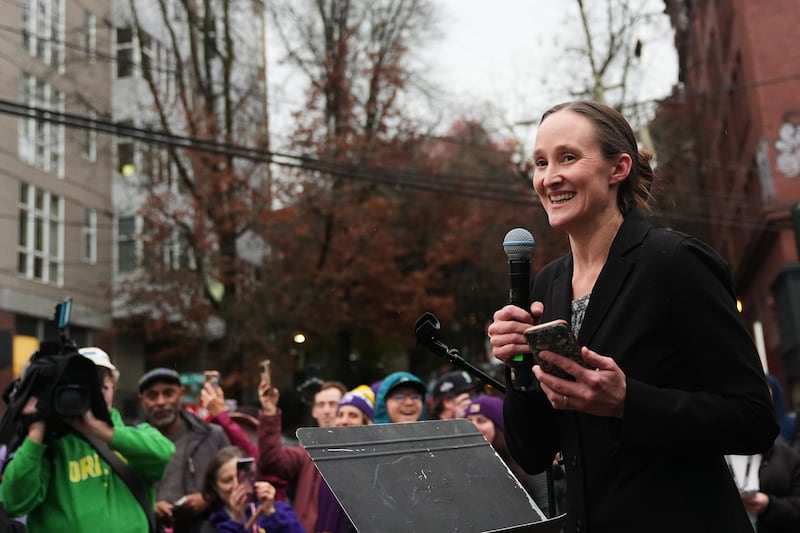
“Sewer socialism is flowing through America’s cities,” a recent Axios headline said.
In Mamdani’s case, the term can be taken literally. Among his first initiatives as mayor in New York City was a $4 million program to expand public toilets.
But the mayor himself seems to want to rename the philosophy, saying earlier this year, “We have showcased a new kind of approach to governing in our city — pothole politics. Delivering public goods coupled with public excellence.” His team has floated the term “street socialism,” according to Emma Goldberg, writing for The New York Times.
Why ‘sewer socialism’ is popular
In a column for The New York Times last year, published a month before Mamdani was elected, E.J. Dionne Jr. said Mamdani’s ideas were “certainly progressive, but none are radical or loony.” He cited the success of Daniel Hoan, a socialist who was the mayor of Milwaukee for 24 years, beginning in 1916.
“You don’t get re-elected that often by being a failure,” Dionne wrote, noting that politicians who embraced the “sewer socialist” moniker were focused on doing “whatever they could to improve the lives of working-class people in their jurisdictions.”
Mamdani has said exactly that, telling Katrina vanden Heuvel and John Nichols of The Nation, “To fight for working people must also mean to fight for their quality of life.”
But Allysia Finley noted in The Wall Street Journal, quality of life is about more than sanitation systems, which is why so many societies have rejected socialism of all kinds.
“Socialism’s strongest opponents in America are immigrants who suffered under it in their native countries. Its most enthusiastic supporters are well-to-do young people who have never experienced privation and don’t know what life was like behind the Iron Curtain — nor are they taught about it in school,” Finley wrote.
‘Quality of life’ in politics

The “quality of life” for New Yorkers was also central in the politics of a much different mayor, Rudy Giuliani, a Republican who served for eight years beginning in 1994.
Giuliani’s directive to cut crime in New York began with what is known as “quality of life crimes” — nonviolent offenses like graffiti and destruction of property. Such acts “destroy the citizens’ trust and confidence in government’s ability to provide its first obligation, which is public safety,” according to William Bratton, a former police commissioner of New York.
While both Guiliani and Mamdani said they want to improve the quality of life for the citizens of New York, they have approached it with vastly different political philosophies.
Mamdani, a democratic socialist like Vermont Sen. Bernie Sanders, won easily with 50.4% of the vote in a three-way race. But he might have a harder time selling “sewer socialism” in other parts of the country, even if he promises to improve sanitation.
Per Axios, “39% of U.S. adults have a positive view of socialism, while 54% view capitalism positively, per a 2025 Gallup poll.”
That poll noted, however, that Democrats are much more likely to view socialism positively than independents or Republicans. (Similarly, Democrats in Utah are more likely to approve of socialism, and Mamdani’s administration, than Republicans.)
And young American adults are the greatest backers of socialist ideas, with one Cato Institute/YouGov survey showing that 62% of Americans aged 18–29 say they hold a “favorable view” of socialism.”
Writing for the Deseret News about that poll, Samuel J. Abrams said, “Older Americans still reject the label overwhelmingly, but for younger voters, ‘socialism’ is no longer taboo. It’s part of the political mainstream.”