

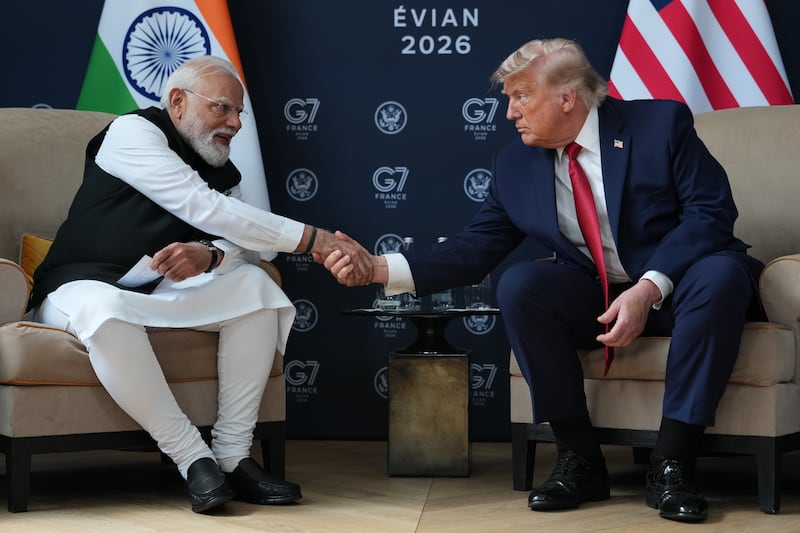

President Donald Trump and Indian Prime Minister Narendra Modi held a bilateral meeting on the sidelines of the G7 Summit in France.
Trump flattered Modi, calling him an angel but a killer negotiator, while revealing that they are close to striking a trade deal.
The U.S. president also promised to visit India “sometime in the future.”
This meeting, which marks Modi and Trump’s first encounter in 18 months, comes on the heels of U.S. Trade Representative Jamieson Greer’s trip to India next week in hopes of finalizing a deal, as Reuters reported.
The state of play: U.S.-India relations
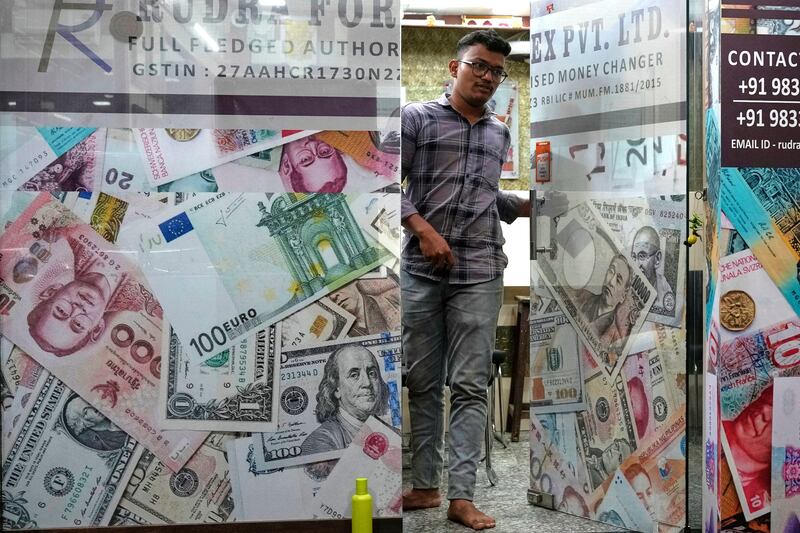
The relationship between the two countries has been strained since the Trump administration imposed tariffs on India that were as high as 50% at one point, thanks to a 25% penalty tariff over New Delhi purchasing Russian oil amid the war in Ukraine. Currently, the U.S. tariff rate on India is down to 18%.
Referring to the potential trade deal, Trump described Modi as a “scary” negotiator, adding, “He’s the most beautiful looking man. He looks so nice. He’s like an angel. But actually, he’s as tough as — he’s a killer.”
Modi and Trump built a good rapport during Trump’s first term, but his second term, marked by conflicts in Ukraine, Iran and Gaza as well as trade disputes, has strained the relationship. The ever-changing immigration policies in the U.S. added to these stresses.
Still, Modi and Trump’s friendship was on display Wednesday as the U.S. president called his Indian counterpart a loyal friend.
“We have the best relationship. We cannot be closer than we are. Would you say that, sir? I don’t think we can be any closer,” Trump said, reaching out to clasp Modi’s hand. “Both him and I, and our nations. But it really starts with the two of us.”
Modi and Trump talk about Iran deal
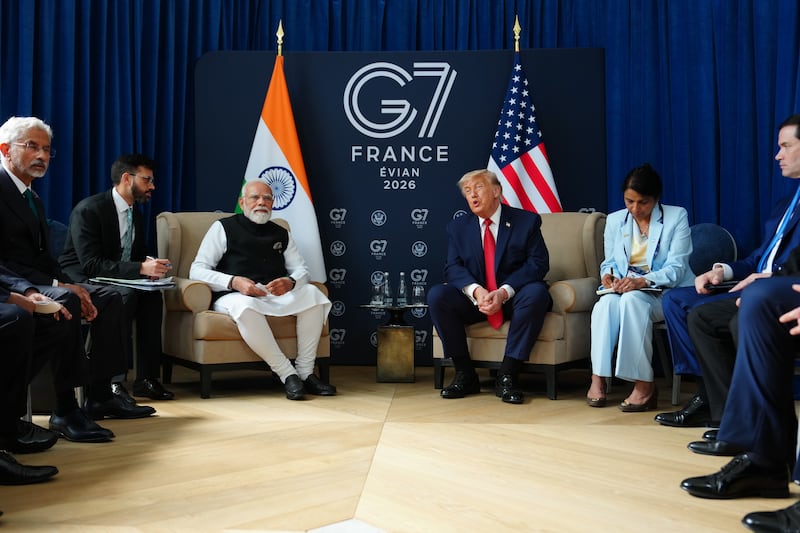
During a press conference Wednesday at the Group of Seven Summit in France, Trump defended the agreement to end the Iran war, which the administration released over the weekend, as the Deseret News reported.
Modi applauded the Trump White House for signing a deal with Iran to end the war for three months and open the Strait of Hormuz. The Indian prime minister also advocated for the safety of the Indian nationals working aboard ships in the strait.
“I’m confident that the issue of seafarers will receive the highest priority during the implementation of this agreement,” Modi said.
On that note, Trump acknowledged the recent killing of three Indian sailors by American naval forces off the coast of Oman, saying, “I heard about that.”
“This has been happening throughout time, but we work together. We love all of those people, and they’re great people,” Trump said.
Immigration policies loom in the background
The Trump administration’s policy of travel bans and a $100,000 fee on H1B work visa applicants was deemed unlawful in court rulings this month.
When U.S. Secretary of State Marco Rubio traveled to India over Memorial Day weekend last month, he addressed the White House’s immigration priorities.
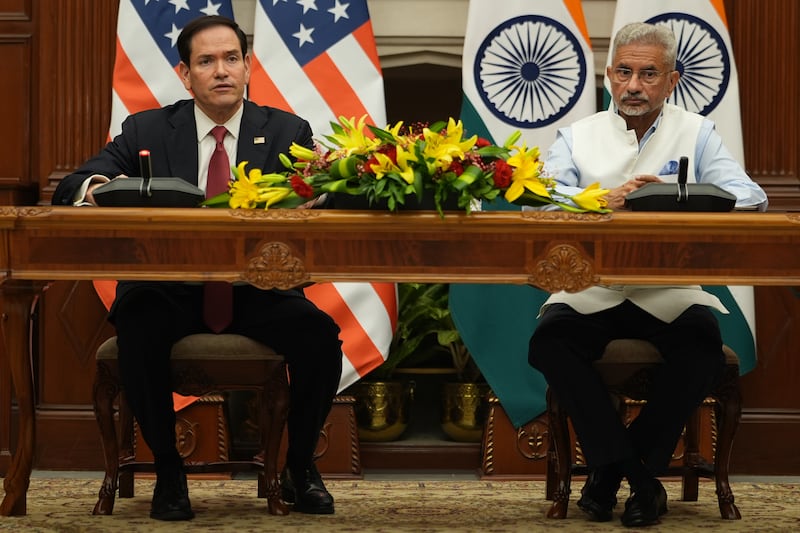
He hailed the U.S. as “the most welcoming country in the world on immigration,” acknowledging his parents, who immigrated from Cuba in 1956, before defending the immigration reform under Trump.
During the press conference on Sunday, Rubio said the Trump White House isn’t targeting India but acknowledged that the South Asian country will feel the consequences of this policy.
“The changes, while they may be having a disproportionate impact on a place like India that provides so many high-skilled workers to the U.S. economy, are not a system that is targeted at India,” he said, adding that it’s a “period of transition.”
“We think ultimately our destination is going to be a better system,” he said.