


- Democrats cite alleged corruption as basis for planned investigations.
- Chris Stewart says Democrats feel betrayed and want to punish tech execs.
- Palantir CEO Alex Karp told Politico his products are "essentially progressive."
Democratic members of Congress signaled immediately following the Nov. 3 general election that they plan on directing their new oversight powers to investigate technology executives with close ties to the Trump administration.
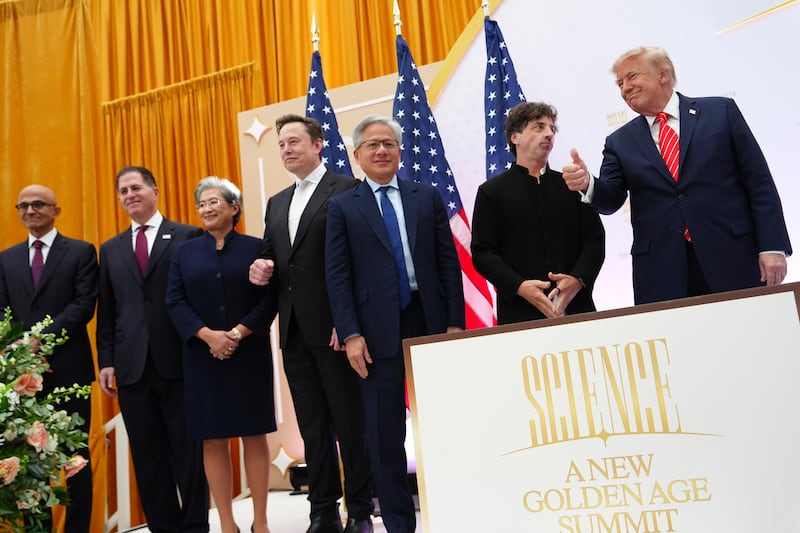
High-ranking Democrats who are expected to chair committees in the new term cited alleged corruption as the cause for their future investigations into industry leaders who donated to President Donald Trump’s pet projects or lent their products for government use.
Heightened scrutiny of Silicon Valley comes after Democratic candidates campaigned on curtailing data centers and regulating artificial intelligence, according to former U.S. Rep. Chris Stewart, who founded a nonprofit seeking AI safeguards.
It also reflects Democratic outrage over prominent AI CEOs — like SpaceXAI’s Elon Musk, OpenAI’s Sam Altman and Meta’s Mark Zuckerberg — who cozied up to the Republican president despite previously serving as major Democratic Party donors.
“Democrats feel betrayed by that,” Stewart told the Deseret News. “They’re angry at Silicon Valley leaders and they think they’re too closely aligned with Republicans now. And, frankly, they want to punish them.”
Constituents everywhere will likely be happy to see it. A groundswell of opposition to AI infrastructure swept the midterms, with 40 out of the 41 measures restricting data center development across the country receiving voter approval.
In addition to reflecting public opposition, the incoming Democratic majority in Washington, D.C., is inclined to target Big Tech billionaires who appeared to flip from progressive stalwarts to Trump cheerleaders over the past two years.
”They are angry at them for shifting their allegiance," Stewart said. “And then there’s this last thing, they don’t like billionaires. Billionaires are the bad guys. Well, it turns out a lot of tech leaders are billionaires.”
Industry heavyweights already seem to be feeling the pressure. Palantir CEO Alex Karp won the White House’s favor after Trump’s comeback by criticizing wokeness and allowing his data management software to track illegal immigrants.
On Wednesday, Karp felt the need to reaffirm his liberal bonafides in comments to Politico, insisting he knew more about being a progressive “than almost anybody on the planet” and that all of Palantir’s products are “essentially progressive.”
The need for AI accountability
Beyond the partisan motivations, there is a real need to hold some innovators accountable, according to Stewart. He founded a group called Public First to encourage proactive guardrails for AI after becoming an expert in the U.S. House.
During a decade of service representing Utah’s 2nd Congressional District, Stewart, who is an Air Force veteran, rose to a position on the House Intelligence Committee, where he received exclusive briefings on the global AI arms race.
Public First received $20 million from Anthropic — a frontier AI lab — in the past election cycle for candidate endorsements.
Stewart recently signed a letter from prominent national voices asking Trump’s Department of Justice to investigate the most prominent AI chip maker in the world for failing to keep its strongest processors out of Chinese hands.
Nvidia disclosed its chief executive, Jensen Huang, had an affair with a businesswoman who U.S. intelligence determined was a Chinese spy. Huang had been one of the loudest advocates for lowering U.S. restrictions on chip sales to China.
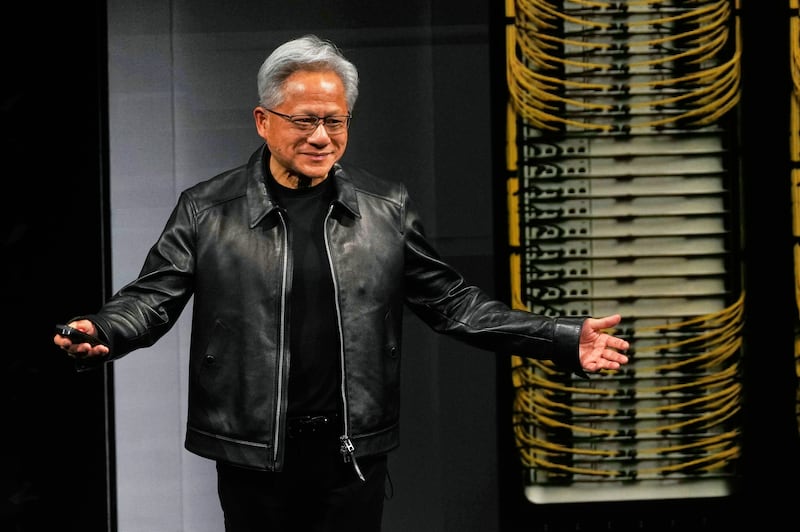
He had also curried Trump’s favor with a $25 million donation to the White House ballroom under construction. Last year, the Trump administration broke from its prior stance, lifting prohibitions on Nvidia to sell chips to certain Chinese firms.
Nvidia did not follow through with requirements to ensure other chips worth millions of dollars were not being smuggled into China from third countries, Stewart said, making Huang’s ties to a suspected spy that much more worrisome.
“If you’re the Nvidia leader and you’re advocating for selling those chips, how in the world would you not exercise judgment to say, ‘I’m not going to get close to what is apparently a Chinese national, maybe a Chinese spy,’” he said.

Huang’s actions demonstrate something “way beyond” poor judgement, Stewart added. The scandal has already hurt Nvidia, one of the largest companies in the world with power to shift the stock market since every AI firm relies on its chips.
However, Stewart draws a distinction between the kind of inquiries that should be launched into Huang, and those being considered by the likes of Maryland Democrat Rep. Jamie Raskin and Massachusetts Democrat Sen. Ed Markey.
Investigations require evidence of wrong doing beyond having close ties to Trump, according to Stewart. Not only will Democrats’ stream of promised subpoenas impede AI development, they will also violate American norms, he said.
“Talk about weaponizing justice,” he said. “This is something new. This is going after anyone associated with Republicans. ... That’s essentially what they’re saying, is ‘show me the industry and I’ll show you the criminal.’”