


The NBA game has a problem (OK, not just one): It has bad endings. Bad, as in “Lonesome Dove” bad (Gus dies at the end). Bad, as in that old Superman movie when Christopher Reeve spins the world backward to bring Lois Lane back to life.
The NBA game is 46 minutes of frenetic action followed by — what’s this? — 10 guys standing around watching free throws and looking at the clock. Is this a basketball game or a bus stop?
Fun.
What’s in the fridge?
As everyone knows, this occurs because the team that is trailing intentionally fouls opposing players hoping they’ll miss free throws and thus give the trailing team another chance to cut the scoring deficit.
It’s tedious but at least it drags the game out a long time. The final minute of a game actually takes 5.4 minutes; the final three minutes more than 12 minutes. The quick pace of play comes to a screeching halt, stopping and starting and stopping and starting, like rush-hour traffic.
It’s like stopping the Olympic 1,500-meter race after three laps and having them choose a winner by tossing horseshoes.
It’s not as if we’re trying to solve the cold fusion problem here. There’s a simple solution — the team that is fouled gets free throws plus possession, which would all but end intentional fouls — but this suggestion has been ignored. Now there is another solution and it seems to be gaining traction in the NBA.
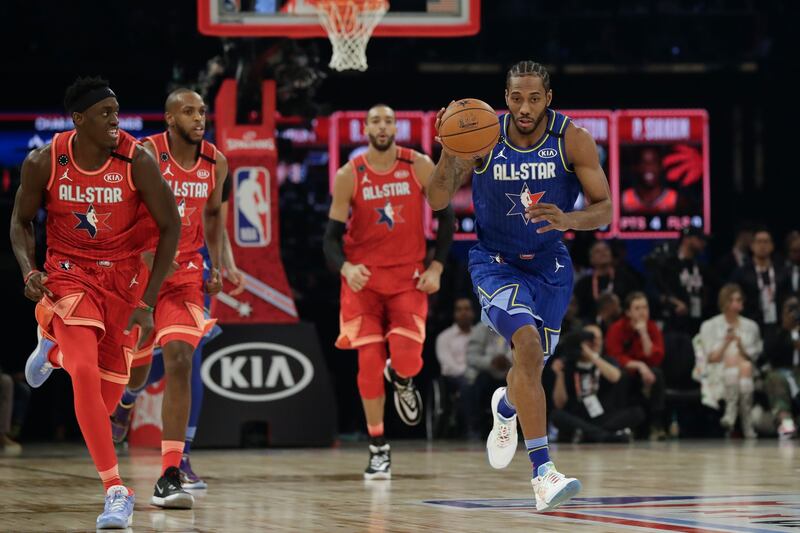
The NBA tried a new rule during Sunday’s All-Star Game, adopting the so-called Elam Ending, which, to put it in its simplest terms, consists of one thing: The winner is decided by a predetermined point total — first one to reach that number wins.
In the case of the All-Star Game, at the end of the fourth quarter the game clock was turned off and it was determined that the winner would be the first team to reach 157 points. That number was determined by adding 24 points to the score of the team that held the lead after three quarters.
Result: It was a smash hit with fans and players, turning a chronically tedious game into an intense competition. It was fast-paced and exciting to the end.
The Elam Ending was created by Nick Elam, a Ball State professor. While watching a college basketball game in 2004, he grew frustrated when it devolved into the usual tedious foulfest in the final minutes and decided there had to be a way to remedy this flaw in the game. Three years later he introduced the Elam Ending to the basketball world. Since then the rule has been adopted at various levels of the game.
Elam’s original idea was to turn off the game clock with four minutes to play and determine the final target score by adding seven points to the score of the team that was leading at that time.
There are potentially unlimited iterations of the same theme, but all pick a predetermined score. The Basketball Tournament, a 64-team event that pays $2 million to the winner, has used a variation of the rule since its inception in 2014 — there is no clock and the first team to 50 wins.
Apparently, the NBA is giving the rule serious consideration — not only was it used in the All-Star Game, but the league invited Elam to the game to discuss it.
Why not? Consider the many ills the Elam Ending eliminates or limits:
— Starters won’t sit out the fourth quarter because the team still has to reach that point target.
— There would be no point in intentional fouls.
— There would be no need for overtime.
— Every game ends with a game-winning basket.
— For some reason a shot clock is still employed, but that, too, seems unnecessary. There would be no point in stalling.
“The idea is not to change basketball but exactly the opposite, to preserve a more natural style of play through the end of every game,” Elam told the Boston Globe. “Because under the current format, that’s when we really see basketball change during the late stages and we see a totally warped style of basketball, which quite frankly I feel is an inferior type of basketball.”
The All-Star Game revealed one flaw in the Elam Ending: It ended with a free throw — but not as a result of an intentional foul — which is one of the things the Elam rule is trying to avoid. It has been suggested that a team that commits a foul late in the final two minutes loses a point.
The rule still needs some tweaking.
The natural questions are: Why not use the Elam Ending for the entire game — throw away the clock and first team to 100 points wins? Halftime occurs when one team reaches 50 points. And: Why not use it in basketball games at every level since it addresses a problem that occurs in high school and college games?
This could bring a much-needed change to the game.