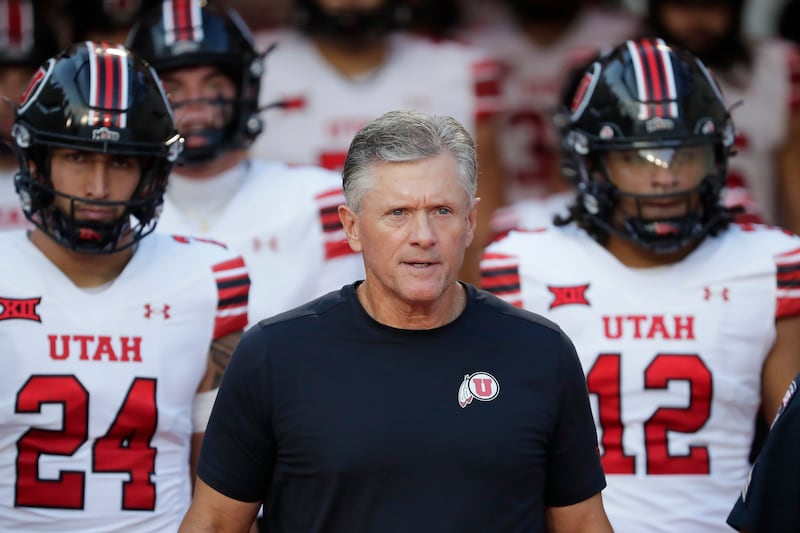
When Kyle Whittingham announced his retirement last week as head coach of the Utah football team, it marked one of the few times that he put himself in the spotlight; that’s not his style.
It couldn’t be helped, of course.
The man has managed to coach for 30 years at the University of Utah, 21 as head coach, and he did it about as quietly as he could. The story was never about him, if he could help it.
I remember sitting in his office one morning many years ago as we began an interview for a in-depth, two-part story about his life and career. I could sense his reluctance, his discomfort. I commented on this, and he said, “You know how some people say they don’t like to be in the spotlight, but they really do? I really don’t.”
He never wanted the attention. He coached on the down-low, almost anonymously, at least as much as that was possible for a coach who guided his team to three conference championships, two Rose Bowl appearances, 18 winning seasons, one unbeaten season, a win over mighty Alabama in the Sugar Bowl, and 10 top-20 finishes in the national polls (including No. 2 and No. 4), all of which would result in two national coach of the year awards.
Controversy was anathema to him. There was one occasion, a long time ago, when he got into a minor tiff with the Wyoming head coach, but that was when Whit was still making the transition from two decades as an assistant coach to head coach and learning that the new job demanded different decorum. He conducted himself thereafter with great restraint and dignity.
On another occasion, he made a bold, brutally honest comment — a warning, really — about where college football was headed with NIL that was widely quoted. He probably didn’t know the national impact it would make, but it proved wise and prescient and he was willing to take one for the team — college football, that is. He was the voice of reason.
Then he went back to work. He’d said what he said, now stop talking to him about it.


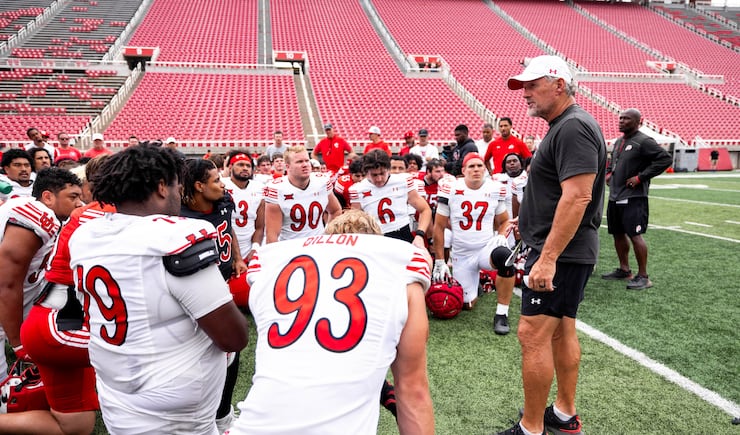
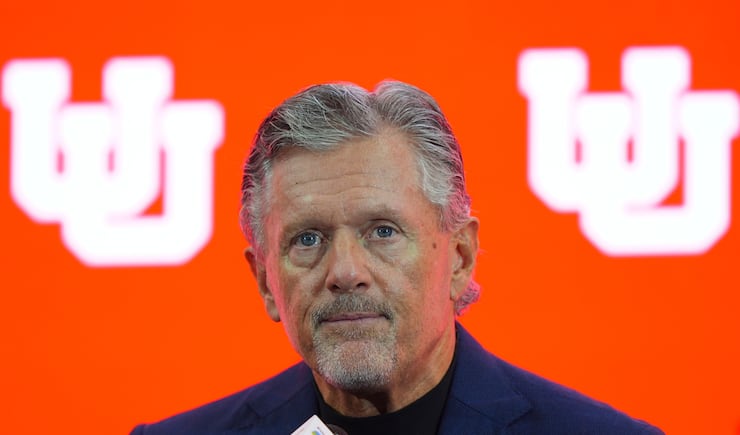


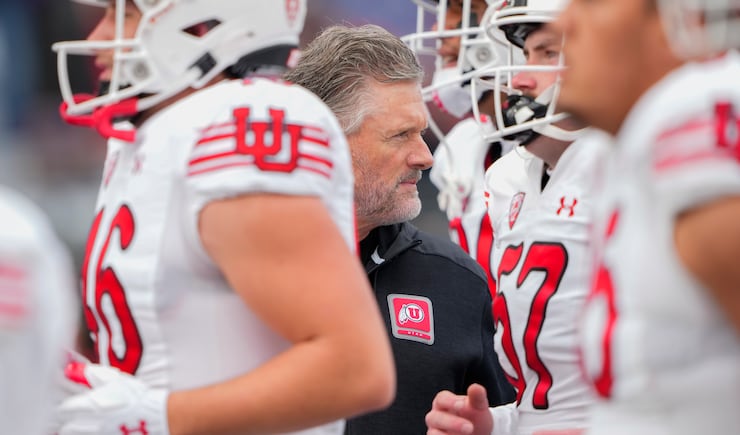
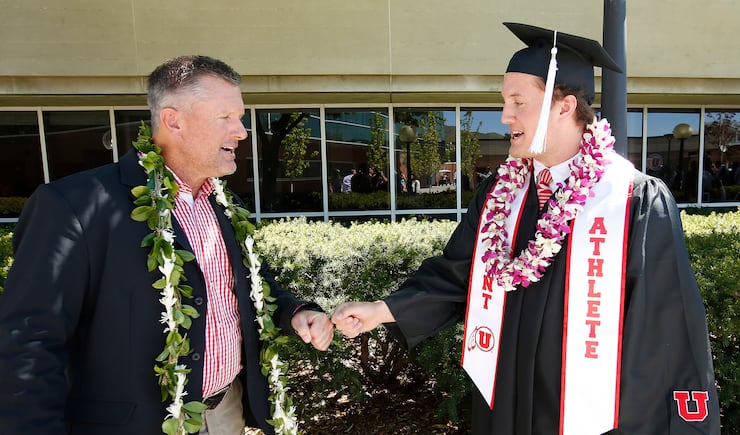
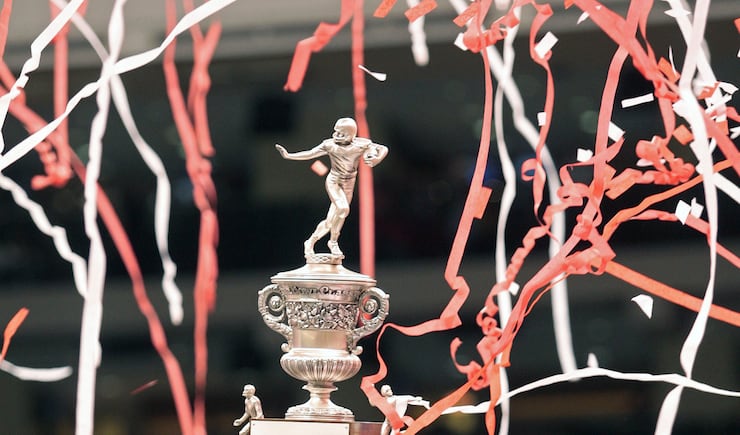
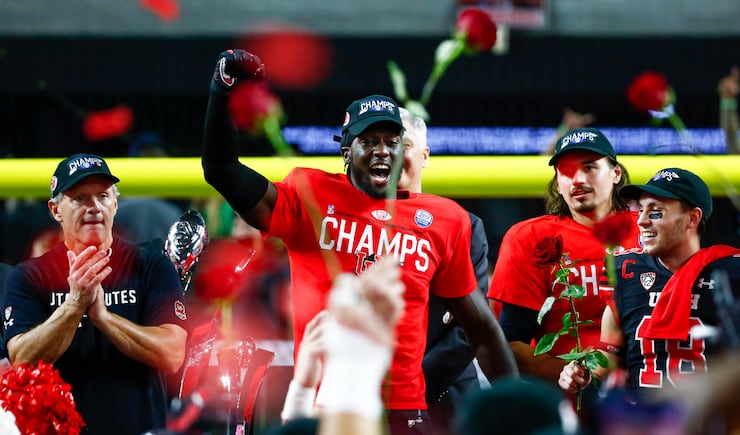
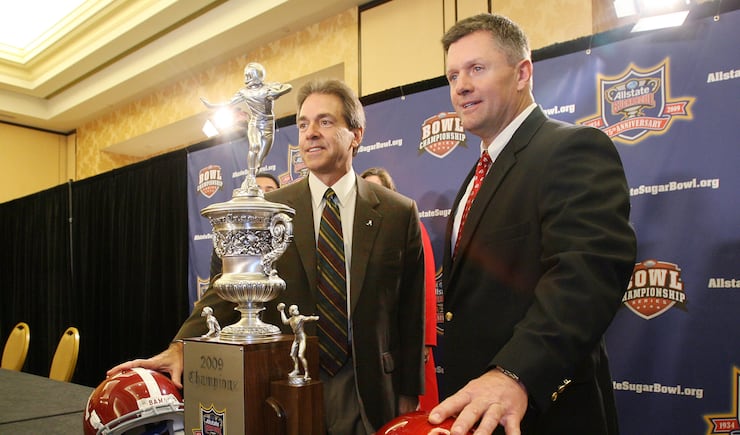
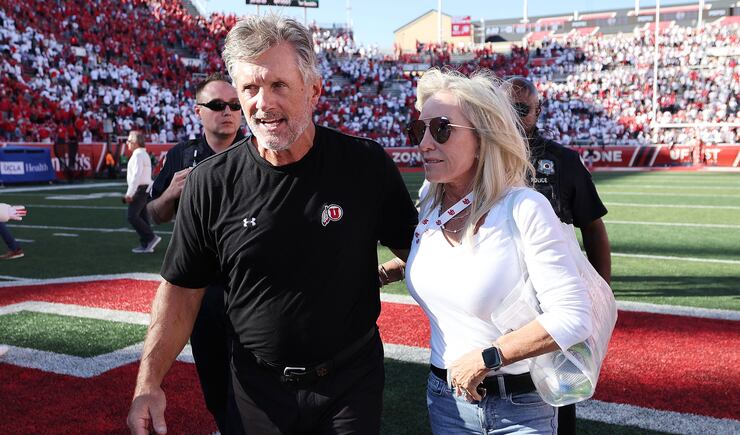


Throughout my journalism career, I seemed to encounter Whittingham at every turn. I first met him when he was an all-conference linebacker at BYU. He turned up a few years later as a graduate assistant for the Cougars and began his ascent up the coaching ladder.
Our sons played in a little league football game against one another. Those sons wound up playing a couple of seasons together on two of Whittingham’s teams at Utah. Whittingham won’t remember this, but I once asked him for a game jersey to give to a friend who was a Ute fan; Whittingham gladly obliged and had one waiting for me at his house.
I enjoyed talking to Kyle; he’s a deep thinker and given to introspection. He’s intense and intentional in everything he does. I especially enjoyed our conversations that veered from football to other subjects.
We shared an interest in music, and he told me about a trip to Paris in which he spent a good part of a day in the Pere Lachaise Cemetery, paying homage at the grave of rock legend Jim Morrison. We spoke of our travels and he told me about annual trips he took to New York City with his wife Jaime. He liked the energy there, he said.
I knew his father, Fred, one of the most fascinating characters I’ve ever met (up there with Jerry Sloan, Larry Miller, Rodney “Hot Rod” Hundley, Craig Garrick and Luke Staley). He pretty much despised writers, but for some reason he tolerated me. We got along. We struck up a couple of casual conversations while sitting around the dorm lounge at the Utes’ training camp in Price, Utah. The stories he told … they should have made a movie about Fred Whittingham.
He was a man’s man with that Jerry Sloan, don’t-mess-with-me aura (and no one did), who always looked as if he had a lot on his mind. He was a former (unbeaten) Golden Gloves boxer and NFL middle linebacker who was nicknamed Mad Dog. It wasn’t much of a stretch to see where that came from.
Fred was self-contained, intense, tough, no-nonsense, taciturn, football smart and what would be called ruggedly handsome. He was exactly what Hollywood would cast as a head coach.
This also describes Kyle Whittingham, except he is a warmer personality.
He was Kyle’s hero — he literally tried to fill his shoes, wearing his father’s Size 13 sneakers (six sizes too big) to school one day. He tagged around with him at NFL camps. He learned the coaching trade at his knee.
The only time I saw a crack in Kyle’s tough veneer was when I asked him about his father in 2009, shortly after he had been named the national coach of the year for the 2008 season. His voice failed him for a moment and he had to pause to control his emotions. Fred Whittingham, a career assistant coach for 25 years, died suddenly at age 64 in 2003, 14 months before his son became a head coach.
Fred missed it all.
As I wrote in 2009, Fred was there for the formative years, but not the victory lap.
They coached Utah’s defense together for three years. Kyle kept his father’s old playbooks and notebooks in his office for years, referring to them early in his coaching career. When he was agonizing over whether to accept a head coaching offer from BYU or Utah, years later, he drove to Provo and visited his father’s grave.
“I’ve asked Kyle if he feels like his dad is there,” his mother Nancy once said. “He says there are times during a game when he feels like he’s right there next to him.”
So now Whittingham is stepping down as coach of the Utes at the age of 66, two years older than his father was at his death. Urban Meyer delivered two brilliant, lightning-strike years at Utah on his way to the big time and then handed the reins to Whittingham.
It was an incredibly tough act to follow and seemed like a recipe for failure. Whittingham not only maintained what Meyer had begun, he made it better — he sustained it. He met the daunting and historic challenge of moving to the Pac-12 in quick order, and then made another move to the Big 12. He created a brand; he made Utah one of college football’s elite programs and became the winningest coach in school history. It was a remarkable run.