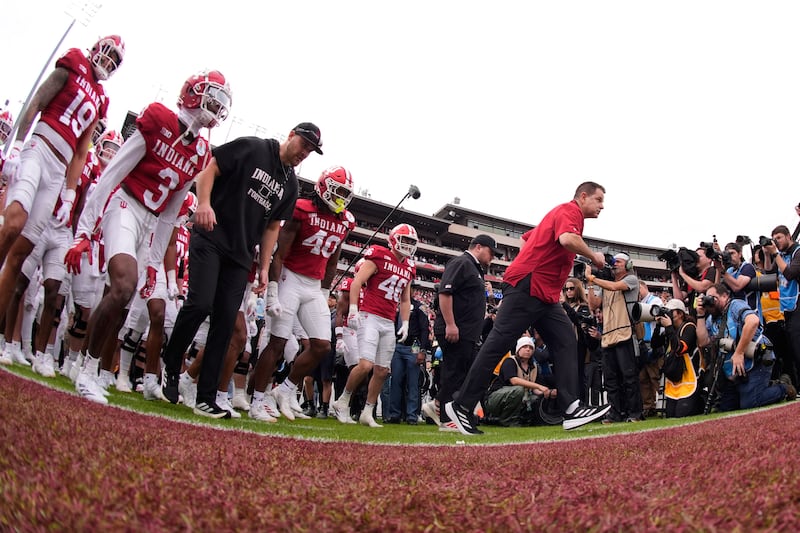

Some observers are wondering if Indiana, 15-0 heading into Monday night’s championship game against Miami, might be the greatest college football team ever.
The Hoosiers chewed up the competition — while playing in the mighty Big Ten Conference. They have defeated their opponents by a ridiculous average score of 42.6 to 11.1. In the playoffs, they beat Alabama 38-3 and Oregon 56-22, and neither game was as close as the score might appear.
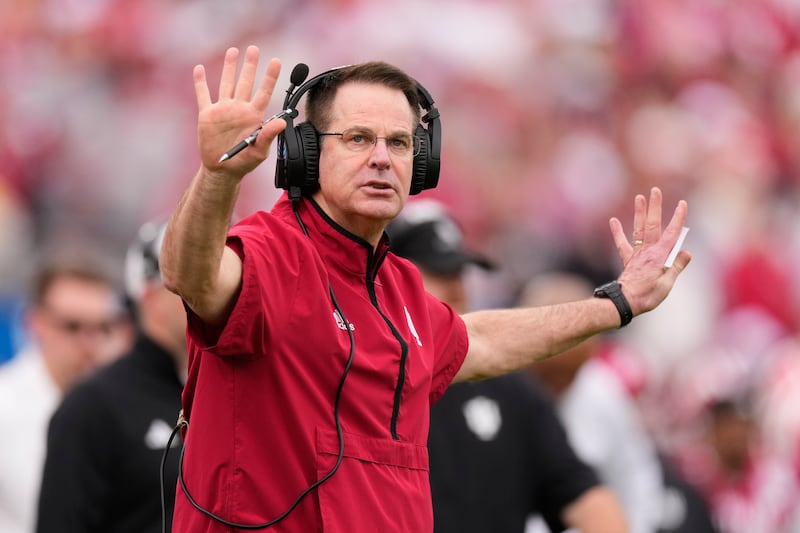
How have they done it? Or, rather, how has Curt Cignetti, the stone-faced head coach, done it? That’s what everyone in college football circles is trying to figure out. How did Cignetti transform Indiana — a nobody in college football forever — into thiiiis.
Football was a warmup act for Hoosiers basketball in the past. Something to do while waiting for hoops. Not anymore. Since Cignetti became the head coach last season, the Hoosiers have won 26 of 28 games — more wins than the previous five seasons combined — and their first Big Ten championship in 60 years. They are one win away from their first national championship in 127 years of competition.
It is a remarkable turnaround for a school that had played in one bowl game in 30 years and had had just three winning seasons since 1994. In the three seasons before Cignetti arrived, the Hoosiers finished with records of 2-10, 4-8, 3-9.
In some ways, Cignetti’s career parallels that of Urban Meyer, who transformed Bowling Green and then won 22 of 24 games at Utah, including his last 16 to go unbeaten in his second season.
These days, you can’t swing a dead cat without hitting a former Nick Saban assistant coach who hasn’t made a name for himself, and Cignetti is one of them.
Five of the 12 head coaches in CFP playoffs spent time on Saban’s staffs at Alabama — Georgia’s Kirby Smart, Oregon’s Dan Lanning, Ole Miss’s Pete Golding (and, during the regular season, Lane Kiffin), Miami’s Mario Cristobal and Indiana’s Cignetti (also, Texas’ Steve Sarkisian and Georgia Tech’s Brent Key barely missed the CFP).
They absorbed what they could under Saban, including the sour sideline face.
Cignetti, after working one year under Saban, took a head coaching job at Indiana University of Pennsylvania against the advice of Saban. He left IUP with a 53-17 record, then went to Elon (14-9) before landing at James Madison, where he was 52-9.
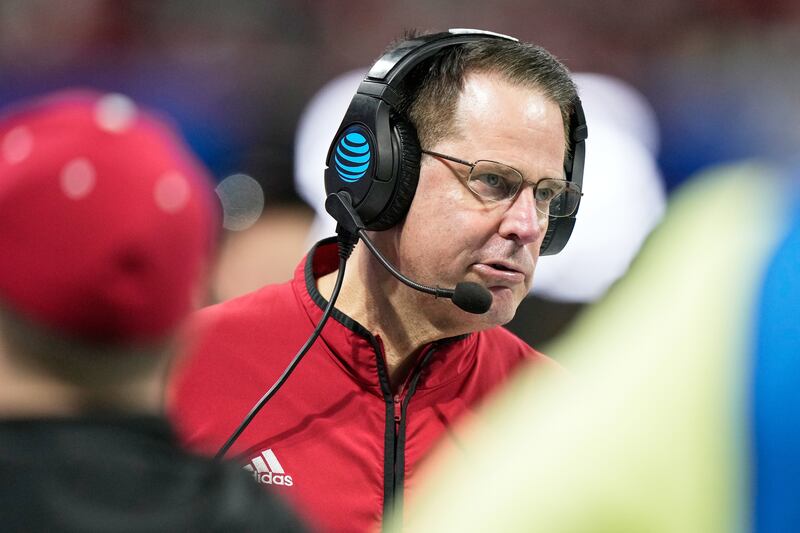
He came to Indiana in the fall of 2023. After 15 years as a head coach, he sports a record of 145-37. He has transformed losing programs into winners at every stop.
But we digress. What differentiates Cignetti’s Indiana teams? How has he done it?
The NCAA allows 20 hours of practice per week, which most coaches complain is too little. The Wall Street Journal reported that the Hoosiers spend only about six of those hours on the field. The rest of the time is spent in walk-throughs, focusing on assignments and game situations.
Cignetti’s practices are relatively short, but intense and organized, making every minute count. His longest practices are easily short of two hours. Lots of slogans are used to describe them: “Work smarter, not harder.” “Brain over brawn.” “Fast, physical, relentless. “Smart, disciplined, poised.”
“I’ve always been a short-practice guy,” Cignetti said. “My practices have probably gotten even shorter through the years, as we do everything we can to prepare the team fully but keep them fresh and healthy.”
The Hoosiers are nothing if not disciplined. They are the second-least penalized team in the country (despite playing two more games than almost every other team), averaging 3.7 per game (26.9 yards).
In some ways Cignetti’s career parallels that of Urban Meyer, who transformed Bowling Green and then won 22 of 24 games at Utah, including his last 16 to go unbeaten in his second season.
Making the most of the modern rules (or what’s left of them), Cignetti recruits for experience. For the 2024 season, he reportedly brought in 30 scholarship players via the transfer portal, including 13 who came with him from James Madison.
This season, all but one starter on offense and one starter on defense have four or five years of DI experience, mostly gained while playing for other schools. Much has been made of the fact that Indiana has no players who were five-star high school recruits and only seven four-star recruits — noticeably fewer than the other three play semifinalists, Oregon (6/52), Ole Miss (3/33) and Miami (5/40).
By the time players have played two or three seasons at other schools, they arrive at Indiana having developed into four- and five-star talent. The team’s average age is 23; there were eight NFL teams this season with an average age of under 26.
“It’s been kind of surreal, but you get it done with the right people, properly led,” Cignetti said, per Yahoo. “We’ve been fortunate to have great staff continuity, and then down in the locker room we’ve got a lot of older guys that have high character, great leadership traits.
“They’re very consistent, day in and day out, in terms of being committed and working hard to improve and being able to enter every Saturday prepared with the right mindset and then putting it on the field. It’s all about people, and you’ve got to have a blueprint and a plan. There’s no question about it, that’s what’s gotten us to this point.”