



Americans’ voracious appetite for betting on sports seemingly can’t be satisfied.
The American Gaming Association estimates people wagered $35 billion on the NFL alone and nearly $150 billion across all sports in 2024. Numbers for 2025 are expected to be higher. Americans legally bet a record $1.39 billion on the Super Bowl last year, and that’s likely to be broken this year.
But Danny Funt, author of the just released book, “Everybody Loses,” said there’s much more than money at stake as sports gambling explodes across the country.
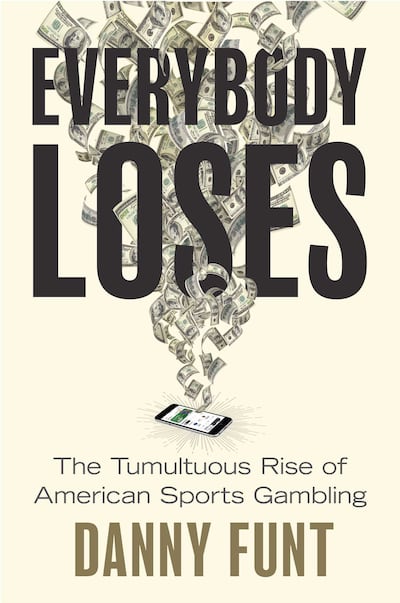
“The betting boom also threatens to shatter faith in the integrity of sports; in the independence of sports media; in commissioners to protect their players, coaches and referees from threats of violence; in lawmakers to prioritize the well-being of the constituents over the wish lists of gambling lobbyists,” he wrote.
Funt takes a deep dive into the unrestrained rise of sports betting in the United States in his eye-opening book. It gives readers a glimpse into how sportsbooks operate, why pro leagues came to embrace gambling and how the media went all in. It raises questions about ethics, addiction and governance.
One chapter describes how sportsbooks cut off or limit big winners, while doing everything in their power to retain the biggest losers. The book also tells painful stories of bettors gambling away their last dime.
“People are divided on whether legalizing sports betting is a good thing,” Funt told the Deseret News in an interview.
“If you read the book, people on both sides of that debate can agree customers shouldn’t be treated unfairly and they shouldn’t be taken advantage of and people who are vulnerable aren’t exploited. I think the evidence that I gathered is pretty overwhelming that that’s happening at the top sportsbooks in the country.”
The book came out on the heels of the latest sports betting scandal in which 15 college basketball players were indicted for point-shaving. Last fall, more than 50 people, including past and current NBA and MLB players and mobsters, were criminally charged in four separate federal and state sports gambling cases.
Funt covers sports betting as a contributor to the Washington Post. His work has also appeared in the New Yorker, Wall Street Journal and Columbia Journalism Review. In an interview, Funt talked with the Deseret News about what he found in reporting and writing “Everybody Loses.” The conversation has been edited for length and clarity.

Deseret News: Why did you decide to write a book about sports betting?
Danny Funt: After covering it for a while, mainly for the Washington Post, I felt that so much remained a mystery, particularly regarding how these dominant sportsbooks operate internally and how they view their business and customers. It seemed to me that it would take a book’s worth of investigation to cultivate sources within these various sportsbooks and to speak with a range of individuals in different roles, whether in marketing, customer relations, bookmaking, responsible gaming, or other positions within these gigantic companies. I felt there hadn’t been a successful effort to pull back that curtain.
DN: The title of the book is ‘Everybody Loses.” How did you settle on that and who is everybody?
DF: “Basically, literally everybody. The reason is that I had a growing realization during my reporting that not only are Americans losing a staggering amount of money in bets, but if you think beyond money, leagues are losing faith in the integrity of their games, and sports media outlets are losing independence and the confidence of their readers that they’re prioritizing the readers’ interests over those of their gambling advertising partners. Certainly, when you consider the losses, including all the people suffering from gambling problems and the damage it causes to their families and friends, it is really pronounced and heartbreaking. When you think about loss in that broad sense, a lot of people are losing.”
DN: If everybody loses, why do people keep betting record amounts of money on sports?
DF: It’s very hard to break the delusion that you can outsmart the bookmaker because you think you know your favorite team or your college team’s conference so well. Whatever niche of the sports world you consider yourself an expert in, it’s easy to believe you can beat the odds. It’s not just that the house edge is difficult to overcome over time; these sportsbooks do everything in their power to come out ahead.
One example I found subtle yet compelling is the push for microbetting, which involves not just betting on who will win or how a player will perform over a game but also on granular details like whether the next pitch will be a ball or a strike, if a batter will hit a home run, or if a football possession will result in a touchdown. Someone who manages microbetting — whose company was soon after acquired by DraftKings — explained to me that they employ a tactic called shading. They recognize that fans are biased to think good outcomes will happen, especially for the teams they like. We’re predisposed to think our favorite team will score or our favorite batter will get on base, and because of that, they make those payouts on those positive outcomes worse for those sorts of bets.
That’s just an example of how the optimism of being a fan gets used against you by these sportsbooks.
DN: Aren’t sportsbooks making lots of money?
DF: That was one of the realizations that inspired the title. You’d think, if nothing else, the house always wins — that’s such a truism of the gambling business. Yet a lot of these companies raced into the marketplace thinking that would be the case. In other parts of the world, such as the UK, there are dozens of operators that turn a profit and they’re all able to coexist. For a variety of reasons, that’s not true in the U.S. It seems pretty clear that it’s on pace to be a duopoly with FanDuel and DraftKings dominating the market and everyone else struggling to just stay above water. That has come as a surprise to a lot of people, including sportsbook executives who thought it would be a much easier business than it turned out to be.
DN: Do you think exposing people through “Everybody Loses” to how sportsbooks work will change their attitude toward betting on sports?
DF: I know that it’s had that effect on me. I used to dabble, not betting a lot of money, not betting too often, but I would place bets from time to time, especially when I was bored. It’s just an easy way to liven up a night of watching a game. Over time, the combination of learning how hard it is to win and how ruthless these companies can be toward their most vulnerable customers did turn me off. I haven’t really bet at all in the past year.
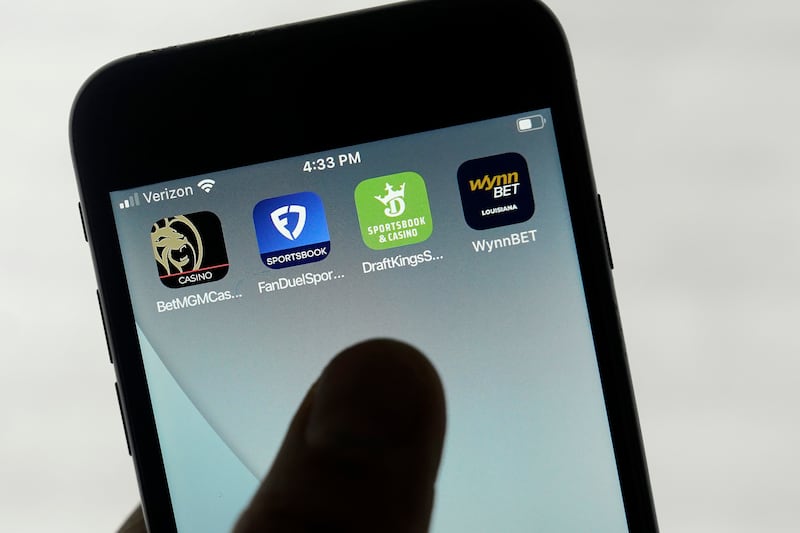
DN: Why did pro sports embrace sports betting after decades of trying to distance itself from gambling?
DF: It’s a somewhat complicated story that I was excited to get the inside scoop on and lay out in the book. The short version is that the gambling industry presented very compelling evidence during some secret meetings about a decade ago. Secret so much so that as you read sometimes these leagues wouldn’t even host representatives of the gambling industry in their headquarters. They had to do the meetings at cafes because they just didn’t want to be seen welcoming them. In these meetings, the industry presented evidence that the most valuable asset to sports leagues, their TV rights, was in danger as younger fans watch fewer games live or they’re canceling cable subscriptions. All of the ways that watching sports forces you to sit through ads, fans are pulling back from. There were really powerful studies done that show gamblers are rabid consumers of sports and watch all sorts of games that ordinary fans don’t care about, they watch to the ends of blowouts to see if their bet will win when most people will change the channel. Just thinking ahead of protecting this treasured asset, their TV rights, the leagues thought that’s too good to pass up. In the NFL’s case, through partnerships they would get with sportsbooks and this indirect profit would add up to more than $2 billion every year.
DN: Is one pro sport more all in on gambling than another?
DF: I’d love to be able to differentiate them, but they all seem like they fully embraced this. One of the most telling examples is how much they allow gambling to be such a prominent part of their telecasts. I remember watching the last World Series Game 7 between the Blue Jays and the Dodgers, and as the leadoff hitter was digging in to start the game, Fox flashes on the screen, ‘Here’s a parlay that you want to bet on this game.’
Your passion for the game and your optimism about the team you’re rooting for, all of that is a competitive disadvantage when it comes to betting on sports. That, I think, is categorically different than hawking any other product.
DN: Has sports betting compromised sports journalism? If so, in what ways?
DF: I felt I needed to devote a whole chapter to that because the normalization of gambling through sports outlets that people really trust is such an important part of why this became ubiquitous. It used to be something that people, if they did it, they might have felt a little guilty about it or they would do it discreetly. Seeing these celebrity in-studio hosts or famous broadcasters or newspaper columnists who you respect so much promoting gambling and saying “Here’s who to bet on’ or ‘Here’s who I’d pick if I were betting,’ that had profound influence.
It also ties their hands if there is something negative about the gambling industry they think is worth covering. There is a reporter who used to work at ESPN named Henry Abbott who said it’s going to look like sports media’s getting bribed by all of this gambling advertising because it’s intimidating to say something that’s going to be embarrassing for such a key advertiser.
DN: How has sports betting impacted the integrity of play on the field or on the court?
DF: One of the biggest arguments that (league) commissioners of the previous generation hammered home was that you would have actual scandals and people disgraced who got caught up in them. You would have a corrosion of trust in the sport, a cloud hanging over those who are doing nothing wrong but now face this level of cynicism from fans whenever something strange happens or something unexpected.
After the NBA and MLB arrests last fall, YouGov published a survey that found 65% of Americans now believe that some athletes alter how they play to influence betting outcomes. I don’t really fault them because the arrests that have come to light is exactly what those commissioners had warned.
DN: What’s your take on the latest point-shaving scandal in college basketball?
DF: All these raise more questions than they answer. For one, why did it take so long? You had players who were active on teams and playing games the week that the indictments came down. A big selling point for legalization was it will give us access to betting data so we’ll be able to find suspicious wagering activity and investigate accordingly. Yet there’s been a number of scandals where the alleged misbehavior took place years before the arrests were made.
Particularly, I’m thinking of the Terry Rozier arrest last year. He was accused of fixing the outcomes of his prop bets as a member of the Charlotte Hornets and then he got traded to the Miami Heat and they took on his big contract. You’d think if something shady were happening with those bets, the NBA or law enforcement would intervene much faster. I feel the same way about this.
DN: Why are state lawmakers so willing to embrace legal sports betting?
DF: There were a lot of things that converged to make this as explosive as it’s been. A part of that was the pandemic was happening when a lot of states decided to legalize. They were facing budget deficits. Rather than deal with the political complications of trying to raise taxes, if you just activate this industry, you could make a lot of money off it. In some cases, the revenue has fallen short of what they expected and it’s kind of a pittance when you think about their state budget needs. Even if it is a significant amount of money, a lot of people I’m hearing say it’s outweighed by the public health costs or the money people are losing in their savings or other forms of financial suffering, whether it’s bankruptcies or poorer credit scores or students tapping into their tuition funds to pay for the betting. In short, the consequences of this would outweigh whatever tax benefits there are vis-a-vis tax revenue.
DN: Is there something counterintuitive about legalizing bookmaking and then promising a large share of the revenue would go to treatment programs for problem gamblers?
DF: The vast majority of states have failed to allocate a very modest share of the proceeds from legal gambling to helping people with addiction, which to some people would be mandatory; if you’re going to create a problem you ought to devote some of the money that it generates to deal with the fallout.