


- Federal authorities charged more than a dozen college basketball players with fixing games.
- A federal indictment describes how fixers and players allegedly manipulated outcomes.
- Point-shaving scandals have eroded fans' trust in the integrity of pro and college sports.
More than a dozen college basketball players stand accused of “fixing” games through “point-shaving” to alter the outcomes in favor of bettors who wagered large sums of money in the latest betting scandal to rock the sports world.
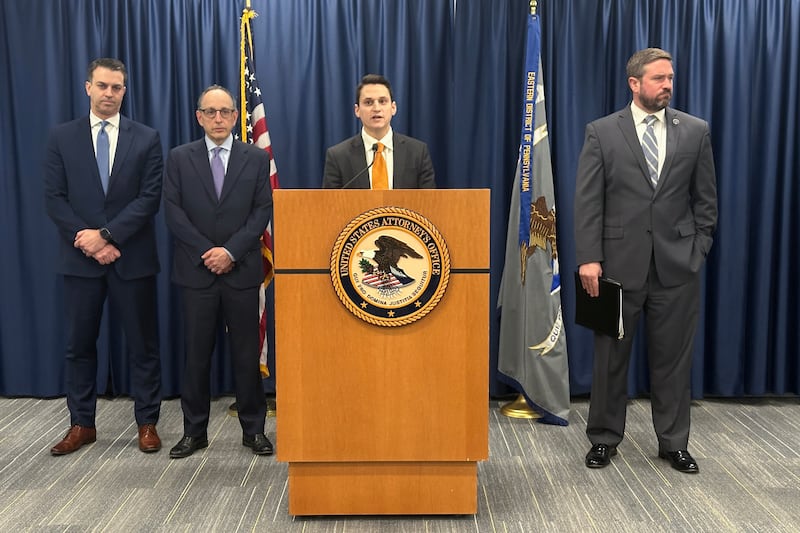
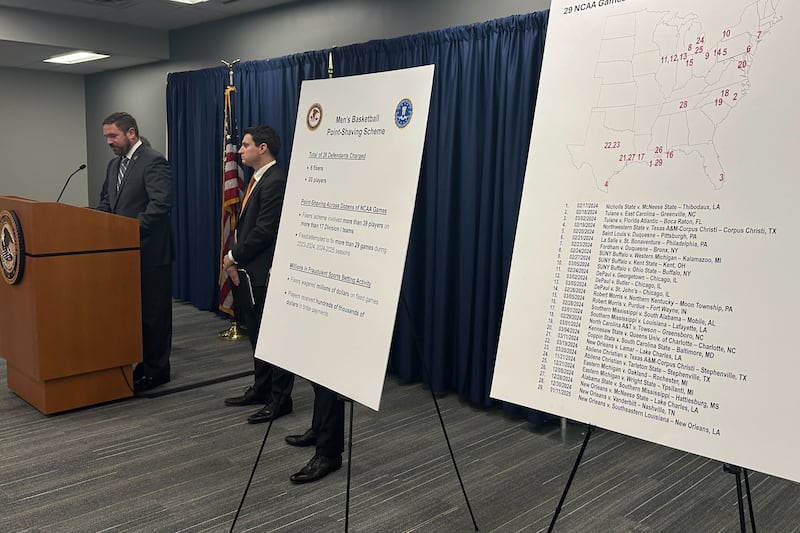
Earlier this month, federal prosecutors in Philadelphia charged 26 people in connection with an alleged bribery and point-shaving scheme to fix NCAA Division I games and Chinese Basketball Association games.
“The stakes here are far higher than anything on a bet slip. The criminal charges we have filed allege the criminal corruption of collegiate athletics through an international conspiracy of NCAA players, alumni and professional bettors,” U.S. Attorney David Metcalf said in a statement. “It’s also yet another blow to public confidence in the integrity of sport, which rests on the fundamental principles of fairness, honesty, and respect for the rules of competition.”
What does fixing mean? What is point-shaving? How do players rig a college basketball game?
The 70-page indictment describes how a group of gamblers recruited players with promises of $10,000 to $30,000 to influence a game or a portion of the game, generally by underperforming on offense or defense, or otherwise trying to limit the number of points scored by their team.
Basically, players rig games by playing poorly on purpose. They might miss easy shots like dunks and layups, slack off on defense, commit turnovers or keep the ball away from a hot shooter who isn’t in on the scheme.
Prosecutors allege the fixers engaged in a point-shaving scheme involving more than 39 players on more than 17 different NCAA Division I men’s basketball teams who then fixed and attempted to fix more than 29 games for millions of dollars in bets.
Point-shaving for dummies
To understand how the scam plays out, perhaps some background on how sports betting works would be helpful.
Sportsbooks set a “point spread” for sporting contests such as basketball games, so that bettors can place wagers based on the relative performance of a team rather than simply betting on which team will win.
The point spread is the predicted scoring difference between the two teams, which determines the favorite and the underdog. For a bettor to win a wager placed on the favorite, the team has to win by more than the point spread. For a bettor to win a wager placed on the underdog, the team has to either win the game or lose by less than the point spread. In sports betting, to “cover” a point spread means a team performed in a way that satisfies the conditions of the point spread set by the sportsbooks.
Games can be fixed or manipulated by a single player or multiple players on one team agreeing to influence the outcome by the way they play. It allows gamblers betting on the score, who are working with the players, to make money by placing wagers with a high degree of certainty regarding the outcome.
Such a scheme is known as point-shaving. Players underperform to ensure their team scores only a certain number of points by halftime or by the end of the game. They alter their performance based on the point spread on that game so that their team won’t cover the spread and their opponent will cover the spread.
Finding new recruits
The indictment lays out how gamblers Shane Hennen, Marves Fairley, Jalen Smith and others allegedly recruited players from smaller NCAA Division I schools who don’t have access to the millions of dollars in NIL and revenue-sharing as their peers at big schools.
And it apparently was easy to find willing players.
“U got somebody at Robert Morris”? one fixer texted. “markese hastings,” another replied, in reference to Robert Morris University’s leading scorer. “Got the RMU (Robert Morris) boys ready, waiting on you.”
With Hastings and two teammates on board, the organizers of the scam bet $256,000 against Robert Morris in a game with Northern Kentucky. Hastings and his teammates “underperformed,” according to court documents, and Northern Kentucky covered the 1.5 points of the first-half spread, outscoring Robert Morris 41-23. Robert Morris played “substantially” better in the second half and won the game 70-60.
When the fixers texted Hastings about paying the players, Hastings expressed “eagerness” to continue the scam, saying “We might as well do the next one too. (This) was too easy,” according to the indictment.
Hastings has pleaded not guilty to charges of conspiracy to commit wire fraud and aiding and abetting bribery in sports.
“The government always cherry picks what they feel are salacious little tidbits to spice up the indictment,” his lawyer, William J. Brennan, told The Wall Street Journal. “I’ve found over the years that many times they’re taken out of context.”
Perfecting the job
In one case described in the indictment, fixers allegedly texted North Carolina A&T players in the middle of a game against Towson to recruit teammates to ensure the fix was successful.
“lf it start looking shaky(,) tell 2 or 3 other (North Carolina A&T players) what it is,” Camian Shell was told, “and they (get) paid too.”
Shell allegedly replied with a “love” emoji. He has pleaded not guilty.
In another midgame text during a game between DePaul and St. Johns described in the indictment, Smith complained to Blue Demon player Micawber Etienne that one of the players who was not involved in the point-shaving scheme was playing well and needed to “chilllll the (expletive) out.”
Etienne texted him back, assuring Smith that the DePaul players involved in the scheme would keep the ball away from that player and prevent him from scoring. Smith responded that if Etienne and the DePaul players keep to the plan, the “bag,” or bribe payments, would be “on the way,” according to court documents.
In another case, fixers allegedly praised players who had “perfected” the job.
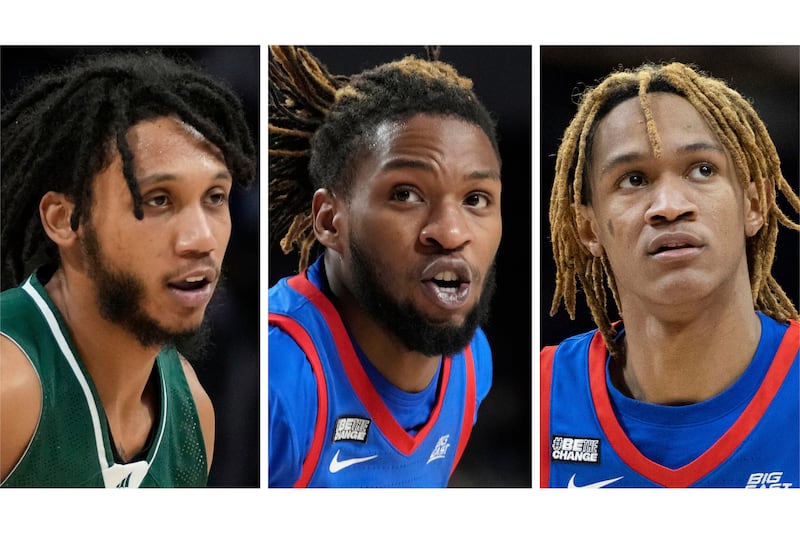
Playing for Depaul, Jalen Terry and Da’Sean Nelson “underperformed” in the first half of a game against Georgetown. Terry scored zero points in the first half and the fixers won their bets. He came back in the second half with 16 and Depaul ended up losing by a point.
“l love Jalen terry he perfected his job . . . ” one fixer texted another. “(Expletive) Nelson snapped too.”
Terry has pleaded not guilty.