

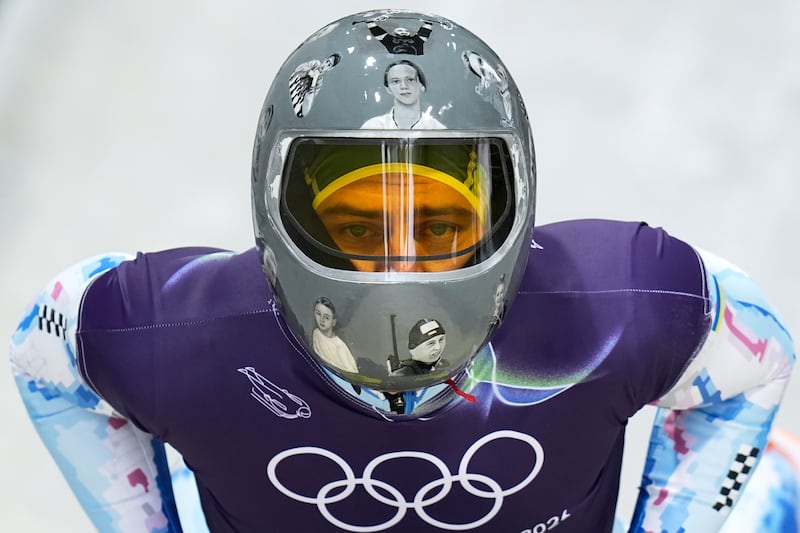

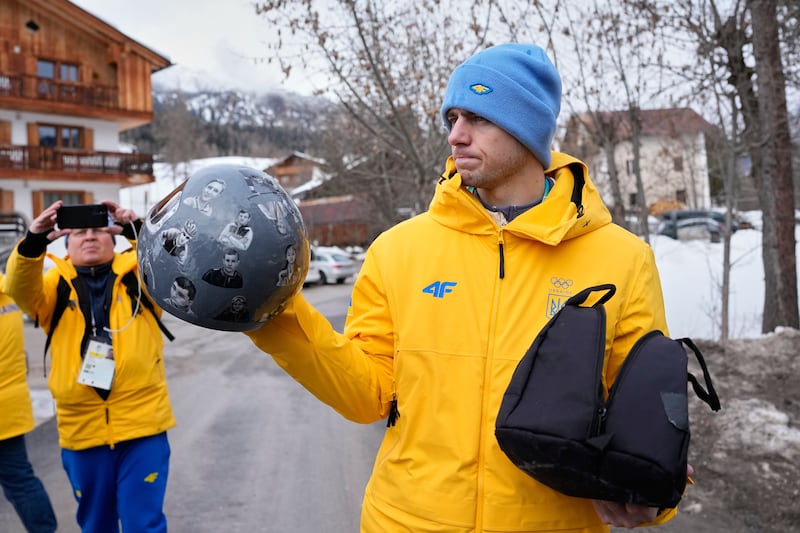
Ukrainian skeleton athlete Vladyslav Heraskevych was disqualified Thursday after refusing a request from the International Olympic Committee not to wear a helmet honoring more than 20 athletes and coaches killed in Ukraine’s war with Russia.
The decision came about 45 minutes before the competition, ending a three-day standoff in which Heraskevych knew he risked removal from the Games by wearing the helmet.
As an alternative, the IOC said Heraskevych could wear a black armband to mourn the fallen and bring his helmet into a postrace media scrum, but he refused the offer.
“For me to back down is betraying (the people pictured on the helmet),” Heraskevych told NBC News.
Heraskevych finished fourth at last year’s world championships and was among the fastest in training sessions ahead of the Olympic races.
IOC intervention does not yield solution
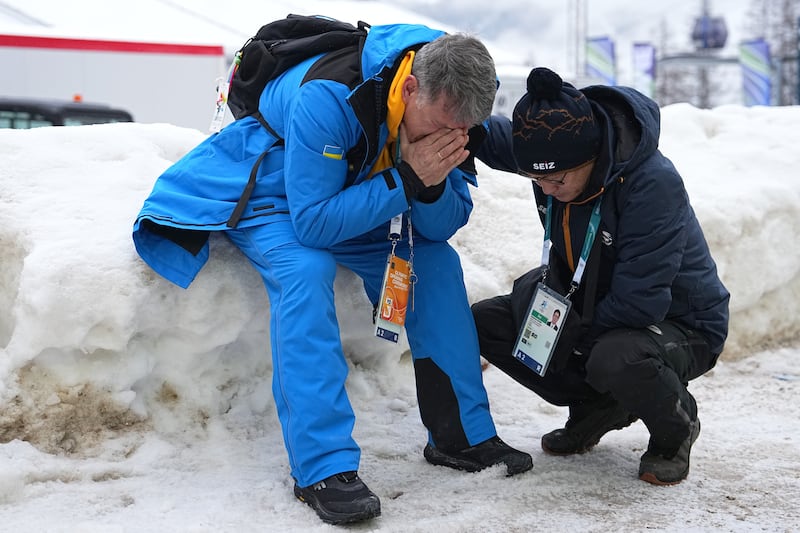
IOC President Kirsty Coventry met with Heraskevych early Thursday in an attempt to break the deadlock, but he stood his ground, resulting in his disqualification.
The Associated Press reported that Coventry, originally scheduled to attend Alpine skiing events, went to the sliding center to meet him. She was waiting at the top of the track when he arrived around 8:15 a.m., and the two met privately for about 10 minutes.
“No one, especially me, is disagreeing with the messaging, it’s a powerful message, it’s a message of remembrance, a message of memory, and no one is disagreeing with that,” Coventry said.
“The challenge was to find a solution for the field of play. … Sadly, we’ve not been able to come to that solution. I really wanted to see him race today. It’s been an emotional morning.”
Heraskevych said of the meeting, “She was telling me that she really wants me to compete. But at the same time, she couldn’t explain to me what is the difference between my case and the case of others?”
He cited examples such as a U.S. figure skater who brought a photo of his late parents, who were killed in a plane crash in January last year, and an Israeli skeleton athlete who wore a kippah bearing the names of 11 athletes and coaches killed in the 1972 Munich Games.
“A competitor literally placed the memory of the dead on his head to honor them,” Heraskevych wrote on Instagram. “I frankly do not understand how these two cases are fundamentally different.”
In a statement, the IOC said, “Having been given one final opportunity, skeleton pilot Vladyslav Heraskevych from Ukraine will not be able to start his race at the Milano Cortina 2026 Olympic Winter Games this morning. The decision followed his refusal to comply with the IOC’s Guidelines on Athlete Expression. It was taken by the jury of the International Bobsleigh and Skeleton Federation (IBSF) based on the fact that the helmet he intended to wear was not compliant with the rules.”
Heraskevych plans to appeal the decision to the Court of Arbitration for Sport.
4 years ago, IOC supported Heraskevych
The IOC has sided with Heraskevych before.
When he displayed a “No war in Ukraine” sign at the 2022 Beijing Olympics, the IOC said he was simply calling for peace and did not find him in violation of the Olympic Charter.
Several days ago, before his disqualification, Heraskevych referenced the incident on X, writing:
“Over these four years, the IOC has changed dramatically. Back then, in that action, they saw a call for peace and did not apply any sanctions against me. Now, at the Olympics, we have already seen a large number of Russian flags in the stands, on the helmet of one of the athletes — and for the IOC, this is not a violation. Yet a violation was found in the ‘helmet of memory,’ which pays tribute to members of the Ukrainian sports family who have been killed since the last Olympic Games were held.”
Heraskevych said he feels the IOC has betrayed the memory of the athletes and that Ukraine could have won a medal if he had been allowed to compete.
IOC spokesperson Mark Adams said allowing unrestricted messaging on the field of play “would lead to a chaotic situation.”
“Sport without rules cannot function,” he added. “We would encourage him to express his grief, but in the end it’s not the message, it’s the place that counts.”
President of Ukraine, others weigh in
Ivo Steinbergs, coach of the Latvian team, prepared a protest letter to the International Bobsleigh and Skeleton Federation, requesting Heraskevych’s reinstatement.
Steinbergs also called for a clearer distinction from the IOC between a memorial tribute and political advocacy. He said it was crushing to see Heraskevych disqualified and his father beside him in tears.
Ukraine’s Olympic Committee said in a statement after the ruling on Thursday: “Vladyslav did not start today, but he was not alone — all of Ukraine was with him.”
Ukrainian President Volodymyr Zelenskyy weighed in on X.
“The Olympic movement should help stop wars, not play into the hands of aggressors. Unfortunately, the decision of the International Olympic Committee to disqualify Ukrainian skeleton racer Vladyslav Heraskevych says otherwise,” he wrote.
“We are proud of Vladyslav and his action. Having courage is worth more than any medal,” he added.
Ukrainian Foreign Minister Andrii Sybiha also expressed his disapproval.
“The IOC has banned not the Ukrainian athlete, but its own reputation. Future generations will recall this as a moment of shame,” he said.