Just how valuable are stars like Richie Saunders?
You take guys like him out of a lineup and the impact, as BYU has witnessed, is obvious. Like a missing portion of a three-legged stool.
Now comes the question: If you could miraculously heal college basketball’s top injured players and create a team out of these limping, bandaged soldiers, could that team win a national championship?
The case could be made.
They are that talented.
Yes, there is a talent drain from injuries like Saunders this March as madness unfolds. It is a tragedy, and it has impacted teams like Texas Tech, Kentucky, North Carolina, Nebraska and Michigan, as well as BYU.
The Big 12 has suffered more key injuries to big-time contending teams than most in the college game, a fact that changed the trajectory of the Big 12 tournament in Kansas City this week.
John Kurtz, a Kansas-based podcaster who covers the Big 12, noted the ACL injuries to Saunders and Toppin came within days of each other and were devastating, especially with Toppin and TT.
“It’s a loss for the sport, not just the Big 12, to see him (Toppin) go down. As the reigning Big 12 Player of the Year, Toppin helped Texas Tech beat three top-five teams (Duke, Houston and Arizona) and turned the Red Raiders into a real national title contender.”
Make a team out of these Out For the Season All-Stars, and I like the chances of this cadre of surgical patients to win it all.
Consider this group of rotational players:
Richie Saunders, an electric energy guy for BYU, a Big 12 first-team player last year and performing at that level this year as one of the nation’s most accurate 3-point shooters, sidelined after ACL surgery in February. Saunders averaged 18 points and 5.8 rebounds, 2.1 assists with a 48% shooting accuracy from the field before his injury.
Caleb Wilson, the highly touted freshman forward for North Carolina. At 6-foot-10, 215, he is a lottery pick in the upcoming NBA draft. This year he started all 24 games he played, displaying elite scoring and defense as a power forward. His season was cut short by a pair of hand injuries. Initially, on Feb. 10, during a 75-66 loss to Miami, Wilson suffered a fracture in his left (non-shooting) hand, which sidelined him for the subsequent six games. As he neared a return, he sustained a broken right thumb in a non-contact incident during practice on March 5, 2026, while attempting a dunk. This required surgery and ruled him out for the remainder of the season.
Wilson averaged 19.8 points and 9.4 rebounds a game for the ACC’s gem program.

Koa Peat, at 6-foot-8, one of the top freshman forwards in the country, playing on Arizona’s presumptive No. 1-ranked team most of the season. A former teammate of BYU freshman sensation AJ Dybantsa on the World Championship U-19 team this past summer, Peat now finds spotty playing time after suffering a lower-muscle strain. He averages 13.3 points and 5.4 rebounds a game and is shooting 53.4 from the field.
Braden Huff, a 6-10 forward for Gonzaga, is out for an undetermined amount of time with a left knee injury and it’s uncertain if he will return to finish the season. A talented shooter and rebounder in the mold of Mark Few’s storied frontcourt tradition, he averages 17 points and five rebounds and is a cornerstone of the Bulldogs’ early-season success.
JT Toppin, the 6-foot-10 versatile center, is an elite scoring and rebounding machine as well as a dominating player in the Big 12. He is a lottery pick and was a power machine for Texas Tech when the Red Raiders were racing along as a top-10 team. He averaged 21.8 points and 10.8 rebounds a game while shooting at a 54.8%. Like Saunders, he was sidelined for the season with an ACL injury about a week after Saunders went down.

Jaland Lowe, a Kentucky point guard who underwent shoulder surgery in early January and is out for the season for coach Mark Pope. A scoring threat and great facilitator, Lowe proved to be a key cog for the Wildcats early this season before going down for good.
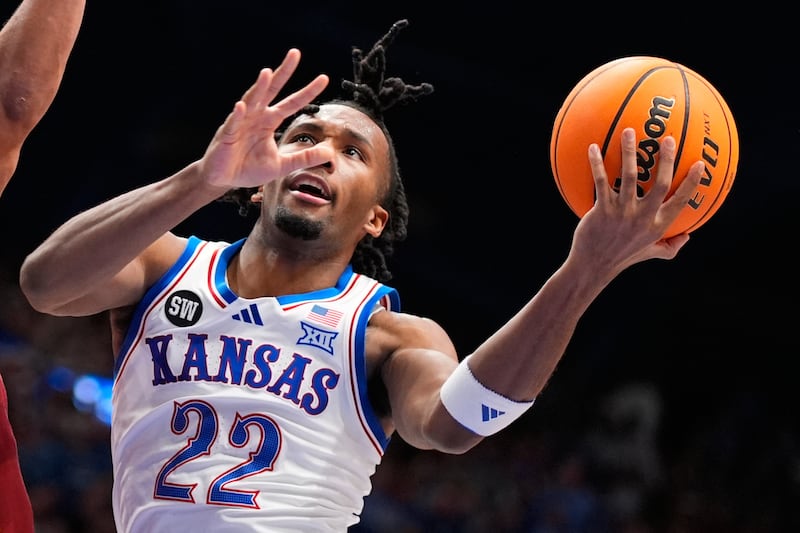
You could throw Kansas star Darryn Peterson on this list, a potential No. 1 NBA pick, but nobody knows if he could actually qualify. He’s kind of ghosted this season. Is he injured or sort of injured?
There are the starters. Yes, they’d win it all if on the same team.
Here are some of the bench players to contribute off the bench for this All-Injury Team:
Michigan guard L.J. Cason, a key player for the Wolverine Big Ten championship run a year ago, suffered a right ACL tear on Feb. 27 and is out for the remainder of the season.
Kentucky’s injury bug didn’t stop with Lowe. Jayden Quaintance, a 6-10 big man has been sidelined since January with a knee problem and guard Kam Williams is expected to be out for the postseason with a broken right foot Jan. 21.
Nebraska guard Connor Essegian injured his ankle back in November and hasn’t played since. You might remember Essegian had 20 points in 17 minutes with 5 of 10 makes from distance against BYU in an exhibition game in Lincoln before the season began. He would be a nice package on the floor with Saunders. Bombs away.
Ty Rogers, a 6-6 talented athlete and key cog in Illinois’ run to the Elite Eight last year, suffered a torn patellar tendon while playing in a pickup game this past June and hasn’t seen the floor since. He was a coveted player in the transfer portal, but elected to return to play at Illinois before disaster struck this summer.
Losing players is a part of the game. But let’s not kid ourselves: College basketball is very different this March because of so many season-ending injuries to teams that have lived in the top 10 at some point in time this season.
These injured, if so assembled, could win it all.
Consider that Toppin already toppled the best when he was on the floor this season.