

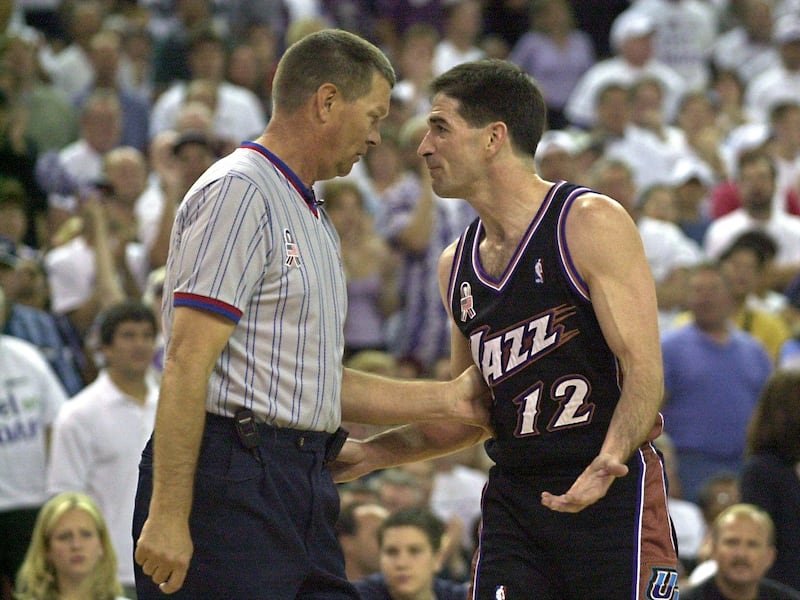

With buzzer-beating excitement and bracket-busting madness in the air, players and coaches will make a name for themselves in college basketball’s most iconic month. And Americans, including those who don’t usually care about sports, get in on the action by watching tournament games, participating in bracket groups and rooting for their alma mater.
But in the background of March Madness, there’s one group that seems to go unnoticed — until something goes wrong.
Just ask former BYU basketball standout-turned-NBA official Bernie Fryer.
Standing on the sideline of the then-named TD Waterhouse Centre in 2002, the veteran NBA referee found himself in a situation referees dream of — or have nightmares about.
“Criticism and second-guessing is just part of what we do. We put ourselves out there and make ourselves vulnerable. We know when we get something wrong and we feel bad about it, for days or weeks, depending on the call or how it affects the game. We all want to be perfect but we are human.”
— NCAA referee Mike Littlewood
With only seven-tenths of a second on the clock, the Charlotte Hornets had the ball on the sideline in a tied game. If the Hornets win, they’ll advance in the playoffs, but a loss would force a win-or-go-home Game 5.
After a toot of his whistle, Fryer put the ball in play and a pass found Baron Davis streaking around the top of the 3-point line who launched a quick, high-arcing shot.
“He catches it, turns in the air, and fires it up there. Buzzer goes off, and it goes in,” Fryer remembered. “I’m thinking to myself, no way he can catch turning, and shoot that in less than a second. So I say to myself, really quickly, no, we’re going to overtime. Well … (the shot) was good.”
Davis, a first-year all-star, vehemently disagreed with Fryer and immediately pointed to the scorer’s table, telling them to look back at the split-second call. Only one problem: instant replay hadn’t been made available yet in 2002, so no amount of video evidence could change Fryer’s ruling.
Few referees understand a player’s frustration over a bad call like Fryer does. The native of Port Angeles, Washington, played basketball at BYU from 1970 to 1972 before playing in the ABA and NBA for a few seasons. Then his officiating career began.
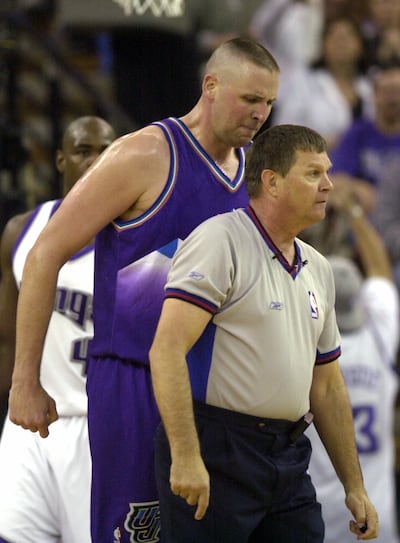
Fryer was an NBA referee from 1978 to 2007, and still serves as adviser to NBA officials.
Fryer says his playing experience makes missed calls even tougher, knowing how much players invest into each moment.
But making split-second decisions every trip down the court — and being remembered only for the few you get wrong — comes with the job for Fryer and anyone else who picks up the whistle.
Starting at the bottom

Tanner Johnson, a high school basketball referee just starting his career in Utah, recalled a similarly memorable game for him. It was a much smaller, less rowdy gym with much less at stake than an NBA playoff game, yet still came with the same familiar heckles. For a first-game referee, Johnson said the intensity was high in the Springville High School auxiliary gym during a competitive girls JV game.
The game came down to a last-second shot right in front of the novice referee. With the game riding on the last play, Johnson didn’t want to “ruin” it.
“I was just nervous to mess something up,” he said.
A feeling many new officials experience in a fast-paced game full of split-second decisions.
To Johnson’s relief, the shot missed and the game finished without any controversy. But after that first experience, Johnson was hooked and decided he wanted to improve his referee skills.
For referees who are in the NBA or just starting out, the whistle carries the same weight when it comes to the outcome of games, and the result of a big blown call can be scarring. For Johnson and Fryer, however, being involved in the action outweighs the potential mishaps.

Along the way, the young 26-year-old also started working high school football and baseball games. Having played multiple sports himself — namely baseball, basketball and cross country, Johnson said he officiates so kids can have the same opportunities he once had.
The quick transition from sport to sport can be demanding for the recently married official who is in his second sports season since his marriage 18 months ago. Balancing time between family, work and refereeing is the difficult part, he said.
Still he credits a supportive wife who makes it all possible.
Driven by a love for the game, Johnson has worked hard to advance and receive better games; and finishing his sixth year as a UHSAA official, the young referee, and newly turned father, was rewarded earlier this year with a state championship assignment.
How refs advance
Contrary to fans who may think referees simply inherit higher status as they put in the years, Johnson reaffirms the journey requires much more.
“I go to camps in the summer. Get reps. That’s what a lot of people don’t understand when it comes to officiating,” said Johnson, who just signed up to attend a camp in Denver this coming summer. “They think you can just move up.”
Each year, referees spend hundreds or thousands to attend referee camps where they are told what they do well and what needs improvement. A system designed to better serve the game as referees polish their craft and learn better strategies for making accurate calls.
While some camps are simply for training purposes, many are hiring camps for officials seeking to work college games. That’s an opportunity very few officials reach.
Breaking through
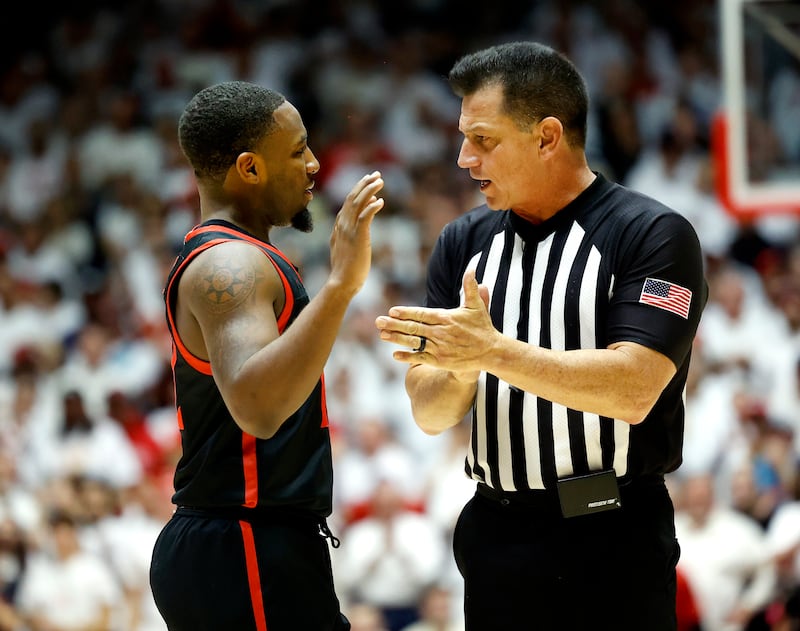
Mike Littlewood, the former BYU baseball coach who also officiates college basketball, said it’s a role he’s been fortunate to break through and make a career out of. Since his first camp experience, it only took him five years to make it to Division I basketball, a quick climb.
“I would hate trying to break in nowadays because officials are all so good (now),” he said. “Just one or two characteristics in a person creates that ‘it’ factor, and those are the guys who move on.”
Littlewood started officiating basketball in 1991 after working a high school football season. He figured he might as well work basketball since it is his favorite sport.
Working his fair share of tournament games, Littlewood will have the treasured opportunity to work the Big Dance again this year. He says tournament games are among his favorite memories as an official, recalling the time he worked his first March Madness game in 2006. The game was a classic tournament moment when No. 14 seed Northwestern State drilled a last-second 3-point shot to down No. 3-seeded Iowa.
Receiving March Madness assignments is just as prestigious for referees as it is for the players and coaches. Year after year, referees work with their eyes set on getting their shot to work the Big Dance — and maybe even the Final Four.

Dealing with the critique
Like Fryer and Johnson, the big games come with scrutiny, Littlewood agreed, and as officials you’re bound to make mistakes when tasked with split-second decisions every time down the court.
“Criticism and second-guessing is just part of what we do. We put ourselves out there and make ourselves vulnerable,” Littlewood said. “We know when we get something wrong and we feel bad about it, for days or weeks, depending on the call or how it affects the game. We all want to be perfect but we are human.”
Fryer understands this reality in a way few referees do.
Seizing an opportunity to referee NBA games due to a referee strike, he became one of the few individuals to referee and play in the NBA. But his first stint was short-lived.
Fryer was sent back to the Summer League where he worked his way back to the NBA, only to be fired once more for performance. Despite his setbacks, he continued to find ways to serve the game and improve himself until he got his opportunity again.
Following another referee strike, he found his place in the league again and served as a crew chief for much of his officiating career. Fryer became a trusted official as he worked 1,696 regular season games, 157 playoff games as well as 12 NBA Finals games, including Game 3 of LeBron James’ first Finals appearance with the Cleveland Cavaliers.
In a career spanning more than 40 years in officiating, he met many officials who seek to serve the game by perfecting their craft, stepping into new roles and mentoring the next wave.
Serving the game
In the aftermath of the Tim Donaghy gambling scandal, Fryer even came out of a brief retirement to support officials facing intense scrutiny. As head of referee operations, he helped guide and mentor referees through one of the league’s most difficult moments.
Such dedication is mirrored by referees at all levels, like Littlewood in the college game and Johnson in the high school ranks.
That commitment will be on display as the NCAA Tournament kicks off. As eyes are glued to the TV, watching players and coaches etch their names into March Madness glory, officials quietly carry the responsibility of keeping the games fair.
In a tournament defined by moments, an official’s goal is to go unnoticed.
And if they do, they’ve done their job.