



- The U.S. House passed a bill that removes protection for gray wolves in the lower 48 states.
- Proponents say wolves are an Endangered Species Act success story and no longer needs federal oversight.
- Opponents call it a short-sighted effort that will devastate the populations of an already struggling apex predator.
The U.S. House passed a bill this week removing federal protections for gray wolves in the lower 48 states.
It directs the Department of the Interior to reinstate a 2020 rule that removed gray wolves from the endangered species list. Federal courts in California had blocked the rule in 2022, leaving the wolves under the protections of the Endangered Species Act.
Additionally, the new legislation would prohibit the law from being reconsidered through judicial review.
“The science is crystal clear on this issue: gray wolves should no longer be on the endangered species list,” Rep. Lauren Boebert, R-Colo., who introduced and sponsored the legislation, said in a statement.
“We can no longer put farmers and ranchers in harm’s way by using taxpayer dollars to protect a species that has been fully recovered and that is destroying their livestock. It is time for the federal government to get out of the way and allow state and tribal wildlife agencies to manage this species.”

The Pet and Livestock Protection Act passed Thursday 211-204, mostly along party lines.
In addition to Boebert, it had 37 additional signatories, which included Rep. Mike Kennedy, R-Utah, as well as representatives from several other Western states including Colorado, Wyoming, Idaho, Arizona, Oregon and Washington. Utah’s four GOP House members voted for the bill.
There are approximately 8,000 gray wolves in the lower 48 states, with more than 9,000 in Alaska. Estimates put around 2,600 in the northern Rockies, 4,700 in the western Great Lakes region, around 450 in the Pacific Northwest, and less than 30 in Colorado.
Wolf protections have been a veritable rollercoaster, especially in the West, eliciting strong feelings from opponents and proponents for decades. The most recent legislation is another iteration of the longstanding debate about how wolf populations should be managed in America.
The bill now moves to the Senate, where similar bills are already being considered.
Does everyone agree?
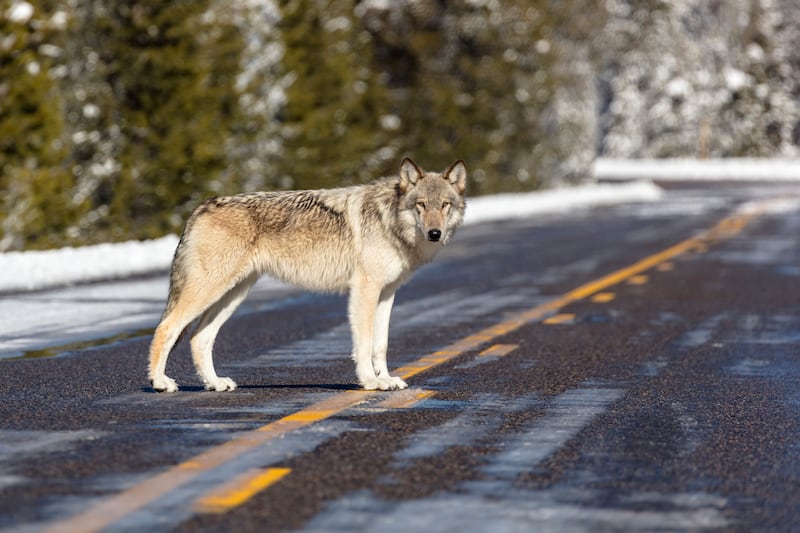
Not all stakeholders believe that the science of the wolves’ recovery is so clear. The judge in the 2022 case over delisting, for example, wrote that the U.S. Fish and Wildlife Service did not prove that wolf populations were actually recovered in its analysis prior to establishing the rule.
“The service’s analysis relied on two core wolf populations to delist wolves nationally and failed to provide a reasonable interpretation of the ‘significant portion of its range’ standard,” wrote Judge Jeffrey S. White, of the U.S. District Court for Northern California. White wrote that “serious” deficiencies in the federal agency’s final rule weighed in favor of setting it aside.
Some conservationists called on science, just like the sponsors of the bill, in denouncing passage of the Pet and Livestock Protection Act.
“Wolves are a keystone species whose presence on landscapes regulates animal populations and improves ecosystem health — something the U.S. Fish and Wildlife Service has acknowledged for at least 44 years,” Kelly Nokes, Western Environmental Law Center attorney, said in a statement calling for the Senate to reject the delisting effort.
“Allowing people to kill wolves in Idaho, Wyoming, and Montana has already stunted recovery in those states. Applying this same death sentence to wolves throughout the contiguous U.S. would nationalize these negative effects, with potentially catastrophic ripple effects on ecosystems where wolves have yet to fully recover.”
One group, the Humane World Action Fund, reiterated a study that found there is broad support for wolf protection. It referenced a recent study that showed 78% of Americans wanted the wolves to retain their status.
“The results of this survey really demonstrate what we already knew that the vast majority of Americans, including those who live in rural areas in states with wolves, highly value them and want them protected,” said Amanda Wight, senior program manager for wildlife protection at Humane World for Animals, an advocacy group that supported the study alongside the U.S. Department of Agriculture.
“Americans understand that wolves need those protections in place in order to fully recover and ... it’s clear that the people driving the negative narrative toward wolves represent a very vocal, but very tiny group of people.”
Yet, wolf populations have grown in recent years and there remains support for wolves to no longer be protected.
“When federal protections were first established for gray wolves in the Great Lakes region, populations were only in the hundreds. Today, there are well over 4,000 wolves across Michigan, Minnesota, and Wisconsin. Despite this recovery, activist judges continue to ignore the science, leaving livestock and pets to be slaughtered and rural communities vulnerable,” said Rep. Tom Tiffany, R-Wisc., a sponsor of the bill.
“The Pet and Livestock Protection Act reflects a commonsense approach that has been recognized across administrations of both parties, including Presidents Bush, Obama, Trump and Biden. The gray wolf has recovered, and Wisconsin should be allowed to responsibly manage a population that has exceeded recovery goals without interference from out-of-state judges.”