

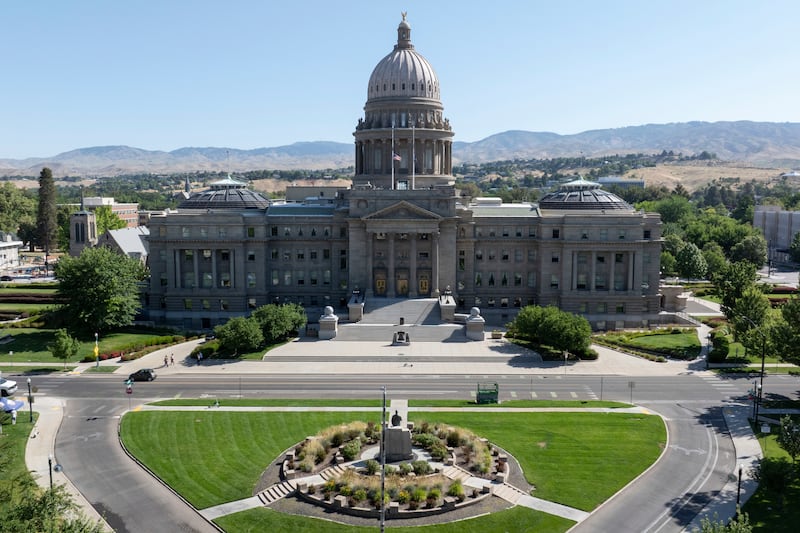

Idaho’s legislature passed a bill this past March that would criminalize using a bathroom that does not match one’s biological sex. The law will take effect on July 1.
After a lawsuit was filed, however, Idaho District Chief Judge Amanda K. Brailsford, a Biden-appointee, granted a preliminary injunction on the grounds that the law is likely to be unconstitutional.
The injunction will prevent only certain sections of the law from being enforced. Transgender people will continue to be able to use bathrooms aligned with their gender identity, but will not be allowed to use locker rooms and showers that do not match their biological sex.
Brailsford wrote in the ruling that the law, “does not identify any objective benchmark, specify what evidence may establish such a need, or explain how an officer is to assess whether the exception applies.”
“Instead,” the ruling continues, “enforcement largely depends on an officer’s subjective assessment of an individual’s physical condition at a particular moment.”
The lawsuit was filed by the ACLU on behalf of six Idahoans who identify as transgender.
Idaho Attorney General Raúl Labrador said on X that the decision, “misapplies the law, confuses the issues, and misrepresents the position of the state. Biological sex is not vague, and neither is this law.” He also said his office will appeal the order.
What Idaho’s law includes

The law states that “any person who knowingly and willfully enters a restroom or changing room in a government-owned building or a place of public accommodation … that is designated for the opposite biological sex of such person shall be guilty of a misdemeanor.”
The punishment for a single violation could be imprisonment for up to a year while multiple offenses could result in a felony charge.
While many states have bans prohibiting transgender people from entering public bathrooms, Idaho’s law would extend that ban to include bathrooms in privately owned businesses such as restaurants and retail stores.
The law does permit exceptions such as when a bathroom is the only one “reasonably available” or if the person has a “dire need.”
Defendants say the law causes fear of harassment
ACLU lawyer Barbara Schwabauer said, “No one should be forced to choose between the threat of arrest for being themselves in public or the threat of harassment and violence for acting the way the state wants them to be.”
Plaintiffs said they were worried about confusing those of their biological sex in bathrooms and also being harassed themselves. The ACLU said that they will continue fighting until the law is completely blocked.
Brailsford wrote that the way that the law is currently written would require police to make “moment-to moment” judgments about enforcement of the law.
After validating the state’s “valid interest in … protecting women and children in public restrooms,” Brailsford, in her ruling, cited another federal judge who said that safety was “not a persuasive justification” for preventing transgender people from using restrooms that do not coincide with their biological sex.