

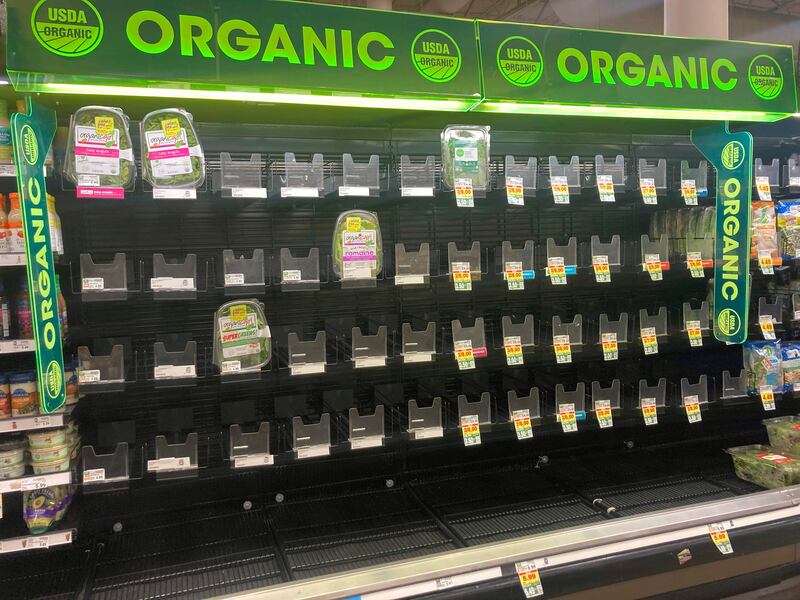

It will soon become more difficult to earn the term “organic” in U.S. supermarkets. On Wednesday, the U.S. Department of Agriculture released new guidelines for how products can earn the title.
“Protecting and growing the organic sector and the trusted USDA organic seal is a key part of the USDA Food Systems Transformation initiative,” Jenny Lester Moffitt, undersecretary for marketing and regulatory programs, said in a statement, per The Washington Post.
The organic food industry made a whopping $57.5 billion in 2021, according to a survey by the Organic Trade Association.
What qualifies a product to be called ‘organic’?
To use the term “certified organic,” products must “meet certain standards of soil quality, animal-raising practices, pest and weed control, and use of additives,” the Post reported.
Prohibited substances that disqualify an item from receiving the label include “most synthetic fertilizers and pesticides,” and the products are required to “have grown on soil that had no prohibited substances applied for three years prior to harvest,” per the USDA guidelines.
Why roll out the guidelines now? The Justice Department has recently cracked down on businesses abusing the term. One such case was a group of people who tried to sell ordinary Eastern European soybeans in the U.S. and pass them off as organic soybeans, which would drive up the cost of the beans by 50%, Axios reported.
Organic Trade Association chief executive Tom Chapman told the Post that the changes represent “the single largest revision to organic standards since they were published in 1990.”