

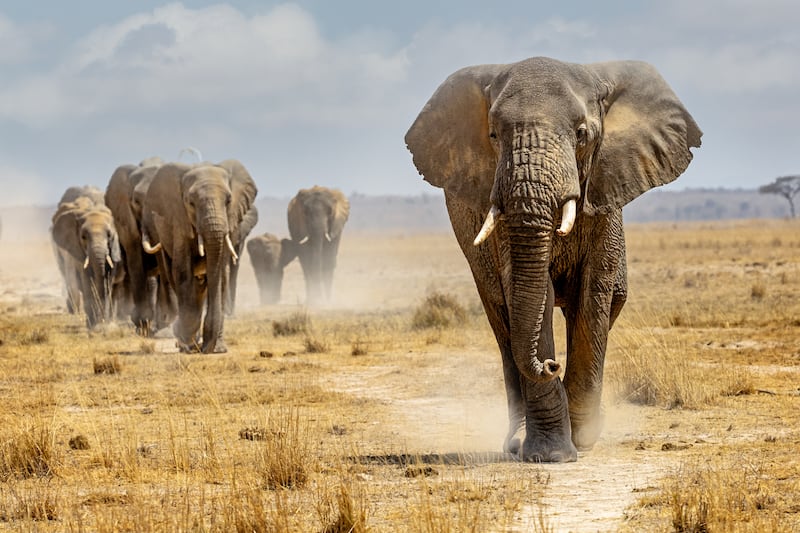

A new device that generates the sound of buzzing bees is being used to keep elephants away from African communities. And it’s working, as evidenced by footage captured in Liberia on March 3 by the organization Elephant Research and Conservation.
The device is called a BuzzBox and was developed by Martyn Griffiths, Wild Survivors board chairman, according to The New York Times. It provides a way to keep elephants away from African communities without physically harming the animal or endangering any humans.
That has potential to reduce elephant-human conflict.
The article said research on the relationship of bees and elephants started in 2002, when Maasai honey hunters told researchers that trees inhabited by beehives were never damaged by elephants.
Save The Elephants, a charity dedicated to conserving elephants, reports on its website that the three-month audio study “was the result of a unique cross-border collaboration” between Elephant Research and Conservation in Liberia, Kenya-based Save the Elephants and Wild Survivors in Tanzania.
The website said BuzzBoxes have a remote sensor with a five-meter radar and can be attached to objects like trees and posts.
The New York Times reported the BuzzBox can be programmed to two high-frequency strobe lights and six different soundtracks, including barking dogs.
BuzzBox inspiration
Lucy King, head of Save the Elephant’s human-elephant coexistence program, started studying elephants’ fear of bees in 2006 and “applied what she learned to create specialized wire fences upon which beehives hang like pendulums.” In 2017, researchers found beehive fences successfully keep elephants away 80% of the time, per The New York Times.
Save The Elephants said the beehive fence was good at keeping crop-raiding elephants out of farms, leading to adoption by 23 countries across Africa and Asia.
Inspired by the beehive fence project, Griffiths designed the BoxBuzz. Quoting Elephant Research and Conservation, Save the Elephants reported that five years later, the “design has evolved from a costly concept design using off-the-shelf sound modules to a low-cost proprietary design adaptable to many different use cases, including deep in the forests of West Africa.”
King called the BuzzBoxes “such a wonderful story of collaboration, partners linking up and working together to research peaceful and effective ways to keep elephants away from communities and reduce human-elephant conflict.”
Save the Elephants provided the initial research and funding, Wild Survivors provided the Buzz Box technology and Elephant Research and Conservation provided evidence that the elephants responded, King said.