



This weekend is expected to bring intense heat to much of the U.S. — 170 million Americans will be under heat alerts.
The high temperatures can be deadly for humans and animals. According to CNN, “heat kills more people in an average year than hurricanes and tornadoes combined.”
What regions of the U.S. will be under heat alerts?
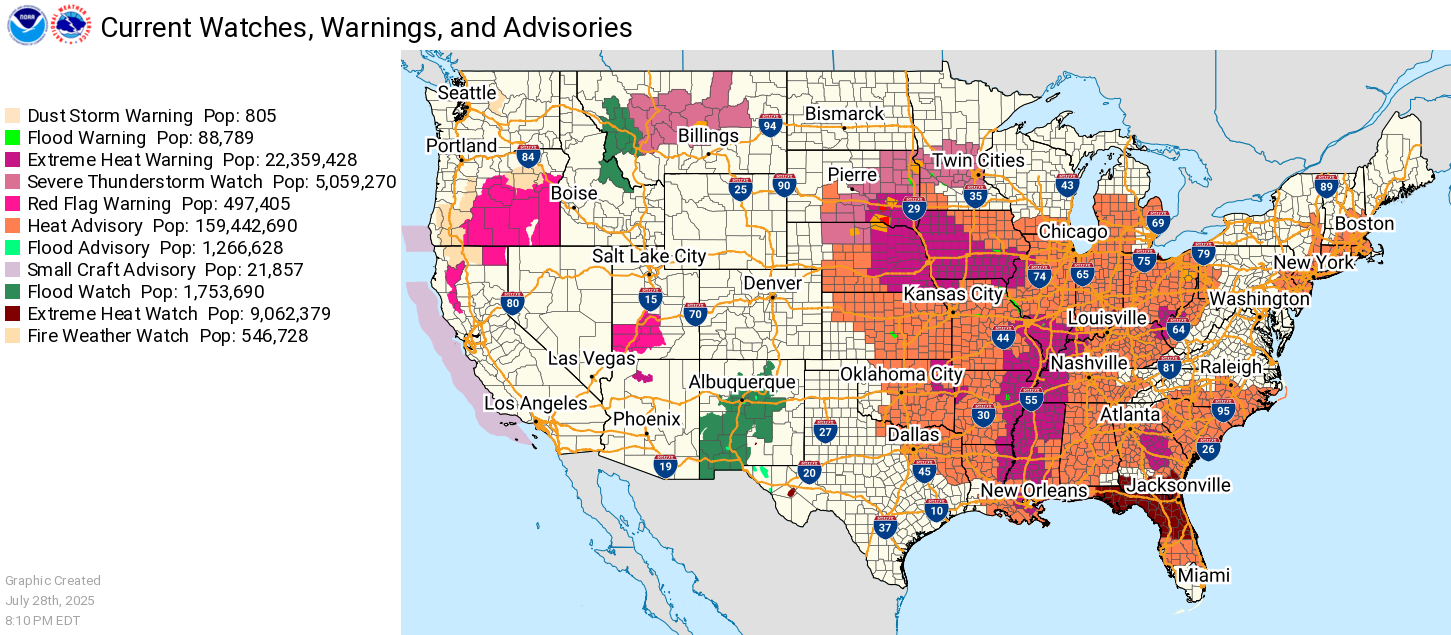
Areas in the South, Southwest, Midwest and East Coast are expected to strike temperatures over 100 degrees at least one day this weekend, per CNN.
It’s the largest amount of areas of U.S. territory experiencing extreme heat warnings so far this summer, The Washington Post reported.
Here are the regions of the U.S. expected to experience heat alerts and advisories this weekend, per the National Weather Service:
- Los Angeles area.
- Phoenix and parts of southern Arizona.
- Las Vegas area and southeastern Nevada.
- Illinois, Missouri and Iowa.
- A majority of Kansas and Indiana.
- Eastern Nebraska, western Kentucky, western Tennessee and western Ohio.
- West Virginia.
- Eastern North Carolina, eastern Virginia and eastern Pennsylvania.
- A majority of Alabama and Arkansas.
- Parts of Oklahoma and New Orleans.
- Mississippi.
- A majority of New York, New Hampshire and Rhode Island.
- Connecticut, Massachusetts, Maryland and Washington, D.C.
Biden announces measures to protect construction workers from heat
In response to the extreme heat waves the nation has been facing, President Joe Biden introduced measures that would address safety protections for construction workers and agriculture laborers — fields where people are more susceptible to heat and high temperatures.
During a press conference, Biden said these efforts are a way to assist those at highest risk, saying, “Construction workers who literally risk their lives working all day in blazing heat, and in some places don’t even have the right to take a water break. That’s outrageous.”
How to protect yourself from extreme heat
The best thing to do during extreme heat is to avoid staying outdoors for extended periods of time and to be prepared and plan ahead.
Here are some of the best things to do if you are outside this week:
- Drink lots of water — hydration is key.
- Utilize air conditioning and fans when you go indoors.
- Find shade when possible.
- Wear sunscreen and a hat.