

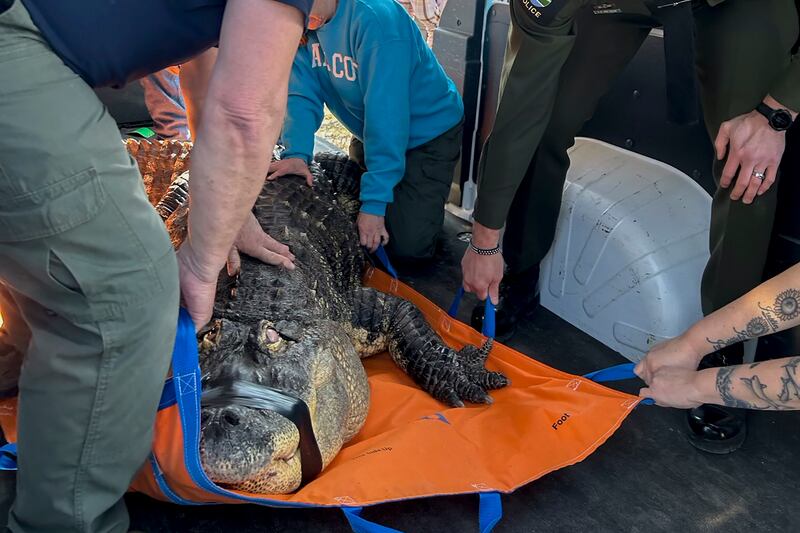
Police in New York seized a pet alligator from a man’s home after learning that the public was allowed to enter the alligator’s pool to pet it, according to CNN. The alligator, named Albert, measured 11 feet long and was almost 30 years old.
The story of Albert
A Facebook post from the New York State Department of Environmental Conservation detailed how Albert’s owner had installed an in-ground swimming pool for Albert to reside in. Because his owner did not have a current license for Albert, authorities had to take him away.
According to The Guardian, Albert was sold at a reptile show in Ohio in 1990, where he was bought by his current owner, Tony Cavallaro. At one point, Cavallaro owned around 100 reptiles.
Cavallaro claims that he has followed the rules when it comes to owning Albert and had always renewed his annual permit, per The Guardian. Cavallaro said he will fight to get Albert back, per ABC News.
New York authorities have taken Albert to temporary housing with a licensed caretaker until a more permanent solution is found, according to The Guardian.
Are exotic pets legal in the US?
According to CNN, animals that fall under New York’s list of “dangerous animals” (for example, venomous lizards or elephants) are illegal unless the owner obtains a Dangerous Animal License, which requires the owner to have experience training and having the proper security measures for the animal.
The Guardian further explains that this specific license is only for animals that are used for only “scientific, educational, exhibition, zoological, or propagation purposes.” That does not include keeping dangerous animals as a pet.
Cavallaro supposedly had a license to own Albert, but it had expired in 2021 and was not renewed due to unsuccessful communication with authorities, according to CBS News.
The U.S. has a lot of regulations when it comes to importing animals, especially ones considered “exotic”. The Agriculture Department helps with regulations when it comes to importing several species of wild animals, such as yaks, elephants, rhinos, zebras and hedgehogs, along with animals considered pets.
Certain species can only be accepted into the United States if brought through the correct port of entry, while some states prohibit it completely. If an animal is considered a pet, the USDA also has a list of separate federal and state requirements to see if the pet will be allowed back into the United States.
But most exotic animals are part of the exotic pet trade. According to National Geographic, the exotic pet trade is a multibillion-dollar black market.
While some exotic pets sold are legal (and are known as captive breeds), there are many others that are stolen from the wild and used in many illegal settings, such as breeding operations, being smuggled out of the country or being mislabeled as captive breeds.
Immigration and Customs Enforcement shares how illegal wildlife trafficking includes exotic pets, bush meat and furs, among other products made from wildlife. The value of illegal wildlife trafficking is estimated to be worth almost $10 billion.
Many countries, including U.S. states, have created laws to stop the illegal trafficking of exotic pets. In the U.S., aside from federal laws about importing wild animals, each state has specific laws “regulating the ownership of exotic pets,” according to National Geographic.