

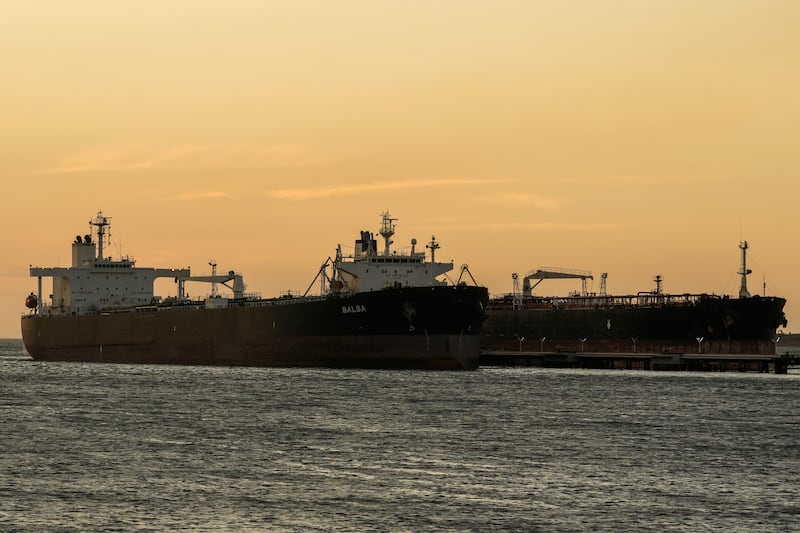

President Donald Trump is urging U.S. oil companies and executives to flood Venezuela’s battered oil industry with $100 billion as soon as possible to boost production following former Venezuelan leader Nicolás Maduro’s capture in early January. But the investment is not guaranteed, even from Chevron, the only U.S. oil company currently operating in the South American country, according to The Wall Street Journal.
Trump’s motivation is to lower U.S. oil prices to $50 a barrel. At the same time, if this were to happen, the price of the crude pumped in Venezuela would reach a range in the high-$30s, per The Wall Street Journal.
“That’s not economic,” said Amos Hochstein, managing partner at the investment firm TWG Global and a former energy adviser to President Joe Biden. “You can’t spend billions of dollars on oil that’s sub-$40. That doesn’t happen anywhere in the world.”
Issues with Venezuelan oil production
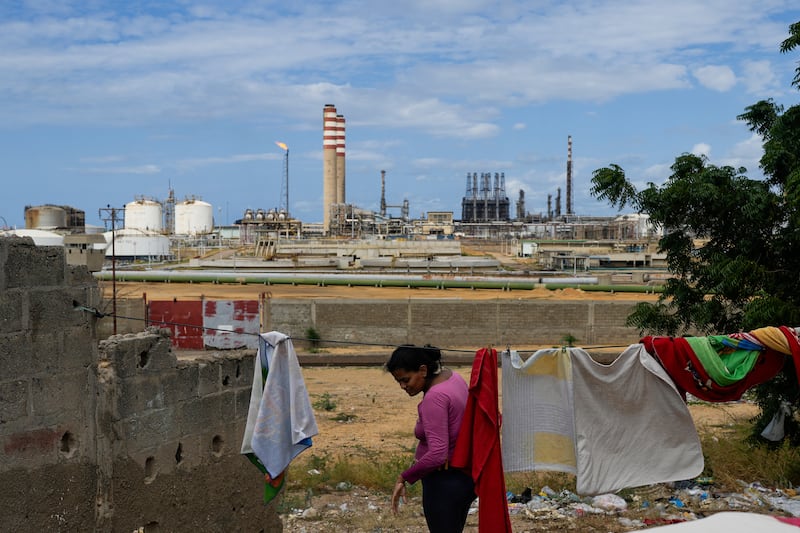
Venezuela faces a number of structural obstacles, including a collapsed infrastructure, a constant shortage of diluent, broken upgraders, sanctions and a hollowed-out state oil company.
Current oil fields, pipelines and facilities are in disrepair or barely functioning. Venezuela’s heavy crude requires lighter oil or chemicals (diluent) to flow and be exported, but the country is experiencing a shortage of these materials. Facilities that process the extra-heavy crude into usable oil are damaged or offline. International sanctions restrict financing, equipment, technology and buyers in the industry, while the state oil company, PDVSA, has lost much of its institutional strength, according to The New York Times.
According to Oil Price, Venezuela was producing about 3 million barrels per day of crude oil in 2008. By the end of last year, with all the roadblocks, output fell to about 963,000 barrels per day.
If these issues were addressed, the country could return to producing millions of barrels per day. Of Venezuela’s 14 oil fields, 11 still hold more than half of their original reserves, and several Western firms maintain a presence, even through operating challenges since Hugo Chávez took office in 1999, Oil Price reported.
What is the U.S. currently doing?
The U.S. government is in discussions with Chevron and other companies operating in Venezuela to expand their licenses. This has piqued interest from more than half a dozen oil producers seeking new licenses to export oil and operate in the country, according to Trump administration official.
Trump has emphasized that the U.S. wants Venezuela’s oil back. Oil Price reported that shortly after Maduro’s capture, the president said Venezuela would hand over 30 million to 50 million barrels of previously sanctioned oil to the U.S. from both on- and offshore storage, according to CNBC.
Recent estimates from the industry suggested that about 34 million barrels of crude was held in storage around Venezuela. U.S. Energy Secretary Chris Wright said the oil would be sold to buyers, including U.S. refineries, with funds going to accounts controlled by the U.S. government, Oil Price reported.
What Chevron currently does in Venezuela
Chevron is a leading private oil company in the country. The company works in partnership with affiliate companies Petróleos de Venezuela (PDVSA) and Venezuela’s National Oil Company in several production projects in Venezuela, according to the company’s website.
Across 74,000 oil and gas acres, Chevron currently operates five on- and offshore production projects in Venezuela, four joint-venture operations and three projects that focus on heavy crude.
Chevron produces around 244,000 barrels per day through its three ventures: Petroboscan, Petropiar and Petroindependencia, according to TD Cowen.
International companies are nervous about Venezuela, given the past
International companies remain cautious about Venezuela. Before investing, oil executives want financial and security guarantees from the U.S. government, which would include changes to legal and fiscal frameworks governing oil contracts, contract sanctity and the rule of law, The Wall Street Journal reported.
“ConocoPhilips is monitoring developments in Venezuela and their potential implications for global energy supply and stability. It would be premature to speculate on any future business activities or investments,” a company spokesperson shared in an email to Reuters.
Long term, Trump highlighted the goal is to encourage international investment back into Venezuela’s core oil fields, according to Oil Price.
“We’re going to start talking about the confines of a deal,” Trump said at the end of a public meeting. “We have to get (oil companies) to invest, and we have to get their money back as quickly as we can, and then we can divvy it all up between Venezuela and the United States and them. I think the formula is simple. ... It’s going to be a tremendous success.”