

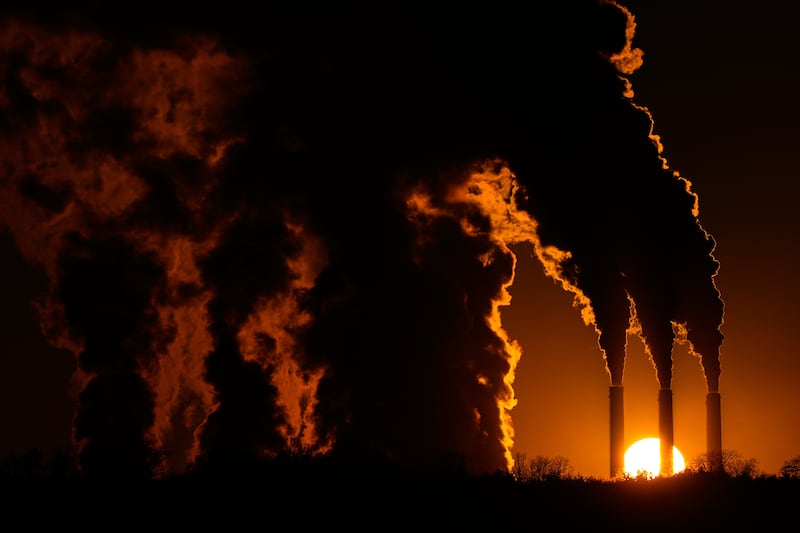

- The Trump administration is canceling or revising $83 billion in Biden-era energy grants, shifting federal support away from solar and wind toward reliable and affordable energy.
- The Department of Energy is prioritizing six sectors — especially nuclear, fossil fuels and grid infrastructure — and is using more than $289 billion in loan authority to finance projects, including restarting Three Mile Island.
- Nuclear energy is the centerpiece of the new strategy, with major investments aimed at quadrupling capacity, expanding small modular reactors and strengthening domestic uranium enrichment to secure long-term fuel supplies.
The Energy Department is canceling or revising $83 billion in Biden-era energy grants and has reevaluated its priorities, according to a year-in-review letter published Thursday.
The Trump administration said it will support reliable and affordable energy, but solar and wind did not make the cut.
To achieve these new energy goals, the office is prioritizing six sectors: nuclear; coal, oil, gas and hydrocarbons; critical materials and minerals; geothermal; grid and transmission; and manufacturing and transportation.
And to give those sectors a boost, the Office of Energy Dominance Financing, which has an available loan authority of more than $289 billion, said it will be awarding power producers and innovators loans.
Already, EDF has announced three new loans, totaling $4.1 billion. Notably, one grant will go toward bringing Pennsylvania’s shuttered nuclear plant, Three Mile Island, back to life.
Throughout 2026, the EDF said it will partner with the country’s private sector to prioritize energy projects that “contribute to U.S. energy security, grid reliability and lower costs for all Americans.”
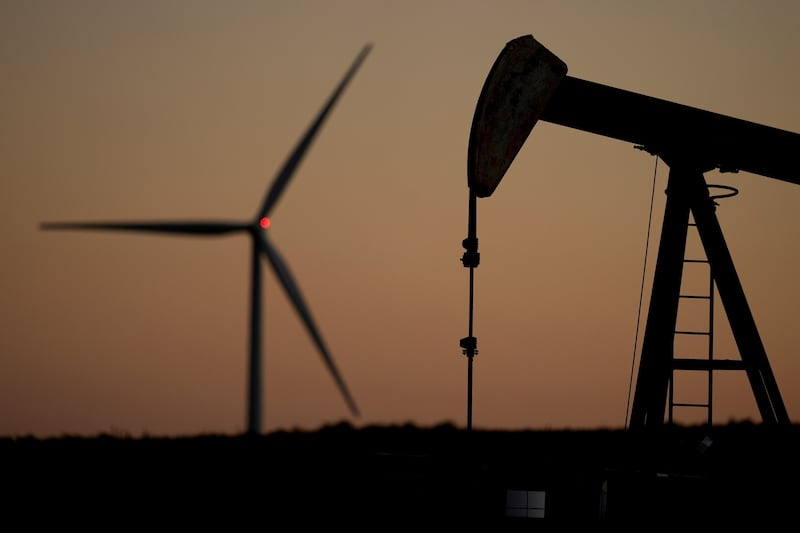
The EDF is analyzing Biden-era loans
In the three months between President Donald Trump’s election in November 2024, and his inauguration in January 2025, the Biden administration authorized $85 billion (about 80% of his four-year energy spending) to energy loans and commitments.
“We found more dollars were rushed out the door of the Loan Programs Office in the final months of the Biden Administration than had been disbursed in over fifteen years,” Energy Secretary Chris Wright said.
As of Thursday, the EDF has completed or is in the middle of de-obligating nearly $30 billion of Biden-era loan obligations and has another $53 billion in revision.
The EDF has also eliminated $9.5 billion in government-subsidized solar and wind projects, including a $2.9 billion partial loan from Sunnova Energy and a $4.9 billion loan for a planned transmission line to connect Kansas wind farms to Illinois and Indiana.
All eyes are on nuclear energy, including in Utah
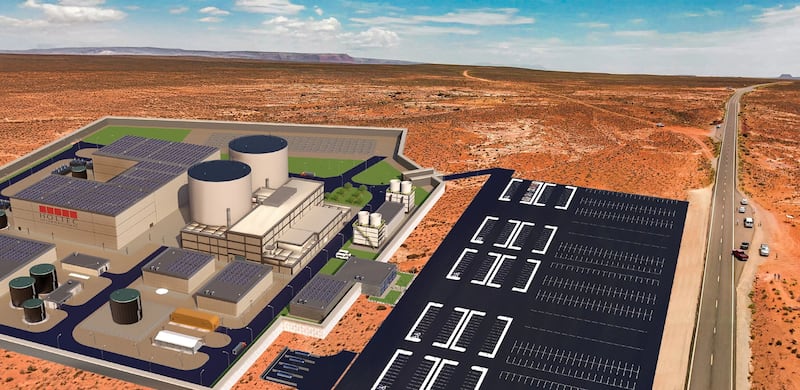
On Tuesday, the DOE reaffirmed Trump’s executive order from May, which aims to increase the country’s nuclear energy capacity from 100 gigawatts in 2024 to 400 gigawatts by 2025, an enormous jump in capacity.
In 2024, the United States’ total electric generating capacity stood at roughly 1,250 gigawatts, and natural gas was the largest contributor at around 500 gigawatts.
Meanwhile, there has been little to no growth in the country’s nuclear energy supply, at least since 2000.
To ramp up nuclear energy production, the DOE invested $800 million in December for the development of small modular reactors. Grants were awarded to the nuclear technology firm Holtec International and the federally-owned electric utility company TVA.
In November, Gov. Spencer Cox announced the state was partnering with Holtec and Hi Tech Solutions to build a manufacturing hub for small modular reactors and other advanced nuclear technologies in Brigham City, Utah, as part of the state’s push to become an energy hub.
In January, the U.S. Energy Department invested $2.7 billion to “strengthen domestic enrichment services” over the next decade. Most commercial nuclear power reactors require enriched uranium as fuel, because it allows reactors to be smaller, cheaper and more efficient. So the investment aims to give the U.S. a steadier supply of cheap and easy nuclear power fuel.