


- A U.S. Special Forces soldier faces federal charges for betting on the capture of Nicolás Maduro.
- French authorities are investigating possible tampering on a weather station to win a Polymarket bet.
- Kalshi suspended three congressional candidates for placing bets on their own campaigns.
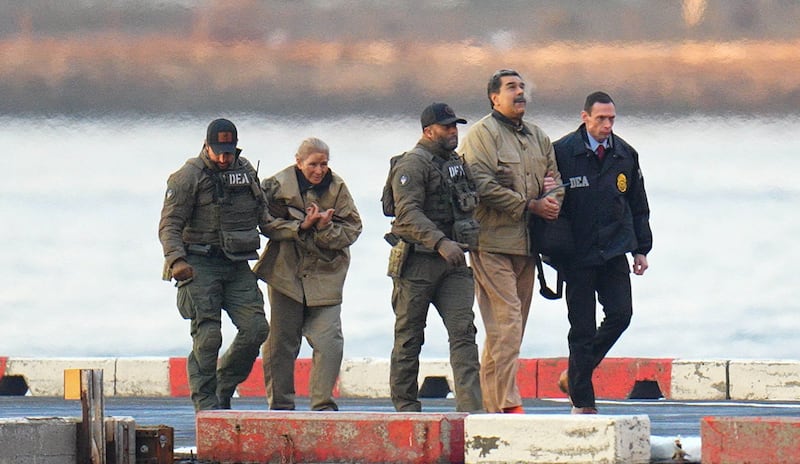
A U.S. Special Forces soldier who helped plan the raid that ousted Venezuelan President Nicolás Maduro faces federal charges for allegedly using inside information to win more than $400,000 on a Polymarket bet.
Also, authorities in France are investigating possible tampering with a weather-monitoring device at Charles de Gaulle Airport in Paris after an unusual temperature spike triggered payouts totaling about $35,000 on Polymarket’s daily high-temperature markets.
In addition, Kalshi this week fined and suspended three congressional candidates who the company said wagered on the outcome of their own elections.
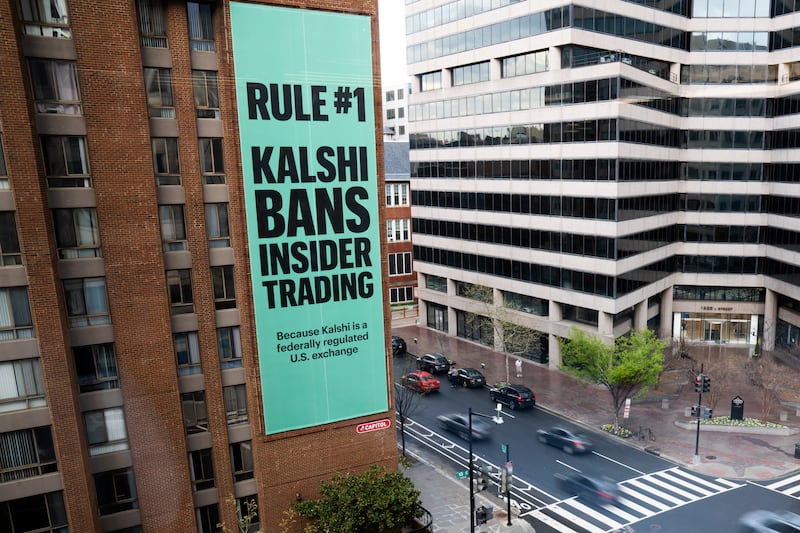
The incidents raise questions about insider trading and manipulation that continue to loom over burgeoning prediction market platforms where users can “trade on futures” ranging from the outcome of an election to the weather.
Insider trading charges
The Department of Justice alleges Gannon Ken Van Dyke participated in the planning and execution of the U.S. military operation to capture Maduro, called “Operation Absolute Resolve,” and used his access to classified information about that operation to personally profit.
“Our men and women in uniform are trusted with classified information in order to accomplish their mission as safely and effectively as possible, and are prohibited from using this highly sensitive information for personal financial gain,” acting Attorney General Todd Blanche said in a press release. “Widespread access to prediction markets is a relatively new phenomenon, but federal laws protecting national security information fully apply.”
Van Dyke is charged with unlawful use of confidential government information for personal gain, theft of nonpublic government information, commodities fraud, wire fraud, and making an unlawful monetary transaction.
In addition to the indictment, the Commodity Futures Trading Commission, the federal agency that regulates prediction markets, filed a complaint against Van Dyke in federal court.
According to the complaint, Van Dyke moved $35,000 from his personal bank account into a cryptocurrency exchange account on Dec. 26, just a week before U.S. forces entered Venezuela to capture Maduro.
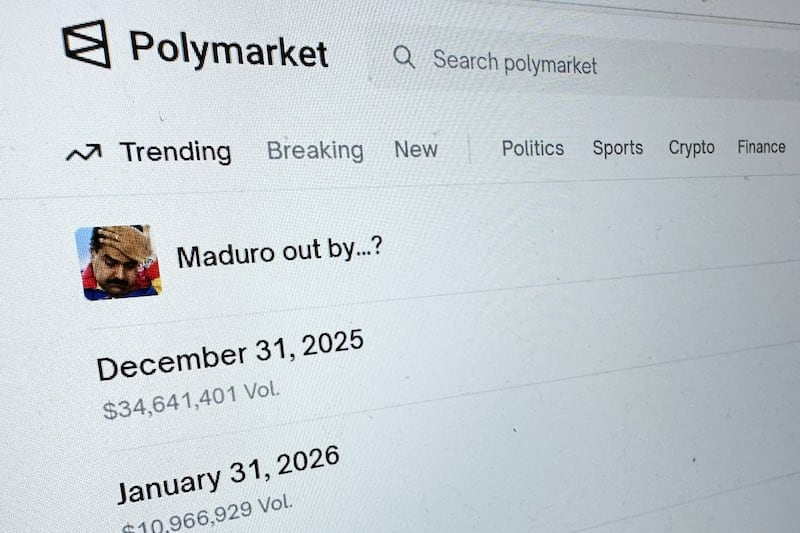
The complaint alleges Van Dyke used classified or sensitive information to purchase more than 436,000 “Yes” shares of the “Maduro Out by January 31, 2026?” contract listed on Polymarket. Van Dyke, who used the Polymarket handle “Burdensome-Mix,” generated more than $404,000 in profits through his trading, according to the complaint.
“The defendant abused that trust by misappropriating extremely sensitive information regarding U.S. military operations, and by doing so, placed the lives and security of our service members at risk,” CFTC director of enforcement David I. Miller said in a press release.
In a post on X, Polymarket said that it published “enhanced” market integrity rules to combat insider trading.
“When we identified a user trading on classified government information, we referred the matter to the DOJ & cooperated with their investigation. Insider trading has no place on Polymarket. Today’s arrest is proof the system works,” according to the company.
Betting on the weather
In France, the national meteorological agency, Meteo France, said in a statement to CNN that it has filed a complaint regarding the “tampering of an automated data processing system” at the airport used to measure daily temperatures for Paris.
A Polymarket trader twice in April placed successful bets on unexpected temperature spikes in the French capital.
On April 6, the temperature rose to about 71.6 degrees Fahrenheit before dropping back to cooler spring temperatures. A Polymarket user won $14,000 for placing a successful bet on the spike.
An anonymous trader with the username “xX25Xx” bet $119 on Polymarket that the weather in Paris on April 15 would exceed the equivalent of 64 degrees Fahrenheit, netting a $21,398 in profit.
When local meteorologists ruled out that the temperature anomaly had happened naturally, the trader deleted the account, per NPR.
Polymarket is no longer relying on the Charles de Gaulle Airport weather sensor data and is instead using data from a device at the Paris–Le Bourget Airport.
Candidates wagering on themselves
Weather and the capture of Maduro aren’t the only incidents involving prediction markets this week.
On Wednesday, Kalshi announced it has suspended the accounts of three congressional candidates who bet on their own campaigns. The candidates from Minnesota, Virginia and Texas were also fined for violating the company’s “political insider trading” rules.
“All three cases concern political insider trading and were flagged because of our newly released safeguards to block political candidates from trading on their own elections,” Kalshi said in a statement.
The candidates are Mark Moran, a former Virginia Democratic primary candidate for Senate who is now running as an independent; Minnesota Democrat Matt Klein, who is running in the primary for that state’s 2nd Congressional District; and Ezekiel Enriquez of Texas, who is running in the Republican primary for the state’s 21st Congressional District.
Kalshi suspended each for five years.
Klein in a statement posted on X said he had never placed a bet on a prediction market and was curious how it worked. He said he bet $50 of his own money on whether he would win the primary. He said he was informed in March that he had violated Kalshi’s rules.
“This was a mistake, and I apologize,” he wrote.
Kalshi said in the statement, “Just like in traditional financial markets, bad actors will try to cheat. Regulated exchanges must constantly evolve and adapt their systems to address insider threats. These three cases are an example of how developing proactive engineering solutions can help identify illicit trading activity.”