


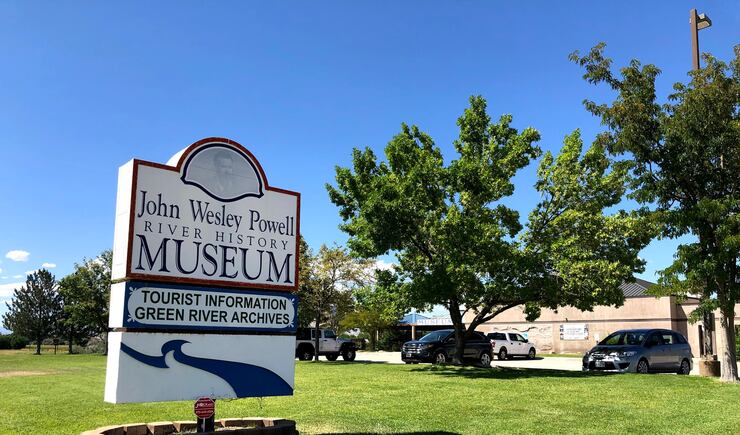
GREEN RIVER, Emery County — It’s high noon and there is no problem finding a place to park at the John Wesley Powell River History Museum. The Tesla charging station on the east edge of the parking lot, where one car is hooked up, is actually busier.
Inside the museum, same story. Overcrowding is definitely not a problem.
It may be the sesquicentennial of Powell’s river run that literally put the middle of Utah on the map, but in sharp contrast to the 150-year celebration this year of the completion of the transcontinental railroad — another Utah-centric event — and to the 50-year commemoration of Neil Armstrong walking on the moon, the fuss over John Wesley Powell’s feat is decidedly more muted.
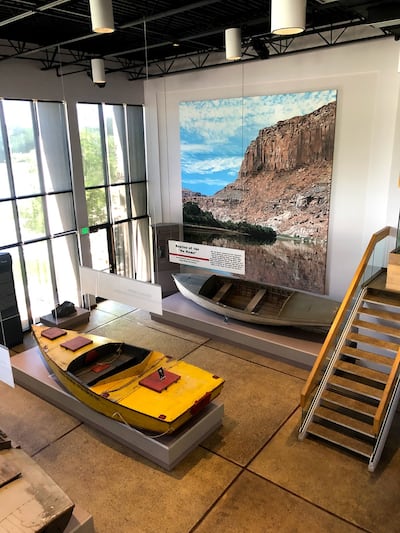
Jackie Nelson is the office manager here at the museum that sits on the east bank of the Green River and is packed full of exhibits dedicated to Powell. Whenever anyone asks, she is happy to turn on the museum’s 15-minute movie that succinctly sums up what Powell accomplished back in 1869.
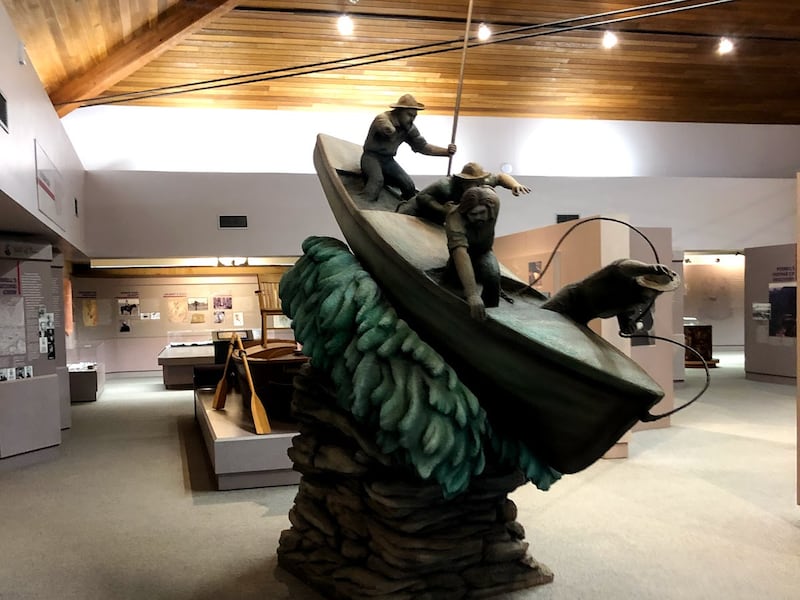
On May 24 of that year, only two weeks after the golden spike had been hammered in at Promontory, Utah, to connect the continent by railroad, he started out from Green River, Wyoming, with a crew of nine men and four wooden boats.
The crew was a collection of mountain men, Civil War veterans and adventurers — people attracted by adventure, not common sense. They really had no idea what they were getting into. They knew as much about river running as they knew about space exploration.
For the next 98 days they improbably rode, portaged or carried their boats nearly 1,000 miles along the Green and Colorado rivers through what is now Flaming Gorge, Desolation Canyon, Cataract Canyon, Lake Powell and the Grand Canyon. They lost one boat and four men along the way. One left the group at an Indian reservation early in the trip and three more departed on Aug. 28, believing the rapids in the Grand Canyon were not only never going to end, but they were going to get much worse. (The three hiked up and over the towering canyon walls and were never heard from again, felled either by Indians, wild animals, hunger or foul play.)
The three deserters could not have had worse timing. The very next day Powell and his remaining crew of five successfully exited the Grand Canyon and arrived at the mouth of the Virgin River, where Mormon settlers gave them provisions and pointed them in the direction of Salt Lake City.
Powell received a conquering hero’s reception in Salt Lake City as word of his achievement spread across the land. The one-armed man — Powell lost his right arm when he was shot at the battle of Shiloh in the Civil War seven years before his expedition — had successfully filled in the last remaining uncharted territory in the continental United States and lived to tell about it.
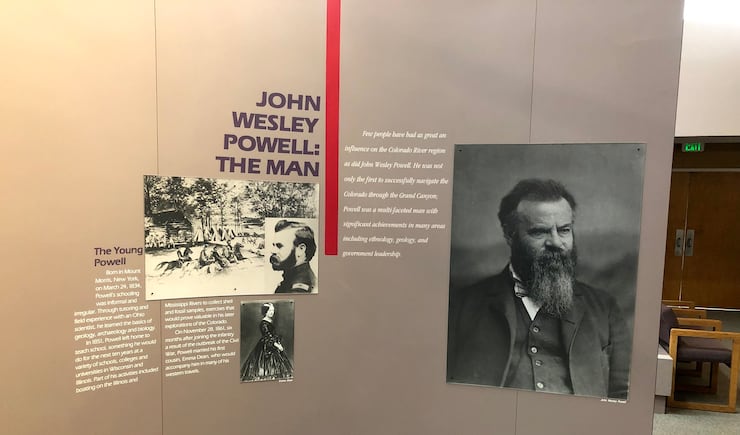
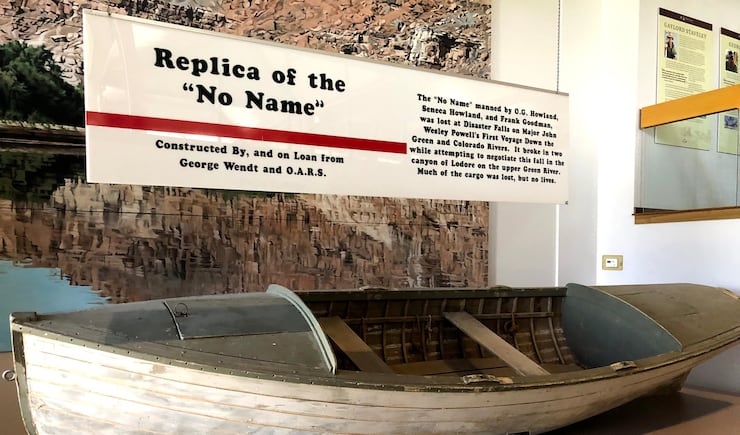


If Powell were to re-emerge 150 years later, he’d have to be pleased at the credit he’s been given.
Besides the museum that bears his name in Green River, Utah, there’s another devoted to him in Green River, Wyoming — the Sweetwater County Historical Museum, where a statue of the one-armed man stands at the entrance. Too, there’s the John Wesley Powell Museum in Page, Arizona, not far from the shores of massive Lake Powell.
His name has been far from forgotten. Nor has his accomplishment. Modern river runners continue to shake their heads that anyone could do what he and his men did in wooden boats with no experience and no planning. It’s a feat as remarkable in its own right as landing on the moon.
But like the moon landing, Powell’s expedition didn’t end up revealing a lot of new possibilities for mankind. Then and now, the Green and the Colorado run through mostly rugged country that is beautiful to look at but not easy to inhabit. Some of it even looks like the moon.
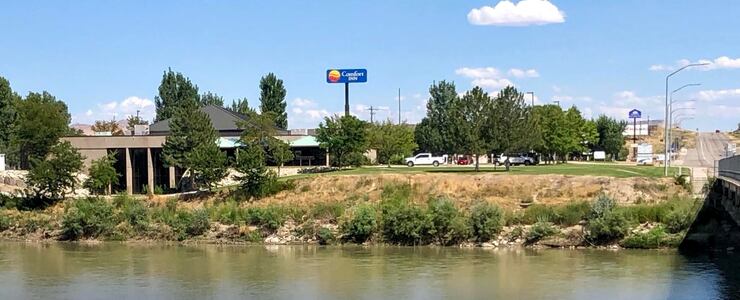
The John Wesley Powell Museum on the banks of the Utah portion of the Green River reflects that. As office manager Jackie Nelson observed, “Not a whole lot of people knew what he was doing or where he was going even when he did it. In some ways that has not changed.”