

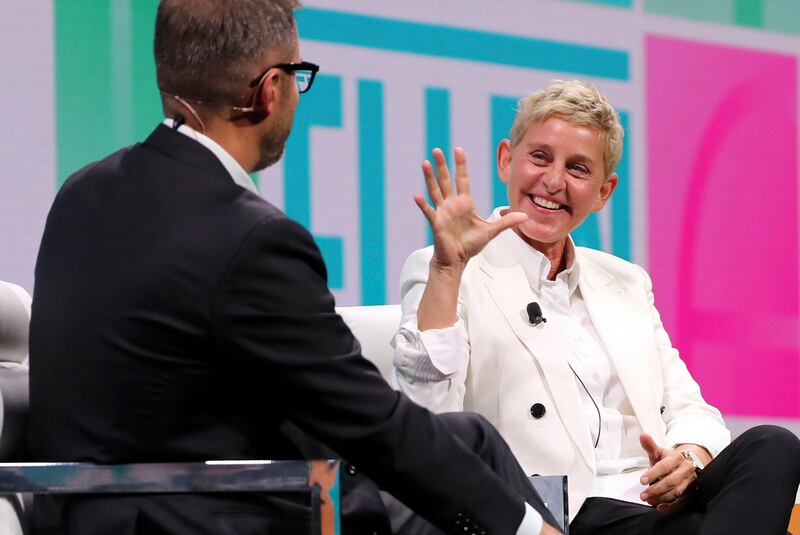

SALT LAKE CITY — A loud and enthusiastic crowd of 3,000 greeted talk show hosts Ellen DeGeneres and Trevor Noah Thursday afternoon as the two celebrities closed Utah tech education giant Pluralsight’s three-day user conference at the Grand America Hotel.
DeGeneres, who famously came out as a gay women in an episode of her 90s situation comedy, “Ellen,” told attendees the decision would serve to knock her career off the tracks for years. But she would come back in an even bigger fashion, launching the talk show format “The Ellen DeGeneres Show” in 2003, a program now set to begin its 17th season in September.
DeGeneres, who appeared on stage with Pluralsight co-founder and CEO Aaron Skonnard playing the role of moderator, said her advice to anyone facing a difficult life challenge, or feeling like they are different or isolated from the people around them, is to have faith and make a positive move.
“Have faith and trust that everything will work out,” DeGeneres said. “You can’t just sit there and have faith and trust ... you have to take steps in the right direction.”
Skonnard told the Deseret News bringing the two hosts — one who has become an icon and the other who is building his own audience after replacing an icon — was very much about delivering a diversity message. And, he was particularly excited about hosting DeGeneres for a Utah gathering that brings together Pluralsight clients, course creators and investors.
“Every year we sort of have an iconic figure who brings a new dimension to Utah and can open up a new way of thinking,” Skonnard said. “And Ellen is someone who really typifies a champion for inclusivity.”
Skonnard said while inclusion and diversity challenges are issues facing the entirety of society, the tech sector, overall, has been particularly slow in making strides toward improvement. When he asked DeGeneres about what needs to change, she said it’s about those in positions of power creating opportunities for a more diverse group of leadership candidates.
“We need to make room for other people,” DeGeneres said. “There is a problem with not giving women, people of color a chance to rise up in the ranks. It’s not just Hollywood. It’s not just tech. It’s any business.”
Noah recapped his childhood growing up in South Africa in the final years of apartheid. The son of a white Swiss father and black South African mother, Noah explained the title of a 2016 memoir, “Born a Crime,” was literally a description of the potential consequences of his birth.
“By the very definition, I was born a crime,” Noah said. “If I’d been discovered, I would have been taken away and placed with a foster family.”
Noah explained that his white father lived separately from him and his mother, though he would get a chance to see him every few weeks. The strength to navigate the situation, under apartheid rule that institutionalized segregation, came from his mother who “never made me feel like things weren’t going according to plan. I just thought my dad was gone all the time.”


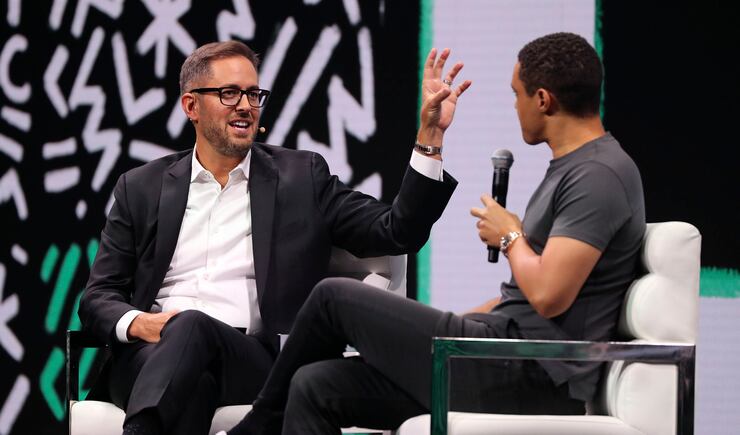







Noah, again crediting his mother, said he embraced emerging technology at a young age that would lead him to start his own business of ripping and selling music CDs to his friends and, later, to becoming one of the first DJs in South Africa to spin songs from a computer.
When asked about his best advice for tech leaders, Noah said it was time for tech leaders to acknowledge the responsibility that comes with creating new, and very powerful, tech companies.
“Silicon Valley ... was a very idealistic place with just a few guys in hoodies trying to change the world,” Noah said. “Now, those same people refuse to accept that they are now ... the behemoths they were looking to shake up. (Jack) Dorsey, (Mark) Zuckerberg ... you are what General Electric used to be. That giant, massive corporation, just in a different space.”
Noah said the importance of education was a lesson instilled in him by his parents, and its one he’s carrying forward with the Trevor Noah Foundation. He said the effort is working to bring computer science education to underprivileged students in South Africa and the U.S.
Equality Utah Executive Director Troy Williams lauded Skonnard and his team for leading out as an example of a tech company that was making workplace equity a priority.
“It’s phenomenal to have icons like Ellen and Trevor Noah here, who help us bridge the divide, help us recognize the things we have in common are so much greater than the things that supposedly divide us,” Williams said. “I think that’s truly the message that Aaron and Pluralsight are trying to deliver.”
Williams noted Utah tech companies are facing challenges, as are tech companies across the country, in attracting top talent in a very tight tech skills labor market. Highlighting the state’s welcoming atmosphere is, Williams said, a wise strategy in working to bring the best tech talent to Utah.
“We know Utah tech wants to be competitive,” Williams said. “They want to attract the best talent and want to send the message to potential employees that live outside the state that this is a welcoming environment.
“The people of Utah are kind and compassionate and when we get together, and get beyond the differences, we’re just human beings and we’re just connecting.”
Sunny Washington, co-founder and CEO of Salt Lake City-based tech learning platform Because Learning, attended the Pluralsight conference and said it was refreshing to see the event embrace diverse content and presenters without making a “thing” out of it.
“These issues are often some kind of feature or sidebar at tech gatherings,” Washington said. “I love that Pluralsight is just embracing it with Equality Utah, Women Tech Council and others just being a part of the proceeding ... as it should be.”
Washington said the imbalance in tech leadership and venture capitalists is evolving, albeit slowly, but believes companies like Pluralsight are helping move equity efforts forward by being an example.
“It speaks volumes to have leaders like Aaron embracing the diversity, inclusion message,” Washington said. “It’s exhausting for the lone female programmer shouting that message.
“Pushing the message here makes it easier for everyone who is out there.”