ENTERPRISE, Washington County — Many good hikes end at something interesting.
What Steve Hunt found while exploring the mountains near Enterprise in Washington County is an ending that could have easily been forgotten.
“There’s metal everywhere. Clear out to there,” he said while tracing a line with his finger down a slope. “It makes sense to me that he came in like that and just exploded.”
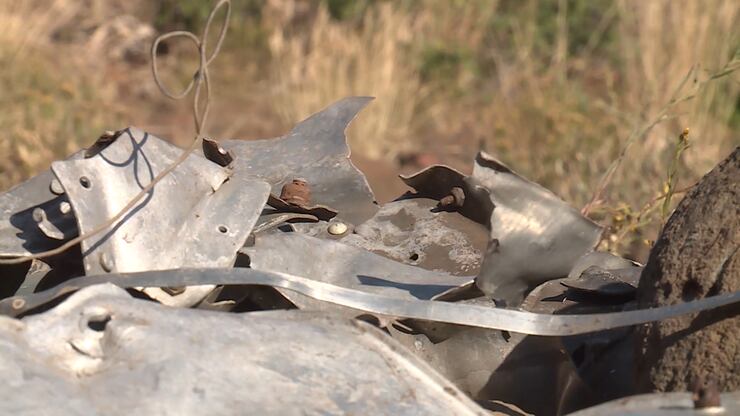
Hunt picked up pieces of metal, turning them in his hand to figure out what they were.
He says the wreckage is from an airplane that crashed during a storm in 1943.
“This was 76 years ago, so you’ve got to be old enough to even remember,” he said.

It was back then, during World War II, when an American effort crashed in these mountains near an area known as Flat Top.
“I’m surprised there isn’t more of this plastic and glass,” said Hunt while poking around the scattered debris.
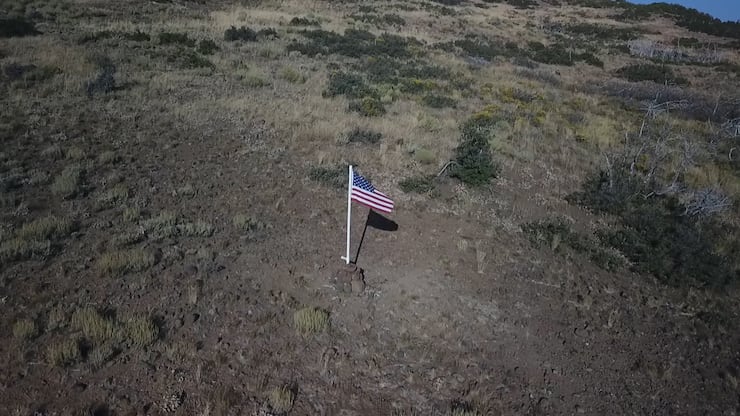
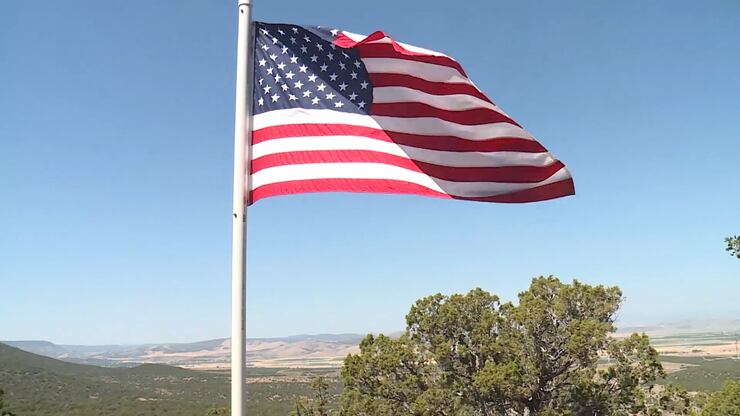
Both pilots died, and Hunt has now made it his mission to mark the crash site with an American flag.
He has also researched the pilots, Charles Ives and Charles Butterwick, and the airplane they were in.
After printing that information on a piece of paper, he laminated it and stuck it inside a small plastic pipe attached to the American flag.
“This is a death certificate. I’ve gone ahead and found their grave markers. This information is just so when people come here, they can see who, what, when, why,” said Hunt. “Part of that is, I just, I honor these guys. They were in the military and they went down in the cause of the war.”
Old-timers in the area have passed the story of the plane crash down through generations.
However, as time moved on, those stories started to fade.
“I appreciate what he’s doing,” said former Enterprise mayor and lifelong resident Lee Bracken. “It makes it come alive and it makes those men come back visible that were otherwise just obscured and have disappeared in history.”
The Flat Top isn’t the only crash site.

In all, there were three airplane crashes within a year and 30 miles of each other.
Another site, just east of Gum Hill, is more difficult to access, but has a lot more wreckage.
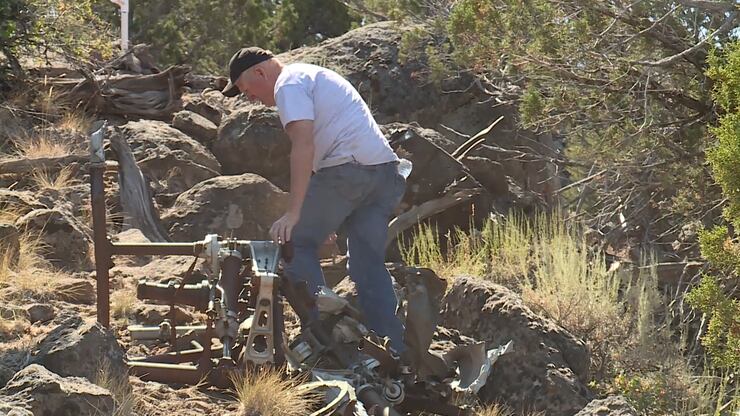
“I spent three days finding it in these cedar trees,” said Hunt.
At the site, you can clearly make out landing gear, a gun turret and hydraulics.
There are also bolts and pieces of metal everywhere from the bomber, which Hunt says also crashed during a storm.
“This looks like part of the cage,” he said while examining a thick piece of metal. “In my heart, I think he probably missed going over this hill by 150 to 200 feet.”
Like at the other two crash sites, Hunt has placed an American flag and information on the pilot who died.
“Nolan Pringle. He was just pushing 28 years old,” said Hunt.
To reach the sites, it requires some knowledge of where they are located.
Hunt hopes people will take the time to visit these sites to see and feel history.
“I’m an easy crier,” said Hunt. “I could cry really easy just because it feels good to let these guys know that somebody knows who, where, and what they were doing. That they’re not forgotten. It has just become, not an obsession, but a passion would be more the right word.”
At some point, Hunt would also like to be involved in getting a more permanent history marker at each of the sites, instead of just plastic pipes to keep laminated pieces of paper in.
He believes people should know about these pilots who died far from home.
“I want them to know these men gave their lives for this country,” he said. “These guys didn’t fight in the war, but they delivered the equipment so the other men could fight in it.”
It’s a war America ultimately won.