

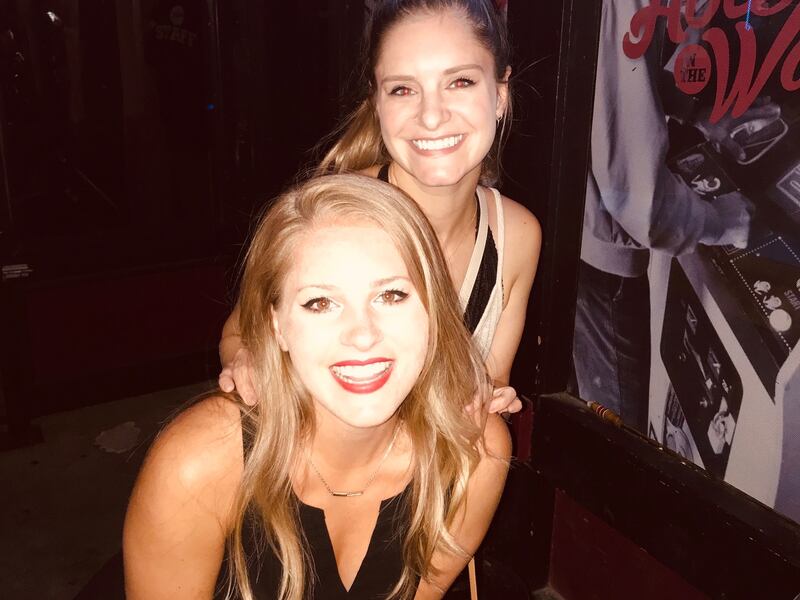

SALT LAKE CITY — It wasn’t until Emily Skill saw her stepsister’s face on her phone that she allowed herself to feel the full weight of her fear.
“That’s when I sort of lost it,” said the 25-year-old Salt Lake resident who survived a mass shooting in Dayton, Ohio, last August.
“Seeing her face, seeing her concern, that’s where it got kind of difficult. ... I struggle with (the shooting that claimed nine lives) more when I think about what it was like for my family.”
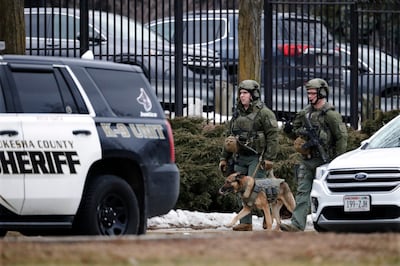
When a gunman opened fire this past week, killing five co-workers at the Molson Coors complex in Milwaukee, that fear and uncertainty came flooding back for Skill as it does when each new mass shooting is reported.
Frustrated with Utah lawmakers’ inaction on gun bills again during this legislative session, Skill wonders what it will take for people to finally demand action.
The night of Aug. 3 was one of reunions and revelry for the Ohio-native who moved to Utah 2 1⁄2 years ago. “I hadn’t been home in a while, and I was just home, visiting family. … (Earlier) that night, I was on the same street with my dad and my sister talking about the shooting in El Paso.”
After learning that around noon on Aug. 3, a gunman walked into a Walmart in El Paso, Texas, shooting 44 people, killing 22 of them, she and her family discussed the menacing unpredictability of the incident.
Seven hours after that dinner conversation, Skill was hiding in the tiny bathroom of a bar as a gunman opened fire in one of Dayton’s most popular downtown districts. The 24-year-old gunman shot 26 people in less than a minute, killing nine of them.
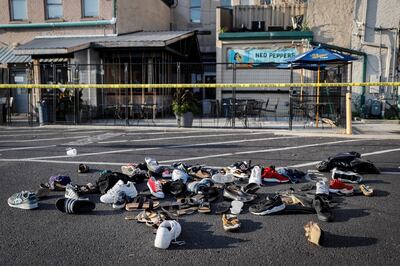
Before experiencing the terror and chaos of a mass shooting, Skill watched news stories of mass shootings or gun violence with sympathy, frustration and helplessness. But after what happened on Aug. 4, 2019, she doesn’t feel like she has the luxury of watching from afar.
After months of trying to heal on her own, she attended a Moms Demand Action survivors storytelling conference. It inspired her to do more than just feel frustrated with how difficult it is to even discuss legislative change to gun laws.
During this session of the Utah Legislature, she has done just that, talking with lawmakers and writing an op-ed in support of three bills — one requiring universal background checks, one criminalizing irresponsible storage of guns, and one that would create a liability for people who give or sell their firearms to someone who later uses it to harm someone.
“It was the first time I’d shared my story with strangers,” she said of the storytelling conference. “I felt like maybe I was ready to start talking.”
Skill’s night started with dinner with her dad, and then she and her stepsister met up at a local bar. They met with two friends from high school, her stepsister’s boyfriend and a friend from college. They enjoyed conversation on a patio until her stepsister and her boyfriend decided to go home about midnight.

Another friend joined Skill and they all went inside to continue visiting.
“We were toward the back of the bar when suddenly we saw a rush of people sprint out of the bar through the back door,” she recalled.
That door took patrons to the patio that Skill and her friends had just left, and on the other side of a fence that surrounded the patio was the bar’s parking lot.
“My first thought was that there was some sort of fight,” she said. “Then music turned off. ... You could hear nothing but screams and bullets outside the bar.”
She got up and ran for the back door, but there was a mass of people, and she couldn’t get out. She turned and ran into the bathroom, someone else slammed the door behind her, and they quickly fell to the floor and strategized about how to keep the door from swinging open, as there wasn’t a lock on it.
“It was very small, two stalls and a sink,” she said. “There were probably 15 of us squeezed in there, all lying on the floor. ... We barricaded the door with our feet. We could hear people on the other side of the door crying and begging us to let them in.”
“Gun violence, mass shootings, it seems like it’s an epidemic, real problem that we’re continuing to ignore. That’s frustrated me even more that other people are going to continue to experience what I experienced because we continue to do nothing, and that’s hard.” — Emily Skill
Those inside the bathroom decided not to risk opening the door.
“That was really hard,” she said, her voice softening. “You want to help whoever you can, but you also can’t risk those of you who did find safety.”
She knows she didn’t lie on the floor very long, but it felt like an eternity.
“People were checking on each other, asking if they were OK,” she said. “They were very supportive. When we couldn’t hear anything, the guy next to me said, ‘The bullets have stopped. Should we leave?’ Eventually we did.”
She has no memory of leaving the bathroom or finding her way to the parking lot outside.
“I just remember being in the parking lot,” she said, noting that she quickly found her friends. “It was really lucky.”
Police told them to leave the area and go someplace safe.
“We just started running. We didn’t even know where we were going,” she recalled. “It was the most shocking experience to look around and you see men, women, different ages, skin color, such diversity, and everyone was just completely shocked ... crying, having so much fear in their eyes. As we were running, I felt like I didn’t know where safe was.”
As they ran, they saw a concrete wall or fence, and it looked like the best, safest option.
“I remember feeling this anxiety of turning a corner and maybe running into another shooter,” she said. “There was so little information, I was on edge the whole night. We found this concrete wall, and just got behind it and leaned against it. We felt like we were safe enough there that I could call my stepsister to come get us. She only lived about 10 minutes away.”
She used FaceTime to call her stepsister, and it was seeing the fear and concern on her face that chipped away any defenses Skill had erected to keep her emotions at bay.
“When I think about the text I had to send my parents,” she said, emotion choking her voice, “that was a hard text message to send. I wanted to let them know what happened, but that I was OK. ... It’s hard to think about those sort of things.”
This past week, all three bills failed to even make it out of committee hearings in the Legislature.
“It’s really frustrating to see that Utah had the potential to sort of start making the changes that could keep people safer,” she said. “They just completely rejected that opportunity, without even much opportunity to discuss.”
She said the proposed changes were small but important — requiring background checks, securing a weapon responsibly and holding people accountable for accidents. A fourth bill, a red-flag proposal, was abandoned by its sponsor because of lack of support without even a hearing.
“Gun violence, mass shootings, it seems like it’s an epidemic, real problem that we’re continuing to ignore. That’s frustrated me even more that other people are going to continue to experience what I experienced because we continue to do nothing, and that’s hard.”
The fact that these measures can’t even be debated or voted on by the entire Legislature is profoundly disappointing to Skill, whose own experience is with her every day.
“To say how I really feel,” she said pausing, “to not do something makes no sense. It’s not going to be a panacea, but just because it’s not perfect doesn’t mean you shouldn’t do something. ... Living in America, we all have this idea of freedom.
“I feel like my freedom has been so constrained because of how unsafe I feel in public places. For a long time, I felt like I couldn’t go anywhere; I felt completely exposed,” she said.
“By not having effective policies in place — universal background checks, red-flag laws or bans on some sorts of weapons — there so many people who don’t feel free because they don’t feel safe.”