

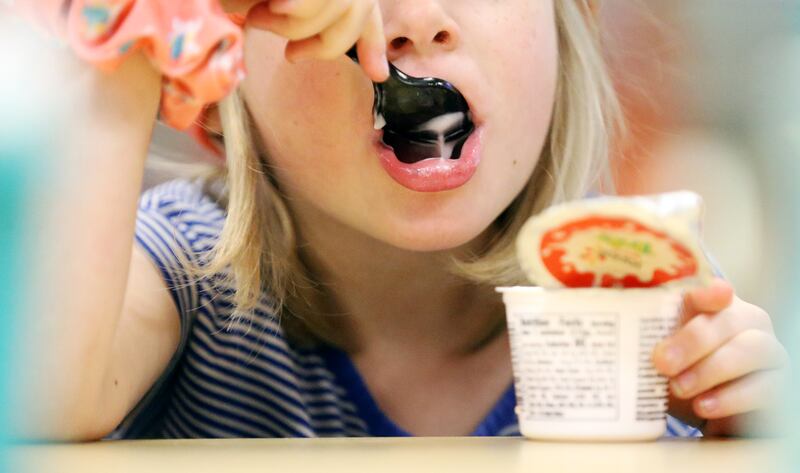

SALT LAKE CITY — Less than a week after voting down a bill that would require Utah schools to adopt alternative breakfast models where high percentages of students qualify for free or reduced-price breakfast and lunch, a Senate committee Monday endorsed a substitute version of the bill.
Alternative breakfasts are typically served after the start of the school day. Some schools serve breakfast in classrooms, provide grab-and-go carts or a midmorning second-chance breakfast.
The legislation, unanimously approved by the Senate Economic Development and Workforce Committee, permits schools or districts to opt out of the program.
SB222 will be a “difference maker” for kids, said bill sponsor Rep. Dan Johnson, R-Logan, who has spent much of his career as a school principal and administrator.
Absent such programs, Johnson said, he knows teachers who keep breakfast foods in their classrooms to feed hungry students to help them learn and contribute to their well-being.
Many Utah schools offer alternative breakfast options, but the state has the lowest rate of breakfast participation nationally, according to the advocacy organization Utahns Against Hunger. Among all Utah students eligible for free or reduced-price lunch in the state, fewer than 40% receive school breakfast.
Johnson said the latest version of HB222 would make it less cumbersome for school districts or charter schools to opt out of the program.
The bill was also amended by the committee to lower eligibility thresholds, making the program available to more students faster.
For the first year, the mandate affects schools where 70% or more students are eligible for free or reduced lunch. The following year, alternative breakfast would be served in schools where 50% of students meet federal requirements for free or reduced school nutrition programs and to 30% the succeeding year.
Johnson spoke in support of the change.
“I really appreciate the amendment. ... It will make a big difference for those (kids),” he said.
Heidi Grimshaw, family life commissioner for Utah PTA, spoke in support of the bill.
“Currently we have schools in our community that have been offering alternative breakfast models and have found they have decreased tardiness and absences within the school,” she said.
“The SmartStart program will not only lead to more students ready to learn but more students on time for learning,” she said.
Susan Edwards, public engagement coordinator for Canyons School District, also expressed support for HB222.
Only a few of Canyons District schools do not offer alternative breakfast programs. Among those that do, “we’ve found it highly effective.”
According to Utahns Against Hunger, which specializes in federal nutrition programs public policy issues, school breakfast programs improve student health, education outcomes and general well-being.
“Recent national studies suggest that alternative breakfast styles could reduce rates of chronic absenteeism by as much as 6 percentage points in impacted schools,” according to a press release from the group.
Costs to the state would be minimal, although Sen. David Hinkins, R-Orangeville, said some teachers expressed concern that the programs would add to the workload of custodians.
Hinkins was among three committee members who initially voted against the bill, arguing that breakfast was a family responsibility.
“I just kind of wonder when we’re going to let parents be parents,” he said in earlier debate. “Parents should be parents. My mother fixed my breakfast. My wife fixed my kids’ breakfast.”
On Monday, after doing research over the weekend, and learning that most schools in his Senate district serve breakfast, Hinkins made the motion to give HB222 a favorable recommendation.
The bill moves to the Senate for its consideration.