

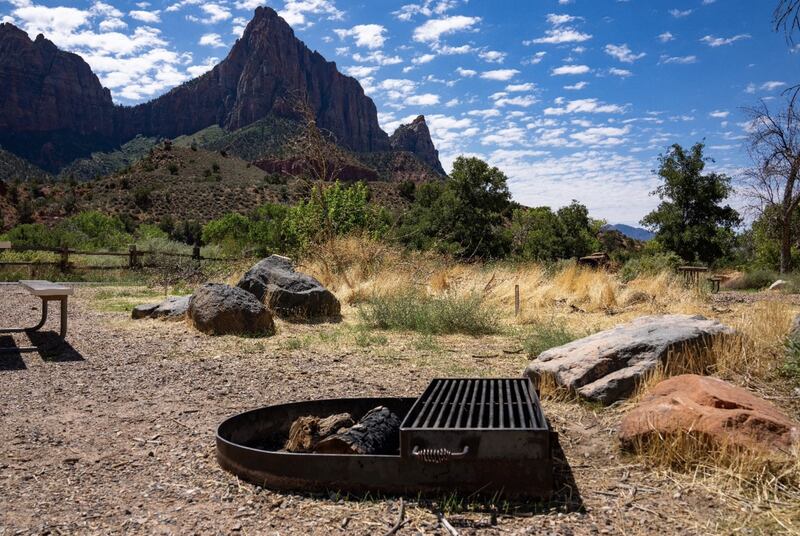
Fire restrictions at Zion National Park are being lifted ahead of the Labor Day weekend because all the recent rainfall and improved fire conditions, park officials said Tuesday.
Zion's restrictions, put in place earlier this year, expire at the start of Wednesday. Once it's lifted, campers can have fires within metal rings at Watchman, South and Lava Point campgrounds.
Lyndsay Fonger, Zion National Park's fire management officer, said this month's monsoonal storms have improved plant conditions and reduced fire danger; however, she cautions that people should still be careful when visiting the park.
"This doesn't change that you still need to use fire sense. Make sure fire pits are cold to the touch before leaving and avoid parking or smoking near dry plants," she said.
Southwestern Utah has received plenty of precipitation in recent weeks. Data from National Weather Service stations positioned in cities surrounding the park show that the region received rain totals that are well above normal for August. For example, Kanab's 2.21 inches of precipitation is nearly a full inch above its listed normal.
More scattered showers and thunderstorms are expected to close out this week, continuing into the holiday weekend, said KSL meteorologist Matt Johnson. By tacking onto previous precipitation, they could lead to more flash floods at the park, especially in slot canyons and dry washes.
Zion National Park rangers are already gearing up for what is typically a busy weekend at the park. On Monday, they warned people planning to come to expect long lines and traffic congestion in and around the park.
Park officials also offered a few tips for people planning to visit this weekend:
- Check the distance and difficulty of trails to make sure you're prepared for hikes.
- Drink a gallon of water per day, and pack salty snacks to avoid heat-related illness.
- Bring appropriate gear like sunscreen, a hat, hiking shoes and walking sticks.
- Check the forecast before you get to Zion. Pay special attention to temperatures and the likelihood of flash floods.