

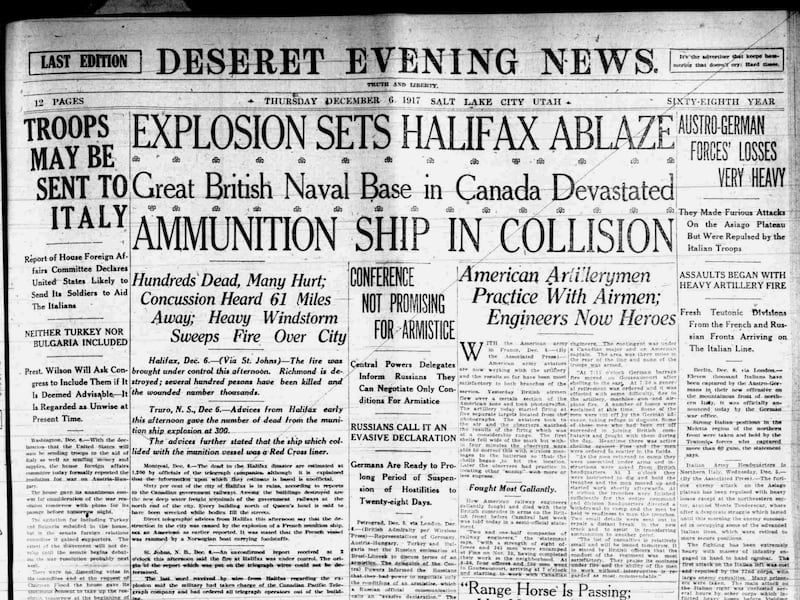

Editor’s note: This story was originally published on Dec. 6, 2024.
A look back at local, national and world events through Deseret News archives.
On Dec. 6, 1917, more than 1,700 people were killed when an explosives-laden French cargo ship, the Mont Blanc, collided with the Norwegian vessel Imo at the harbor in Halifax, Nova Scotia, setting off a blast that devastated the Canadian city.
It is noted as the most powerful human-made blast in history until the Hiroshima atomic bomb at the end of World War II.
The community of Halifax had dealt with maritime tragedy before, as it was the closest to the Titanic in April 1912, when the ship hit an iceberg and sank. History notes that while Titanic’s survivors were taken to New York, all who perished came to Halifax.
Ship crews braved awful conditions to recover bodies and invented a unique system to solve the mystery of many unidentified Titanic victims. Many artifacts are housed in the Maritime Museum of the Atlantic in Halifax.
Five years later, the devastation came closer to home. Newspaper coverage at the time was extensive.
On that morning, the French cargo ship SS Mont-Blanc collided with the Norwegian vessel SS Imo. The Mont-Blanc, full of high explosives, caught fire and detonated, devastating the Richmond district of Halifax. At least 1,782 people were killed by the blast, debris, fires or collapsed buildings, and an estimated 9,000 others were injured.
Communities along the East Coast helped where they could. In fact, Bostonians were especially generous in their aid at the time.
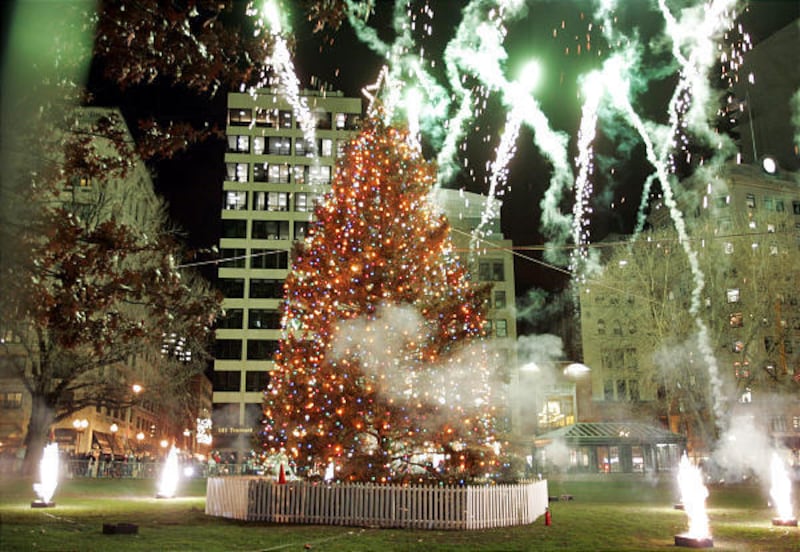
Each year, Halifax sends a Christmas tree to Boston to show gratitude for the help Bostonians provided after the devastating Halifax Explosion.
Here are some stories from Deseret News archives about the Halifax Explosion, other maritime disasters as well as the history the coast of Novia Scotia offers:
“History comes alive at popular tourist spots”
“Macneil, Lehrer novels differ but both are excellent”
“Canada’s maritime provinces will charm your socks off”
“At Civil War’s end, a steamboat disaster with more deaths than the Titanic but forgotten by history”
“Tales emerge from ship disaster”
“Town memorializing 1852 steamboat disaster”
“Ships collide in Antarctic whaling clash”