


It’s been nearly 3½ years since Eli Mitchell’s life was tragically taken. While riding his bicycle to the store, eager to use the new debit card his mother had just given him, the West Jordan boy was struck by a drunk driver at 13 years old.
The pain of losing his grandson hasn’t eased in the months since then. Glendon Mitchell said that if anything, the anguish has only gotten worse for him, Eli’s parents and his family.
“It would be foolish to tell you it’s been an easy journey,” he told the Deseret News, “Eli was always one who looked out for others. He was sensitive to those who were maybe being picked on or bullied or left out. And even if he didn’t know them, he would reach out and try to do what he could to alter the situation.”
Now, forced to live only on the memory of his beloved grandson, Mitchell has found himself working in the field of victims’ rights post-retirement.
The Mitchell family has worked with state legislatures to improve state laws, government programs and outreach to help people like them — who find themselves in an unfathomable situation.
“We have to deal with all of the trauma, grief, mental fog,” Mitchell said, while still “trying to make a difference for others. So maybe there’ll be fewer people put into the position that we unknowingly found ourselves in. And we didn’t sign up for it, we didn’t volunteer for it.”

Most recently, the Utah Board of Pardons and Parole named its initial victim notification letter “The Eli Mitchell Letter,” which serves as the initial point of contact between crime victims and the Board, and provides essential information about the post-conviction process.
“I hope those who never want to get one of these letters will at least be given a choice to get informed of what the next stage of the criminal justice system is going to be like for them ... victims need to have a voice in the criminal justice system, and that’s been an ongoing focus of the Board of Pardons and the legislature for the last few years.”
When it comes to priority, Mitchell would say the criminal justice system is 80% offender-focused vs 20% victim-focused. “I would say it’s improving with a long way to go,” he said.
The other side of true crime

Society as a whole seems to gravitate towards criminals rather than victims. In Netflix’s list of its 10 most popular shows of all time — on a global scale — No. 2 is the story of a 13-year-old accused of murdering his classmate, and No. 5 is the real story turned drama of infamous serial killer Jeffrey Dahmer. A 2023 Pew Research study found that true crime is the most popular podcast genre streamed.
According to media ethics scholar Whitney Phillips, audiences often find it easier to engage with the sensational psychological aspects of offenders than to sit with the emotional weight of victims’ grief and trauma.
Phillips explained that some people slip into treating true crimes as harmless entertainment, unaware they’re missing key facts and overlooking their ethical implications, and realizing that these are real victims, not just characters on a screen.
But for real victims like Chanae Haller, the pain she lives with is very real. Through her experiences, she became well-versed in the government structures put in place for victims of crime. She now lives her life helping others through the hurdles of bureaucracy.
Both Haller and Mitchell shared the struggle of trying to live with this deep heartache and grief, which is hard enough as is, but then gets significantly complicated and amplified by the intricate and often frustrating realities of the legal system, whether that be ongoing court proceedings that can take years, or filing protective orders to ensure future safety.
But there isn’t a day that goes by that Haller doesn’t have to remind herself to keep going.
“Healing is the biggest advice I can give,” she said. “So, for people who are survivors of a horrible trauma, you need to always protect yourself.”
She lives by the motto “live in the 10 seconds. ... If you can look at that clock and just do some breath work for 10 seconds, then move up to 20 seconds, then 30 seconds. I’m staying in the present time during those moments, you’ll get through those hard emotions that you’re feeling.”
Progress and the gaps that remain

Attorney Jim McConkie said attention to victims’ rights has come a long way since he first started practicing law nearly 50 years ago.
“There are statutes now which require the courts and prosecutors to pay greater attention to the victims and to keep them informed, to pledge that they will move along as quickly as is possible to achieve a just result, and to allow them at the time of sentencing, to speak and express themselves in a situation where there’s been a crime and the individual has been convicted. Also, they have the duty under Utah law to keep the victims informed as to the progress that is being made on the case,” he explained.
During his career, he’s noticed the justice system become more “sensitive” to the needs of victims.
“I think on many social issues, we have come a good distance, and recognize the need for those who have been aggrieved to be included.”
His law firm labels cases that could have a lasting social impact for good as “righteous cases.” One of his current cases under such a label is that of Laura Ah Loo, the widow of 39-year-old Arthur “Afa” Folasa Ah Loo, who was fatally shot at a No Kings protest in Utah over the summer.
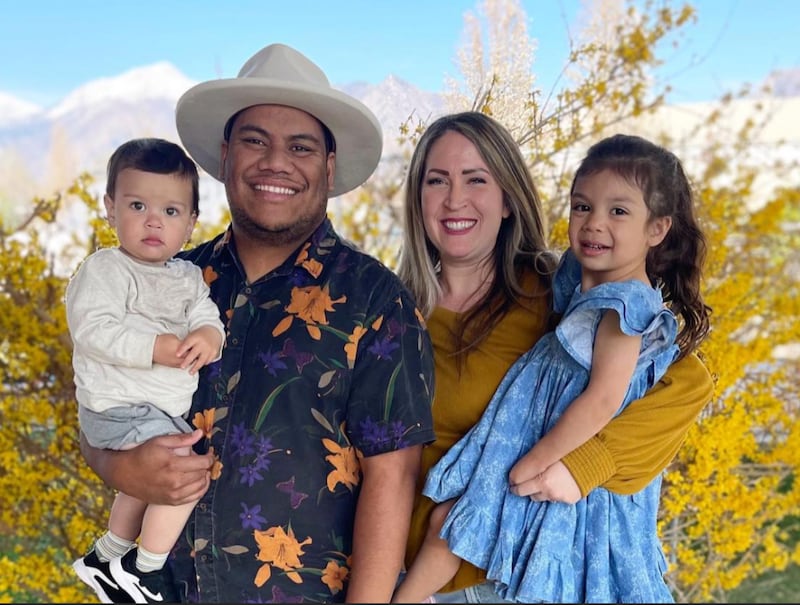
It took five months for felony charges to be filed by the Salt Lake County Attorney’s office in connection with the death of her husband. Last week, one count of second-degree manslaughter was filed against 39-year-old Matthew Alder, a so-called “peacekeeper” at the event.
Following the charges being filed, Laura Ah Loo said she appreciated the DA’s office for working to bring justice for the “negligent manslaughter” of her husband. But she told the Deseret News in a statement prior to the charges that it was “unimaginable to lose my husband in such a horrific way, only to then face silence and inaction” for so long.
As a victim, she said it was “beyond frustrating and unacceptable” and that “you wouldn’t think that basic accountability would be such a hard thing to have to ask for in a situation that should easily and without question warrant it.”

McConkie acknowledged that the case did have “unusual legal considerations,” but “when justice is delayed, it doesn’t give the victims an opportunity to recover, to the extent that it’s possible to in a tragic situation.”
“It creates a perception that our legal system is inefficient and ineffective, and it leads people to question the legal systems ability to uphold the rule of law and instead of having closure, there’s a deep sense of uncertainty,” he added, “and this feeling that their grievances are not important or being addressed by society as a whole.”
As the case progresses and additional information comes forward, Ah Loo said she hopes it will lead to reforms that enhance safety at public events. Like Haller and Mitchell, Ah Loo hopes that through her tragedy, society can learn a lesson or two on how to prevent more victims from going through her pain.