


- It was a busy year on the energy front in Utah, with the state involved in a variety of projects.
- Utah aims to be a world player on the energy stage, particularly when it comes to nuclear and geothermal issues.
- The energy saga is not due to fade in 2026, with much left on the horizon. There is still a lot to be done.
Utah Gov. Spencer Cox unveiled “Operation Gigawatt” a year ago, an ambitious goal of doubling the state’s energy production in 10 years.
A GOP lawmaker from Richfield quickly became a champion in doing what he could to help the governor’s initiative take root.
Rep. Carl Albrecht, R-Richfield,, headed legislation in 2025 to set up an energy council, provide a mechanism for the creation of energy zones and, most importantly, established a nuclear consortium.
“See what I started?” he joked at the time.
Via HB249, the nuclear consortium is comprised of eight lawmakers, regulators, business leaders and Laura Nelson of the Idaho National Laboratory. It held its first meeting in October.
According to Rep. Colin Jack, R-St. George, the group reviewed geographic factors that might influence where to build a nuclear reactor. They were counting on local governments to propose sites.
And Brigham City got on board.
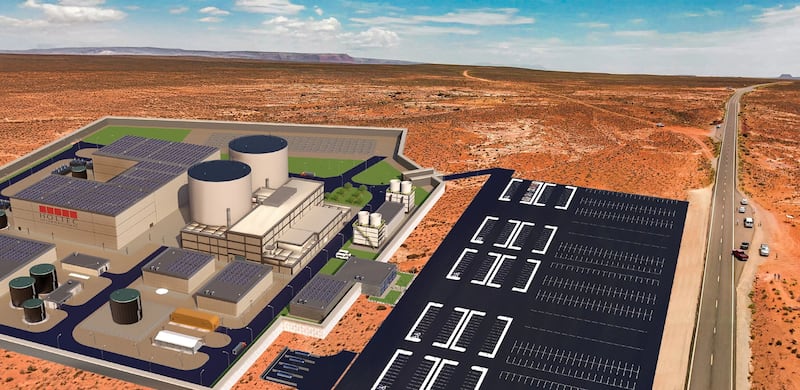
The construction of a small nuclear power plant near Brigham City, to be paired with a manufacturing and training hub that state leaders say could help power Utah’s energy future and reshape the local economy, was announced in November.
The hub aims to support a future fleet of small modular reactors in Utah and across the Mountain West.
Also, the city of Eagle Mountain has been contemplating the adoption of an alternative energy zone, which would include a small modular reactor.
There have been several public meetings on the topic this year in Eagle Mountain, but city leaders deferred action for further refinement, more community engagement and, importantly, to let incoming elected officials have a final say.
In other developments, a new reactor is also planned for the San Rafael Energy Lab in Emery County. While the lab itself is not building a reactor, it will be a host for companies testing the technology. It began operations as the San Rafael Research Energy Lab and was purchased by the state for a little more than $20 million.
The lab plans to specialize in studying molten (liquid) salt reactors, as opposed to uranium fuel rods. The idea is that if the uranium is dissolved into a liquid, it will prevent meltdowns, which makes the reactors much safer. The goal is to have it operational next year.
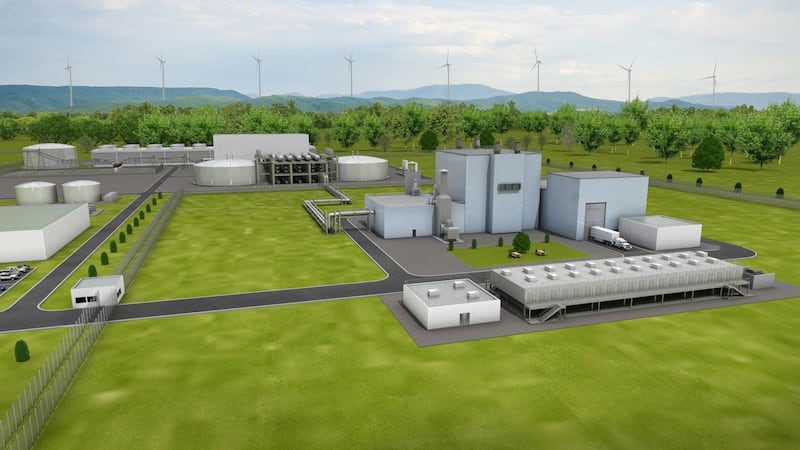
Rocky Mountain Power is intent on someday replacing its coal-fired power plants with technology like TerraPower’s Natrium reactor, which is a 345-megawatt sodium fast reactor coupled with a molten salt energy storage system, providing built-in gigawatt-scale energy storage.
TerraPower broke ground in 2024 in Wyoming at the site of a coal-fired power plant. That led Utah’s governor to sign a memorandum of understanding with TerraPower and two other companies.
Cox made clear this year that he wants Utah to be the star of the alternative energy stage.
“Economic prosperity, quality of life, and national security are all downstream of our ability to deliver affordable and abundant energy. When energy is scarce or expensive, everything else becomes harder,” he told the Deseret News.
“That is why Utah launched Operation Gigawatt and is moving quickly to expand energy capacity using a wide range of technologies, including advanced nuclear and geothermal.”
Cox added: “As a Western state with energy-intensive industries and regional power markets that cross state lines, the choices we make affect far more than just Utah. Reliable and affordable baseload power is essential to economic opportunity across the West.”
He emphasized when states build capacity, energy costs stabilize across the market. When they fall behind, prices rise for everyone.
“Through Operation Gigawatt, Utah is ensuring the energy abundance needed to power new industries, strengthen national security, and keep Utah the best place to live, work, and raise a family today and for generations to come.”

In April, Cox inked an agreement with Battelle Energy Alliance, the operation and maintenance contractor with the Idaho National Laboratory northwest of Salt Lake City.
The purpose of the agreement between the state of Utah and INL is to address emerging energy needs through research, with a focus on advanced nuclear and energy innovation.
It also emphasizes workforce development for a sustainable energy future.

In other noteworthy achievements, the University of Utah’s nuclear reactor celebrated its 50th anniversary.
The reactor was designed not to generate electricity, but the next generation of nuclear engineers. The University of Utah said its role has never been more important, with a “nuclear renaissance” growing to meet the needs of an AI-enabled future.
Data centers and their development are driving that urgency.
In December, U.S. Energy Secretary Chris Wright visited the Idaho National Laboratory to push nuclear.
The laboratory is intertwined with multiple Utah projects, from helping keep cellphones functional for first responders in a catastrophic emergency to testing the functionality of batteries in electric vehicles.
It is North America’s only producer of radioactive, medical grade cobalt-60, a type of radiation used to treat brain tumors at facilities like the Intermountain Medical Center in Murray.
Most recently, INL became the first facility to receive a specialty fuel to power microreactors specifically designed to bolster military readiness.
Utah has joined with Tennessee Valley Authority to partner on developing and modeling advanced nuclear reactors at TVA’s Clinch River site, leveraging Utah’s engineering expertise. It is a $400 million endeavor.
Grid enhancement is not to be left out
Torus hosted Sen. John Curtis, R-Utah, at its South Salt Lake facility in August, showing the company’s growth from a small prototype in a garage to a full-scale manufacturing operation.
Torus builds inertial-based distributed power plants — advanced hybrid flywheel battery systems that deliver the same benefits as traditional power generation, but without combustion, chemicals or emissions.
Curtis praised Torus’s growth and highlighted Utah’s role in strengthening America’s energy independence. He said if he had magic powers, he would bring the project back to Washington, D.C., to show his colleagues the exceptional work unfolding in the arena of energy independence.
Other energy opportunities in Utah and the West
Earlier this year, Creekstone Energy and EnergySolutions partnered to evaluate potential nuclear power options at the Utah Creekstone Gigasite and possibly additional locations.
Creekstone is developing the Gigasite in Delta, designed to meet the rapidly expanding U.S. demand for artificial intelligence and data centers.
The company’s eventual goal is to provide approximately 10 gigawatts of non-nuclear generation at the Gigasite through power and infrastructure technologies.
‘Drill, baby, drill’

With President Donald Trump’s mantra of unleashing American energy independence, it has been a good year for Utah in that arena.
Since 2022, Utah has had year-over-year record-breaking crude oil production and significant growth in natural gas production, according to the Utah Petroleum Association.
The oil and gas industry is the backbone of the Uintah Basin economy. While production has doubled in the last few years, emissions in the basin have decreased by nearly 40%.
Fuel demand has decreased 5.7% nationally, but Utah’s fuel consumption has increased 5.2% since 2016, the association said.
The Salt Lake refineries have expanded nearly 25% in the last 15 years and are running at the highest utilization rates in the country to ensure they can meet Utah’s growing fuel needs, as well as neighboring states.
As California refineries close, driven by policies that diminish the economics of those refineries, it has caused supply challenges that can at times lead to slightly higher prices in Utah.
Utah consistently has fuel prices lower than nearly all other Western states — typically lower than Washington, Oregon, California, Nevada, Idaho and Arizona.
Why the race on nuclear?
A corporate expert says more than 110 nuclear projects are planned globally, but the central question is no longer whether to build, but how to scale without repeating the delays and cost overruns that plagued earlier mega-projects.
According to the World Nuclear Association, governments from 31 nations have signed the Declaration to Triple Nuclear Energy, with a goal of tripling nuclear energy capacity by 2050, compared to 2020.
China is on target to meet its goal, but for other countries, including the United States, more work is needed. The United States has built one nuclear power plant in decades — the Alvin W. Vogtle Electric Generating Plant, currently the largest nuclear power plant in the United States.
The plant, however, faced huge cost overruns, years of delays and technical problems. It also resulted in higher bills for ratepayers.
Geothermal on the rise

Fervo’s flagship development, Cape Station, is well underway in Beaver County, Utah. The project is expected to start delivering power to the grid in October next year, which will make it the first commercial-scale enhanced geothermal project to hit such a milestone worldwide, according to the company.
Wright, the energy secretary under the Trump administration, signed his first Secretarial Order in early February, calling to “Unleash (the) Golden Era of American Energy Dominance,” which expresses support for geothermal energy and heating.
In Utah in particular, “geothermal is on the path to become an important renewable energy source,” he said.
The state is already home to the geothermal project FORGE.
Utah produces 59 megawatts of energy from geothermal resources, and a dozen projects are in some stage of development that could produce more emissions-free power generation.
Victories for coal, not other energies

In the state Legislature, lawmakers took a bold but controversial move regarding the Intermountain Power Agency, which runs the IPP to send close to 100% of its energy to California.
Because of California’s policies to wean itself off coal-generated power, lawmakers said they could not stomach seeing an asset go to waste.
They passed legislation that will allow Utah to take over the coal-generation aspect of the plant or allow an independent entity to take command. Lawmakers gave clarification to the regulatory oversight of the Utah Public Service Commission and Utah’s energy demands.
Coincidentally, IPP stopped shipping coal power to California this year and instead has flipped the switch on natural gas.
Utah is not being deterred. It was successful in its appeal to the U.S. Supreme Court to build a railway in the basin to ship its high-butane, low-sulphur coal to other markets.
The U.S. Supreme Court’s nod of approval was a huge victory for the state and one that could keep Utah’s coal mines in production for years.
Solar got swept by the wayside, however.
“It was a rough year for solar in Utah,” said Utah Needs Clean Energy volunteer Kathryn Kair.
“PacifiCorp backtracked on coal plant retirements, the Legislature imposed new restrictions by cutting commercial and residential clean energy tax credits, and policymakers heavily diluted if not completely restricted renewable energy incentives for large scale solar projects on top of redefining clean energy to include nuclear,” she said.
“That approach undermines that Utah needs real, proven solutions like solar to meet an affordable, clean energy future.”
The Office of Energy reiterated its support for utility-scale solar and does not want to deter the development of utility-scale solar development. It reiterated its “any of the above” approach to energy, despite federal policies that have not been favorable to wind and solar development.